Hilton Head’s Cross Island toll drops July 1. Toll payers are still on the hook for $14M
Hilton Head Island’s single toll road will drop its $1.25 fare for good on July 1.
After that magic day, the road’s toll facility will be removed from the base of the bridge in a $14-million construction project.
But the state isn’t paying for that road construction and the toll booth removal — the tolls collected in the last 25 years will, according to the S.C. Department of Transportation.
It’s that project, and its financing, that has earned a public comment period that will close Oct. 13.
The toll has long been criticized by residents who say it should have been dropped much sooner.
This year, the toll on the Cross Island was dropped from March 20 to June 19 due to the coronavirus pandemic. Town leaders, including Town Manager Steve Riley, discussed trying to drop the toll permanently following that closure.
But Riley said in June that “it quickly became apparent that we would have to find the money (to pay off the bridge), and that wasn’t in the cards for us.”
Asked how the state could stay on schedule to drop the toll on July 1 even after the three-month closure this year, assistant director of public relations Ted Creech said the bond maturity date is July 1 and by state law, that’s when the tolls collections must end, regardless of COVID-19 and hurricane evacuation toll suspensions.
“Transportation Secretary Christy Hall said in a statement that the Cross Island Parkway was financed by a 20-year bond, and the state incurred $56 million in debt for the original project.
To make a public comment on the Cross Island project, use the S.C. Department of Transportation website.
How is the Cross Island Parkway financed?
The tolls were first collected on the Cross Island Parkway in 1998.
Roy Tolson, SCDOT’s director of innovative finance and tolls, said in 2018 that the department makes yearly payments of $3.1 million toward the project debt.
If the DOT were paying off only the project debt, the Cross Island Parkway could be debt free using its yearly revenue of $8.3 million, according to DOT records. But the department must also pay for the toll collection facilities and staff, which Tolson said costs an additional $3.2 million a year to operate.
And the tolls will also finance the new construction necessary to remove the toll collection facilities from the road.
In the nearly 25 years since tolls were first collected, the project has hit some financial snags.
Revenue was unexpectedly low in the early 2000s because more drivers than anticipated obtained a Palmetto Pass — a prepaid pass that drivers use to pay a discounted toll.
After nearly a decade of deficit, the department raised the toll from $1 to $1.25 for two-axle vehicles in 2008.
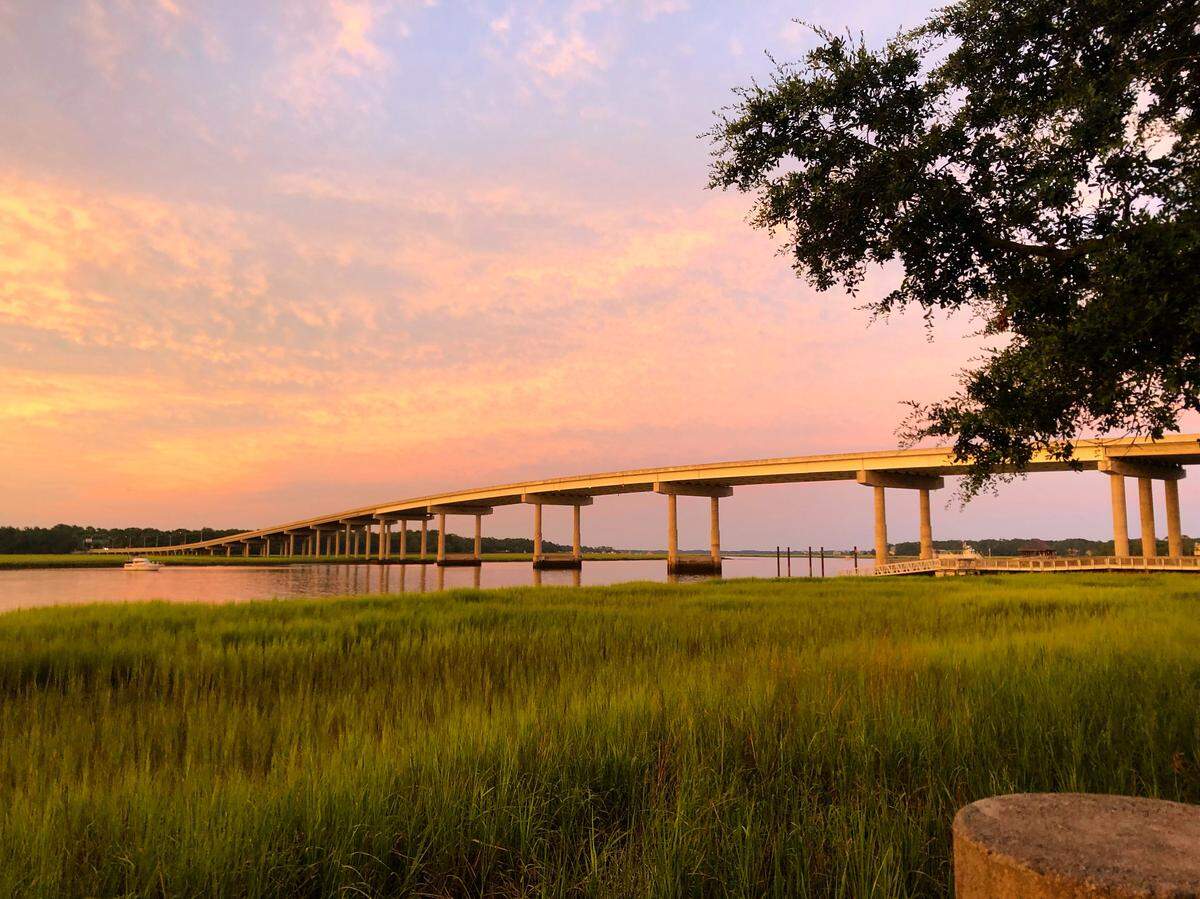
In 2013, revenue from that higher toll got the project back on track, resulting in a $2.4 million surplus, according to previous Island Packet reporting. Tolson said the department used that surplus to complete a resurfacing project in 2019.
The Cross Island is a common route for those who work or live on the south end of the island and, from the beginning, it has seen consistent usage.
It is one of only two toll roads in the state, and Tolson said it’s considered a “destination toll facility.” That means it does not have a high toll violation rate because tourists tend to plan for the toll or even purchase a Palmetto Pass for their visit, he said.
South Carolina’s other toll road, the Southern Connector near Greenville, has increased its toll three times to help cover the costs of the road, according to the Greenville News.
That upstate toll road is set to be paid off in 2051.
The Southern Connector has not dropped its toll during the coronavirus pandemic, but instead suspended cash operations and is mailing bills for the toll to cars that pass through, according to its website.
This story was originally published September 24, 2020 at 4:45 AM.