Did tree-clearing along I-95’s ‘coffin corridor’ save lives? The numbers are in.
A tree-clearing project along 34 miles of Interstate 95 in Jasper County — dubbed the “coffin corridor” — has saved lives, according to initial data from the S.C. Department of Public Safety.
The section of highway was formerly one of the most deadly in South Carolina because of the close proximity of trees to the highway, a 2015 Island Packet and Beaufort Gazette investigation found.
“I know the number of deaths are down in my area since the trees have been cut,” said Hardeeville Police Chief Sam Woodward, who routinely dealt with mangled cars, tragic deaths and grieving families after collisions with trees along I-95 in his jurisdiction.
Total tree-related collisions dropped almost 60% between 2018 and 2019 and no one was killed after crashing into a tree in 2019, according to preliminary data from the DPS analyzed by the newspapers. The total number of collisions dropped 14.8% last year compared to the previous year.
Since January 2016, the number of people injured in collisions with trees has dropped steadily. Preliminary year-end data from 2019 show only four people injured, a 84.6% decrease over the four year period.
The S.C. Department of Transportation marked Jasper County’s stretch of I-95 for attention in 2015 soon after The Packet and Gazette’s stories were published, traffic engineer Brett Harrelson previously told the newspapers. DOT announced the tree removal plan that same year. After delays, it was completed in April 2019.
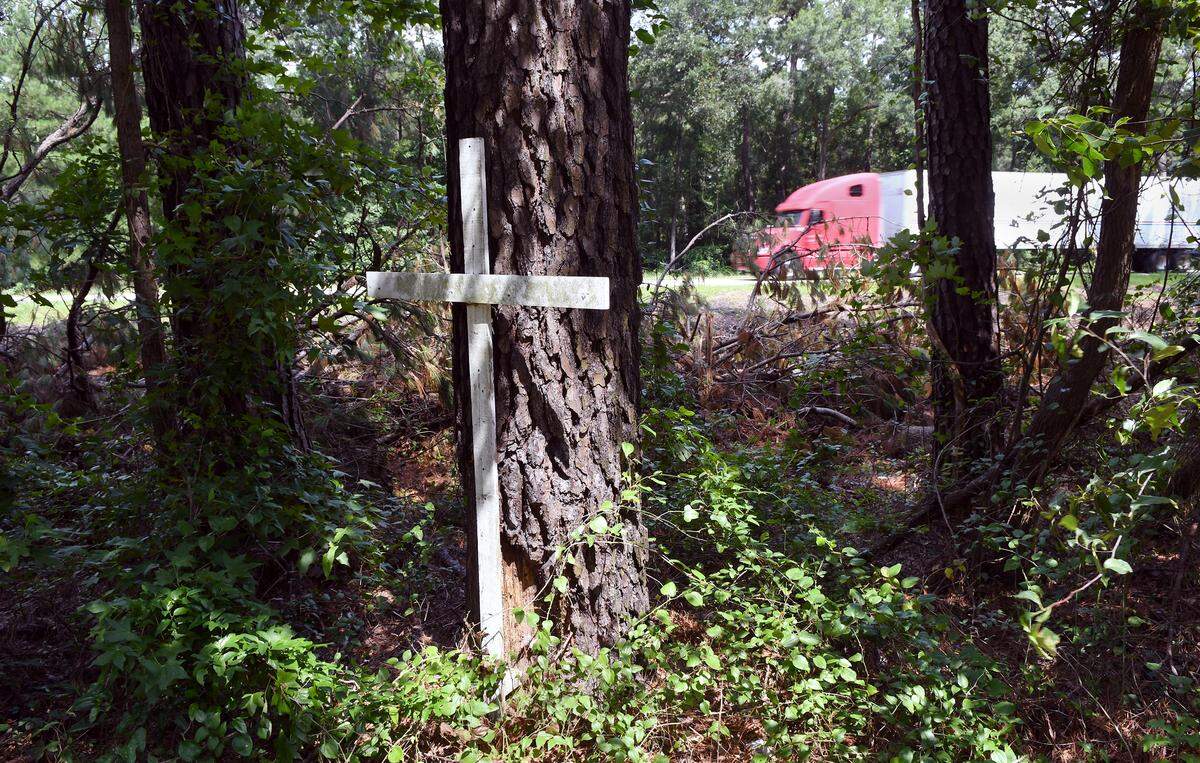
Hardeeville Police know first hand of the trees’ dangers. In the early morning hours of a Sunday morning in February 2005, 34-year-old Hardeeville Officer Mark Jones was killed after striking several trees in the median while responding to a call for backup from another officer.
“I’m a Southern gentleman. I love the wildlife, and I love the trees,” said Woodward. But the tree-clearing “is a matter of public safety” — something he has long called for.
“I’m proud of DOT. I’m proud of South Carolina,” he said.
After 4 years, tree-clearing completed
The newspapers’ investigation did not examine the causes of accidents on I-95, instead focusing on the increased likelihood of death posed by the proximity of the trees to drivers who wrecked in Jasper County’s portion of the interstate.
The investigation found that 22 people had died in the relatively short 34-mile stretch over a five-year period, representing an alarming 32 percent of all I-95 deaths during that same period. Approximately 75% of those killed were in wrecks that involved hitting trees. The papers also reported that in much of Jasper County, trees were within 15 to 20 feet of the road, and state highway safety guidelines recommended a clear zone of at least 30 feet.
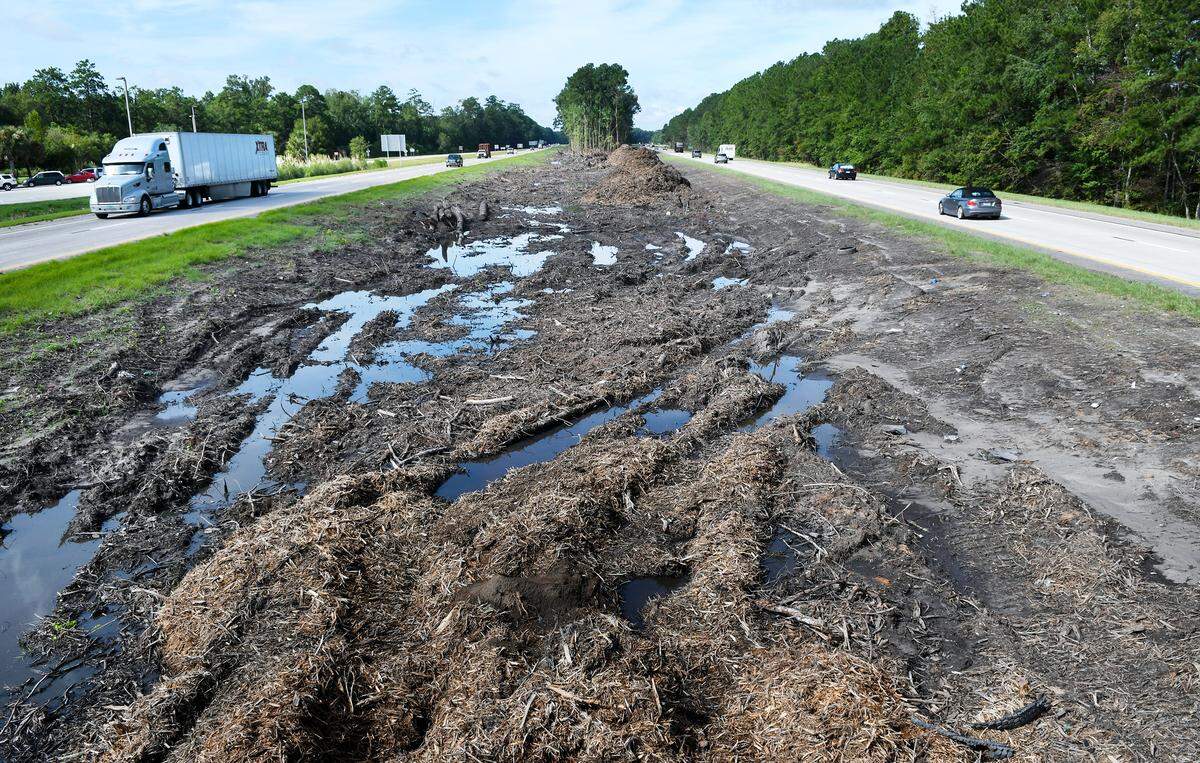
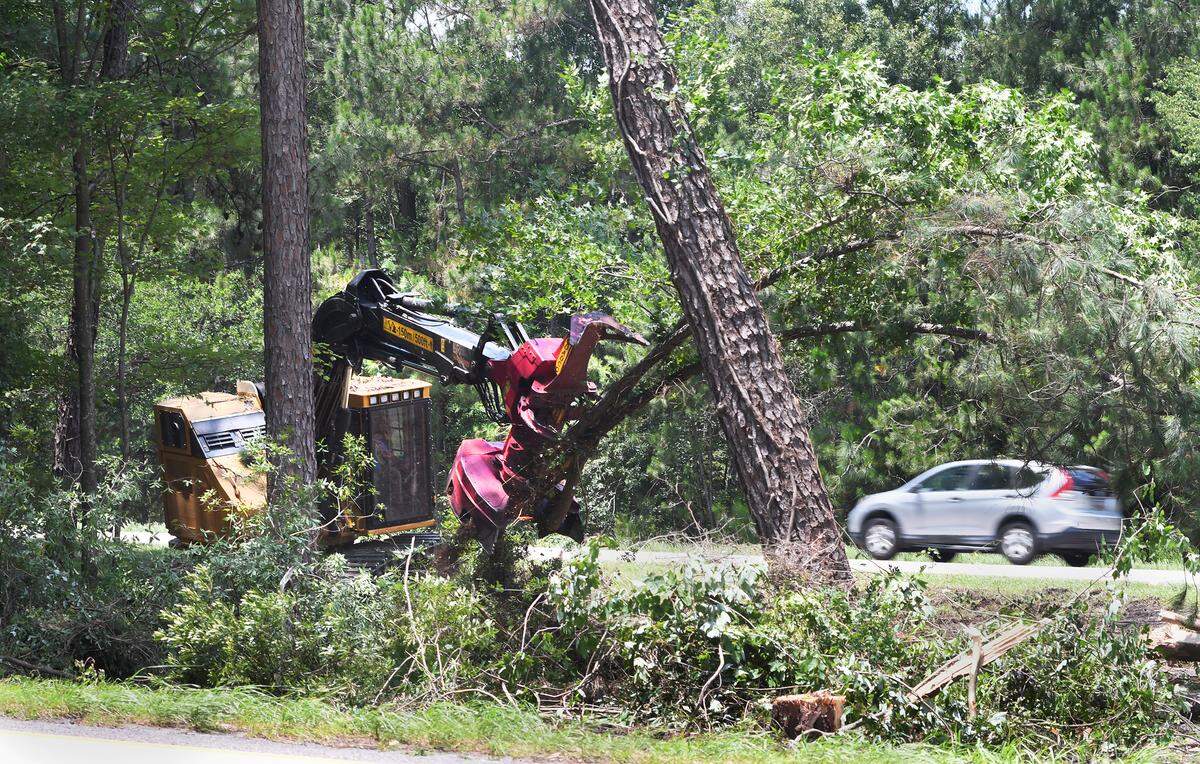
While the DOT’s reaction was swift, the work was not. Clearing did not begin until late 2017, and the project took 19 months to complete, finishing in August 2019, said John Paulus of Civil Engineering and Consulting Services, Inc., the firm contracted to manage the tree removal project. In total, 146 acres of trees were felled and almost 6,700 feet of cable barriers were installed as a part of the highway safety improvements by the transportation department.
Raised domes were also installed outside the edge-line on parts of the roadway. DOT’s final payout on the project was just under $6 million, said Paulus.
The project faced delays due to the use of new surveying technology and the extensive environmental permitting process required because the clearing affected wetlands along I-95.
The improvements bring the section of highway into compliance with state and federal guidelines on roadside hazards which were previously not met, said Paulus.
Almost all sections of Jasper County’s I-95 roadway now have at least a 55-foot clear zone on either side of the highway, giving drivers more time to react if they lose control at high speeds, which can happen under circumstances beyond their control, like a blown tire or medical emergency.
Small portions of the project area have less clearance between trees and the highway due to wetlands along the route, said Paulus.
State Sen. Tom Davis, R-Beaufort, has heard criticism of the tree-clearing at public forums during the past year — usually along the lines of, “Why are we clear-cutting the trees? The trees aren’t jumping out in the road and causing accidents,” he said. Davis said he has no “blanket policy” on clear-cutting and supports it along I-95 in cases where the proximity of trees to the roadway presented a hazard to drivers.
‘Why did they allow so many people to be hurt?’
For some, the safety improvements to I-95 were a long time coming.
Marian Russell Hopson, now a retired high school science teacher from Greenville, had a timeshare on Hilton Head Island. On July 6, 2012, she sat in the back seat of her friend’s Buick, returning from a July 4 girls’ trip to the Lowcountry.

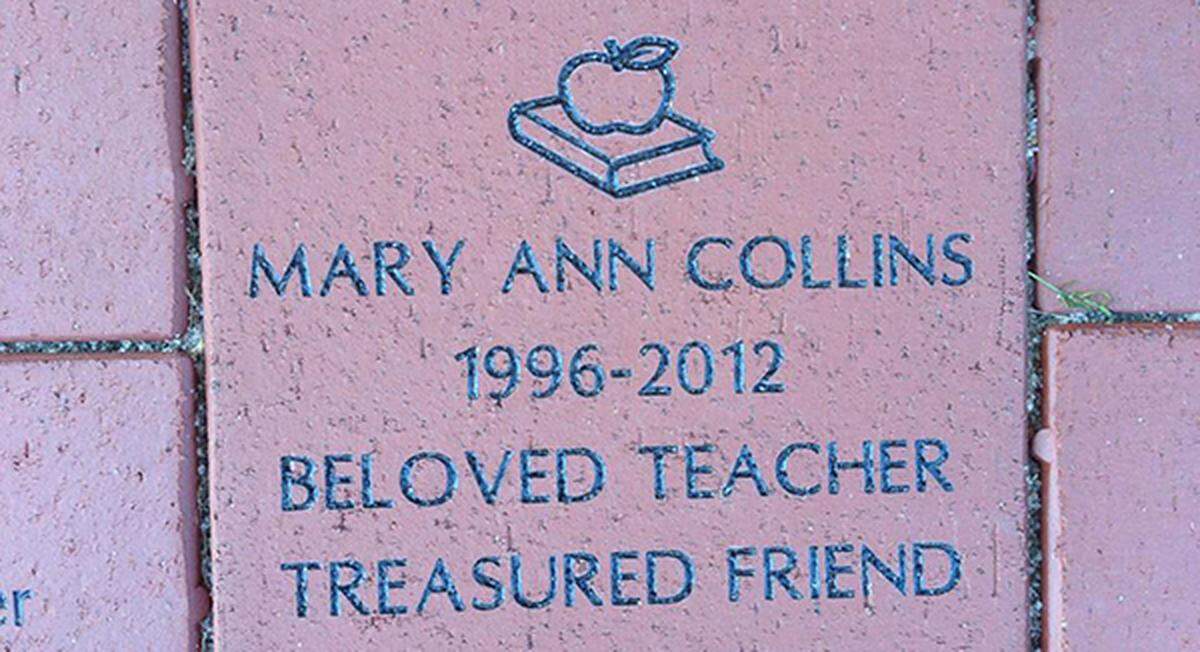
She had spend the week with Mary Ann Collins, her best friend and co-teacher. The two shared a science lab and spent hours together every day. Her last memory from the trip is of walking down the aisles of the Bluffton Piggly Wiggly.
An hour later as the Buick, driven by Collins’ stepmother Frances Brown Dounian, made its way north on I-95, tragedy struck. Dounian swerved to avoid something in the roadway, over-corrected and flew off the highway into the median. In an instant, the car collided with the trees, killing Collins and Dounian.
The next thing Russell Hopson remembers is waking up several days later in a Greenville hospital in extreme pain. Russell Hopson would stay there for six months, finally leaving in a wheel chair and only regaining the ability to walk through hours of physical therapy.
Her knees were crushed, eye socket damaged and right arm shattered. She suffered severe brain trauma from her head smashing into the car’s rear window.
Her teaching career was over. She has since watched from the sidelines as students who once called her their “school mama” graduated college and became teachers themselves.
“What took them so long to get it done?” she wonders about the tree-clearing. And “why did they have to allow so many people to be hurt?”
Russell Hopson has gone through a long process of recovery — and grief. It took years before she could come back to Hilton Head, the memories of meals she shared at local restaurants with Collins still fresh.
“My heart hurts for all those who did suffer and died, as well,” she said.
Early data indicate lives saved
The short section of I-95 in South Carolina north of the Georgia state line has seen at least 170 tree-related collisions since 2015, according to data from DPS. As the tree-clearing progressed, the number of these collisions — along with injuries and deaths they caused — fell.
Although 2019 data is still preliminary, it appears that tree-related collisions did not result in any fatalities last year. The trees had claimed seven lives since January 2015. One pine tree, a few miles north of Walterboro, resulted in two deaths in as many years.
Since January 2015, the number of wrecks involving trees and resulting in injuries has decreased by an average of almost 30% a year from a high of 18 crashes in 2015 to just four recorded in the preliminary 2019 data.
More tree-related deaths occurred along I-95 in Jasper County than in any other county the interstate runs through between 2009 and 2014, according to the 2015 investigation by the newspapers. The trees made the stretch of road the most treacherous.
Local law enforcement, often first on the scene of deadly collisions, felt the reduction in crashes even before receiving year-end traffic collision data from the state. “We’ve had far less calls for crashes,” said Sgt. Jake Higgins with the Jasper County Sheriff’s Office in December.
Hardeeville Chief Woodward said his jurisdiction, 10 miles between mile marker 3 and 13, saw 10 fewer crashes in 2019 compared to 2018. This section of road recorded one fatality last year compared to two the year before. It was not tree-related, said Woodward.
DOT won’t begin to evaluate data from I-95 to measure the effectiveness of the project for several years to ensure figures are representative, according to Pete Poore, the department’s communications director.
Lawsuits avoided
Since the Packett and Gazette first reported on deadly tree-related crashes in early 2015, motorists and their families have filed nine lawsuits against DOT, most alleging negligence in allowing trees to grow too close to the roadway, among other safety issues.
In one suit closed in 2018, a judge approved a $160,000 settlement for the wrongful death of 27-year-old Juventino Gonzalez Reyes of Ridgeland, who died along with 22-year-old Omar Bustamente Juarez after being ejected from a truck that flipped and collided with a tree during a downpour in 2014. The men were on their way home from work.
The suit, filed by Reyes’ brother Florencio, specifically condemned DOT for “the encroachment of large trees that should have been removed due to the risk and danger posed by them to the traveling public.” Reyes’ lawyer, Matthew Creech of Ridgeland, declined to comment. Calls to Cory Fleming, the lawyer who represented the Juarez family in a separate suit, were not returned.
Only one lawsuit mentioning trees was brought against DOT in Jasper County in 2019, two months after the tree-clearing was completed. In it, Jamaal Williams of Florida seeks damages for injury after he lost control of his car, hydro-planed and struck trees near Hardeeville on I-95 in November 2018, according to the suit. Creech is also representing Williams and declined to comment.
Answering the complaint, Peden B. McLeod Jr., a Walterboro attorney for the DOT, wrote that any injuries were caused by Williams’ own negligence and other factors that the department had no control over. Through a secretary, McLeod declined to comment on the suit.
This story was originally published January 17, 2020 at 11:45 AM.