Famed Hilton Head nest that’s drawn in 1M+ viewers has a new visitor that’s a must-see
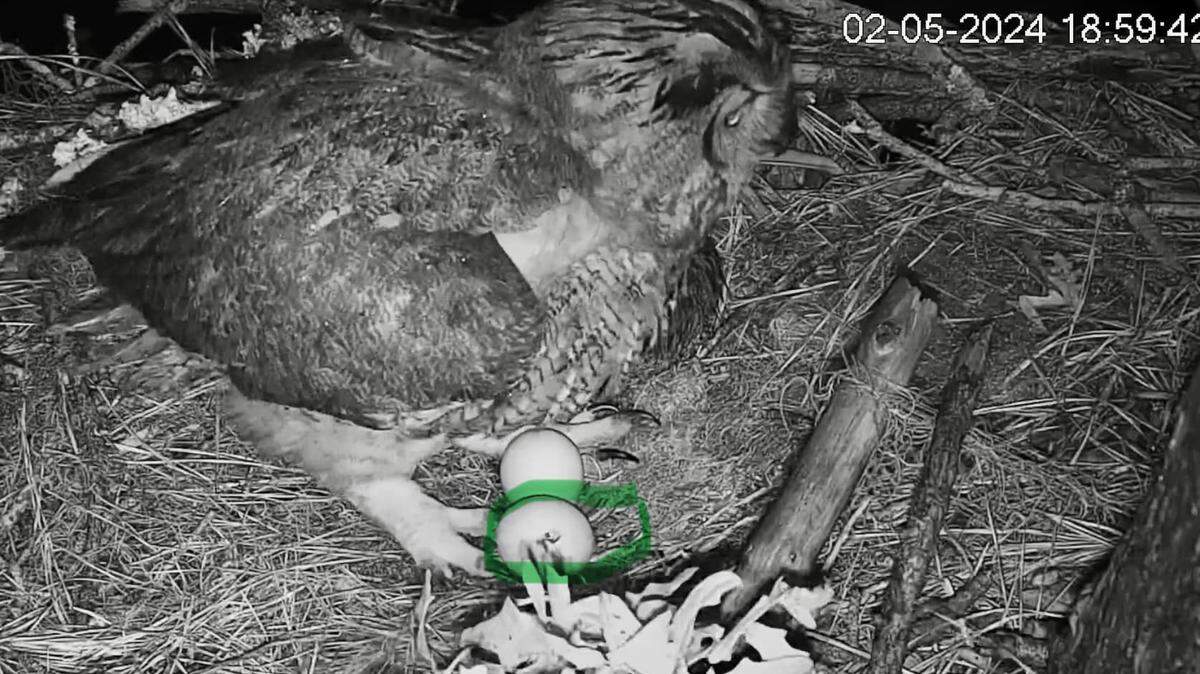
Shortly before dusk fell over Hilton Head Island, a palm-sized egg, in a coveted nest that’s perched high on a pine tree, cracked.
Little by little, hour by hour, new fissures riddled the dull-white sphere. For those who stayed alert, they saw it in real-time from the comfort of their own homes. Fastened near the nest is a Raptor CAM that is monitored by the Hilton Head Island Land Trust. Over the years, it’s drawn in more than 1.3 million views from all over the world. Monday’s affair, via the live stream, wasn’t the one to miss.
By about 10 p.m. Monday, the hatchling emerged from its shell that it’d called home for the past 34 days. And an hour later, the land trust let the world know.
“We have our first owlet!” its Facebook post read. “(The mamma) is seen here eating the spent eggshell to help replace calcium.”
Right behind what the nonprofit is calling HH5, is another egg that’s already in the hatching process, Land Trust Board Member Robin Storey said Tuesday morning. Storey’s hopeful that the arrival of HH6 will be within the next 24 hours.
As the mamma great horned owl continues to protect and feed her babies, the father is on the hunt. Since yesterday, a rat and a bird were dropped in the nest for upcoming feedings.
“We call it the prey pantry,” Storey said, adding that years ago she witnessed a different great horned owl nest stocked with a barred owl and great egret.
But just as these great horned owls hunt down prey, they aren’t without predators. Adult owls are charged with protecting the owlets and once the babies fledge, and pass between nine and 12 months, their survival rate increases.
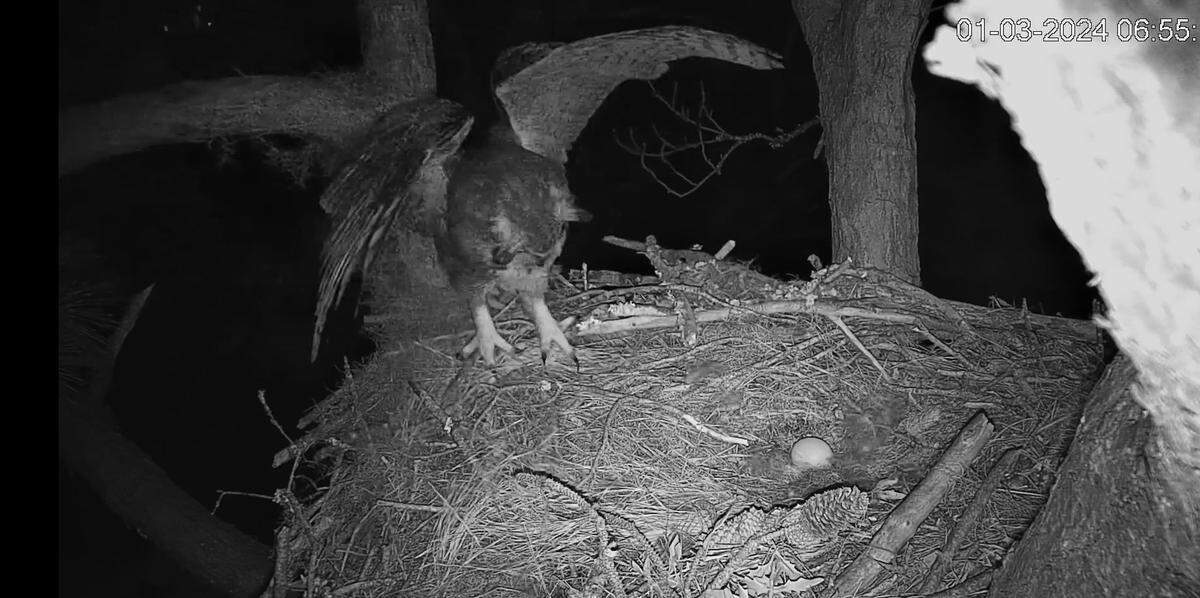
At about five weeks, the young owls may be able to leave the nest or perch on branches close by, according to Audubon. After nine or 10 weeks, the babies can take flight. But mom and dad are nearby and for many months will supply their rapidly growing owlets with food — everything from rats to other birds and snakes.
While the owlets bulk up and learn the ropes, they will grow at about 4-8 grams an hour and at a rate of 1-inch per week beginning from the time they hatch and continuing as juveniles to adults, the land trust said. Their fast growth, however, is dependent on good health and enough food-intake.
Once full-grown, great horned owls’ inborn anatomy makes them exceptional hunters — with their sharp eyesight, strong hearing and the ability to soar up to 40 mph in near-silence, the land trust said.
The soon-to-be two owlets are the Raptor CAM nest’s newest baby birds since acclaimed eagles, Harriet and Mitch, welcomed two eaglets in December 2021. The babies tragically fell from the nest due to avian flu, and the parents haven’t been spotted back at the site since September 2022.
About three years have passed since Harriet and Mitch’s initial reign and stop-ins from other birds, for the great horned owls to settle on the famed Hilton Head nest. And soon, it’ll be home to a family of four.
Storey said Tuesday that the land trust will soon announce the names of the adult great horned owls. To watch the owl parents, owlet and soon-to-hatch egg, go to https://www.hhilandtrust.org/eagle-cam
This story was originally published February 6, 2024 at 9:56 AM.