Advocates say ‘we have to act now’ for increased protection of rare baby whales
Nearly a month after reports of vessel-strike injuries to a North Atlantic right whale calf, the latest update reinforces advocates’ push to strengthen a federal law that they say would help protect the critically endangered species.
The National Oceanic and Atmospheric Administration said its preliminary assessment estimates the vessel responsible for the calf’s injuries was “likely between 35–57 feet in length.” The finding would mean that federal speed-reduction regulations would not apply to a vessel that size.
Critics say the current law, stipulating that all vessels 65 feet or greater must travel at 10 knots or less between Nov. 1 and April 30 in “Seasonal Management Areas,” isn’t enough to protect right whales. NOAA’s 2022 proposed changes would apply speed restrictions to all vessels 35 feet and greater.
The injured calf is the latest example of the harsh reality the species’ face.
Pregnant right whales travel down to waters off the East Coast to give birth in the winter. The pairs then swim back up to the Northeast for feeding grounds. During their journey, the mammals are met with considerable challenges. Part of the journey weaves through heavily industrialized waters with busy shipping lanes, and commercial pot/trap lobster and snow crab fisheries.
Boat strikes and entanglement are the leading cause for the rapidly decreasing North Atlantic right whale population, research shows.
With an estimated 356 North Atlantic right whales remaining, advocates say there is no time to wait. Amending speed restrictions is one way to protect the species.
“This population is on the precipice of extinction,” said Sarah Sharp, an animal rescue veterinarian with the International Fund for Animal Welfare. “We cannot wait seven years. We cannot wait three years. We cannot wait one year. We have to act now.”
Smaller vessels to blame
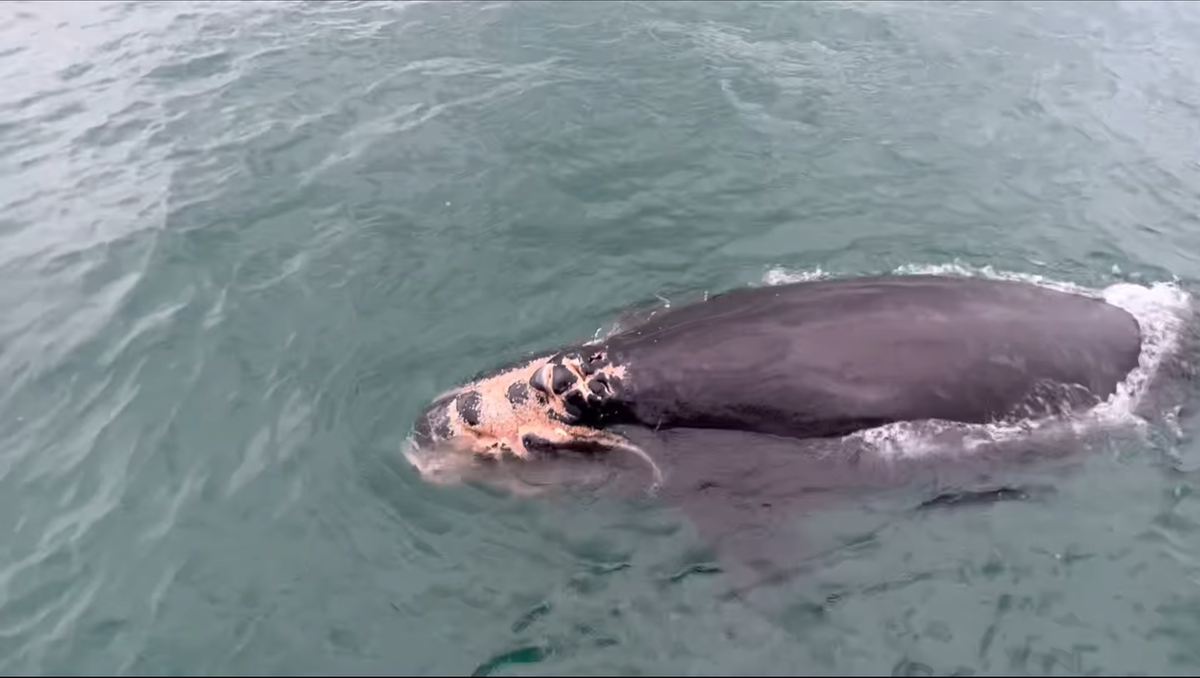
Between Dec. 9 and Jan. 3, a calf of the first mother-baby right whale pair spotted of the season was struck by a vessel in the Atlantic off the coast of Edisto, South Carolina. They were last spotted by researchers Jan. 11, near Amelia Island, Florida.
Videos of the calf of mama “Juno” on Jan. 3 showed propeller wounds on the calf’s head, mouth and left lip. The gashes the calf sustained are problematic because they may affect the whale’s ability to successfully nurse, NOAA Fisheries biologists said.
On Jan. 10, Sharp told the Island Packet and Beaufort Gazette that the calf’s injuries appeared to have come from a vessel with a smaller propeller, not one of a ship.
“We’ve seen plenty of animals that are hit by very large vessels and this is not what this looks like,” Sharp said. “A lot of these animals, especially the calves that have died recently, have shown it was actually due to smaller vessels.”
While NOAA and advocates work to strengthen the speed-reduction law, research shows that many boaters flout current regulations. The law has designated spots — Seasonal Management Areas — off the coasts of northeast Florida, Georgia, South Carolina and North Carolina where speed restrictions apply.
Charleston and Savannah harbors, included in the Seasonal Management Areas, have compliance rates “consistently below 5%,” according to marinewhale.com.
NOAA is asking anyone with information regarding the calf’s injuries and additional sightings to contact 877-WHALE-HELP (877-942-5343). The agency urged to report any sighting of right whales or any dead, injured, or entangled whales. If safe, and from the legally required 500-yard distance. Take photos or video and note the GPS coordinates to share with biologists.
This story was originally published February 1, 2024 at 12:50 PM.