This isn’t ancient Egypt, it’s Hilton Head’s Sea Pines. Mummified dolphin found on beach
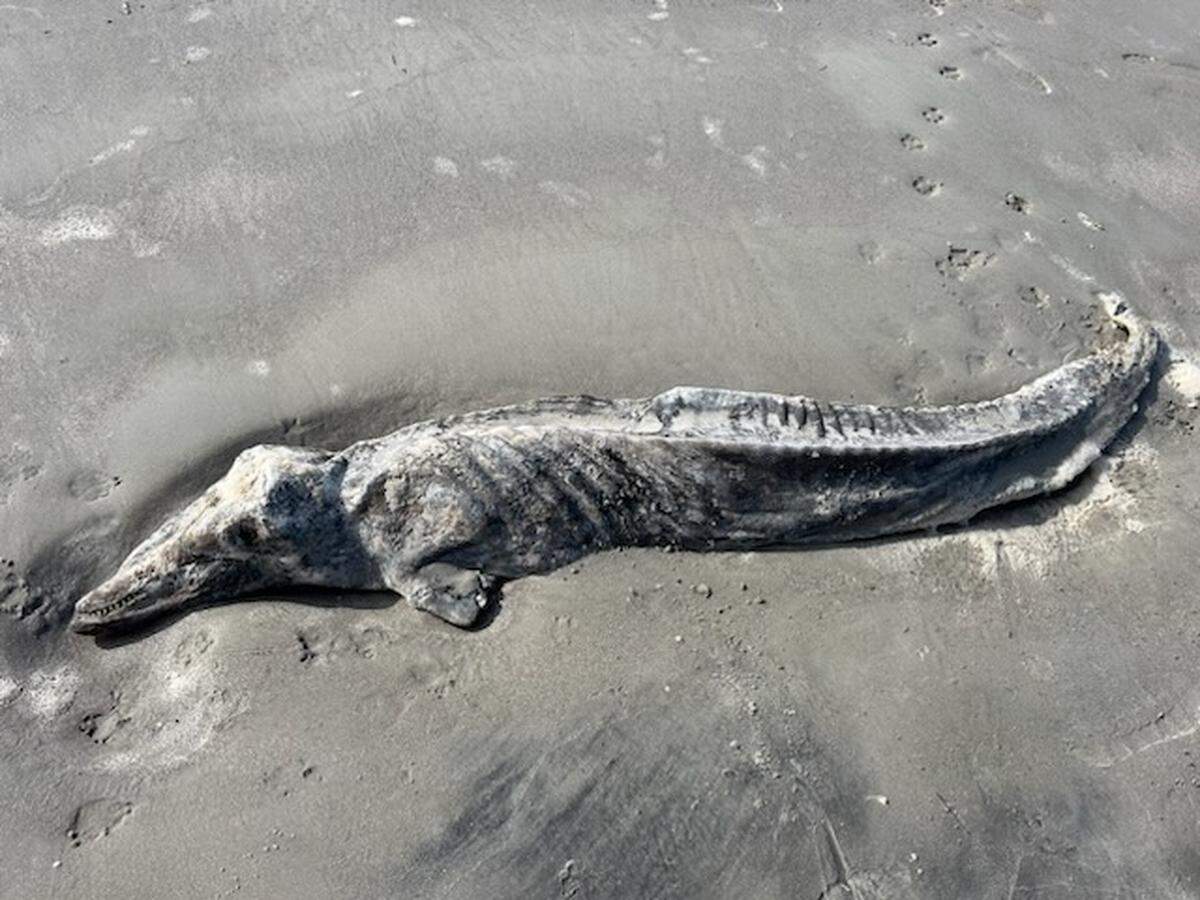
A mummified Bottlenose dolphin washed up on Hilton Head Island’s Sea Pines beach Sunday.
It’s not the type of mummification that comes to mind when thinking about ancient Egyptian pharaohs, but a classification used by the Lowcountry Marine Mammal Network to classify the dolphin as dried out by the sun. It’s one piece of information the network collects to compile data on dolphins and South Carolina’s coast.
“I wouldn’t say it’s hundreds of years old or anything,” Lowcountry Marine Mammal Network Founder and Executive Director Lauren Rust said. It’s more likely the dolphin washed up on a remote beach and sat in the sun for a couple of months before the ocean carried it to Sea Pines, especially because it’s uncommon for a body to go unnoticed on a frequently-visted beach. Rust said there is a possibility that the body was buried and resurfaced, in which case it could be anywhere up to ten years old. Members of the network buried the dolphin on site.
Rust said they see about 50-60 dolphins wash up per year in all of Coastal South Carolina and about 10-15 per year on Hilton Head Island.
If a beach-goer finds a dolphin, Rust encourages them to call the network, which has the authority to handle marine mammals. Once it’s called, the network will rank washed-up dolphins on a scale from one to five. One means that the dolphin is alive, and five means the dolphin is mummified. This eight-foot-long adult dolphin was definitely a five, Rust said.
“It was very, very leathery and hard,” she said. Its organs were missing, meaning that they couldn’t determine its sex and couldn’t tell how it died. If the body is fresher, they’ll perform an autopsy, open up the stomach and conduct a toxicology report. Last month, a Bottlenose dolphin was found dead in Port Royal and the network determined it probably died from a fish getting lodged in its airway.
Rust said common causes are pneumonia, parasites, old age and human impacts such as boat hits. The network has a researcher who examines microplastics in the gastrointestinal tract and “looks for little, bitty, plastics.” They’ll also track dolphins when they’re alive and catalog their deaths.
“The fresher the animal gets, we can collect a lot more data,” Rust said.
To report a stranded marine mammal, whether it’s dead or alive, call the Lowcountry Marine Mammal Network’s stranding hotline at 843-410-7990 or South Carolina Department of Natural Resources’ stranding hotline at 800-922-5431.
This story was originally published January 19, 2024 at 5:00 AM.