Untamed Lowcountry

Move over flamingo. SC has its own big, beautiful pink bird. Here’s what to know

Have you ever been driving through the Lowcountry and something pink caught your eye?

If it flew away, it could’ve been a roseate spoonbill.

Although they look similar to the more commonly known flamingo, they are quite different.
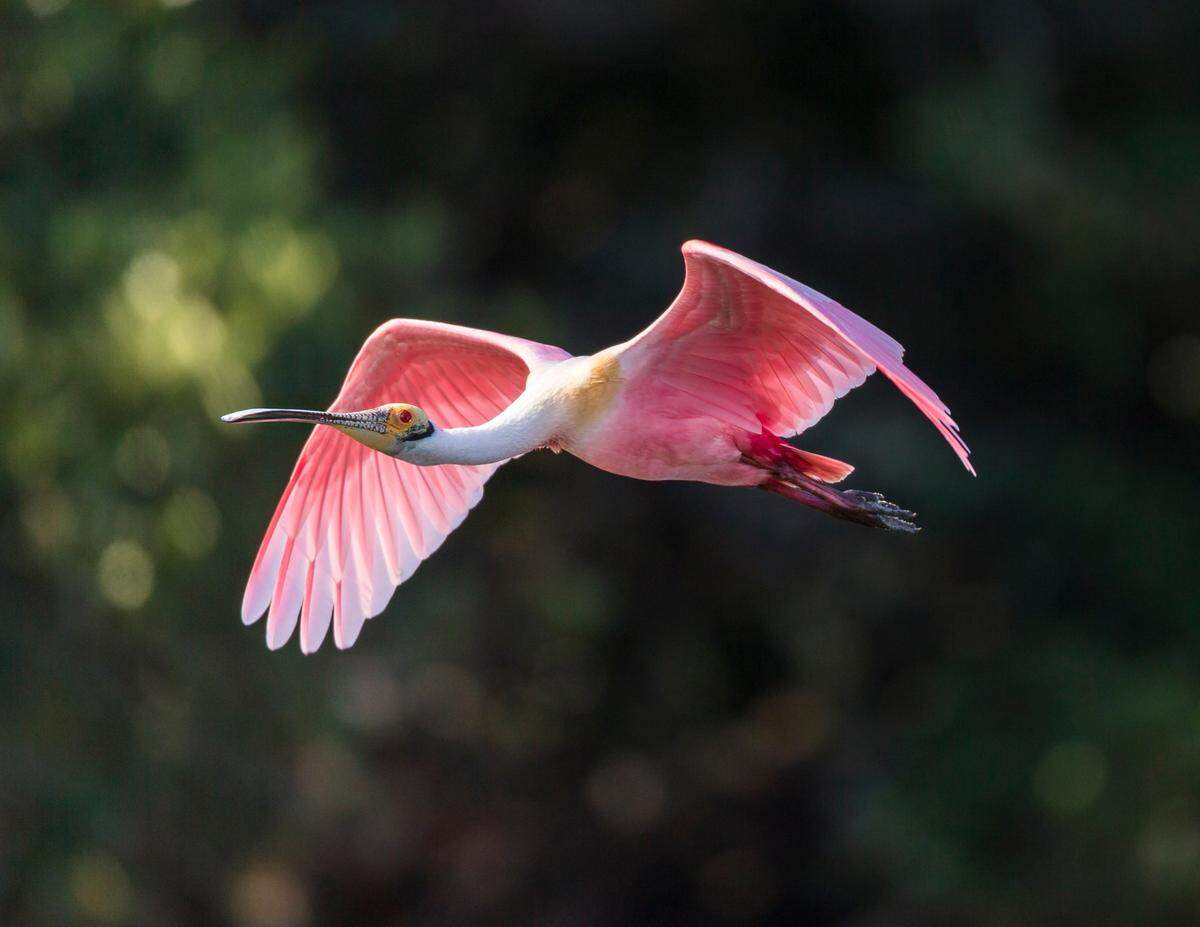
Roseate Spoonbill
Roseate Spoonbill Mary Lundberg/Audubon Photograph

What are they?

Roseate spoonbills are pale pink birds with bright pink shoulders and wings with white necks and a partially feathered, yellowed head with red eyes. They generally stand out from their surroundings due to their vivid coloration in contrast to that of the local flora.

They are wading birds with a spoon-shaped bill, from where the get their name.
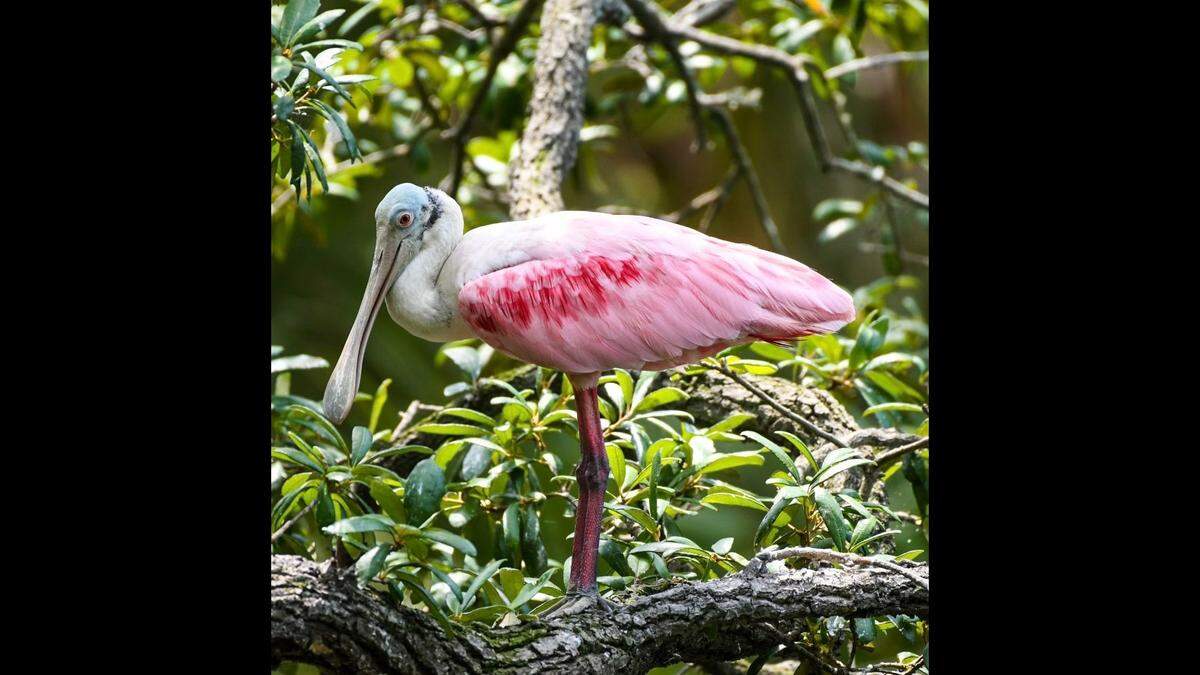
Jenn Clementoni recently took this photo of a roseate spoonbill at Cypress Wetlands and Rookery in Port Royal. 
Jenn Clementoni recently took this photo of a roseate spoonbill at Cypress Wetlands and Rookery in Port Royal.  Submitted

What do they eat?

“Roseate Spoonbills wade through shallow water swinging their heads side to side with their bill under the water feeling for prey,” details All About Birds.

These birds prey mostly on small fish such as minnows and killifish as well as shrimp, crayfish, crabs, aquatic insects, mollusks and slugs; although, they will also dine on plant material, including roots and stems of sedges, according to the National Audubon Society.

A Roseate Spoonbill wades around Mullet Pond at Huntington Beach State Park, searching for food.  The birds, which feed in both fresh- and saltwater settings, use their large spoon-shaped bills to sweep the water, snapping closed when they feel the small fish, insects, snails or shrimp that make up their diet.
A Roseate Spoonbill wades around Mullet Pond at Huntington Beach State Park, searching for food. The birds, which feed in both fresh- and saltwater settings, use their large spoon-shaped bills to sweep the water, snapping closed when they feel the small fish, insects, snails or shrimp that make up their diet. Charles Slate cslate@thesunnews.com

Where do they live?

Roseate spoonbills can be found among shallow waters in a number of places along the South Carolina coast.

These wading birds prefer to live in nearby marshes, lagoons, mangroves and mudflats and can generally be seen among groups of other birds, including ibis and egrets.

A roseate spoonbill was sighted at Huntington Beach State Park on June 20.
A roseate spoonbill was sighted at Huntington Beach State Park on June 20. Gary Phillips For The Sun News

How do they differ from flamingos?

Roseate spoonbills and American flamingos can be differentiated by their black flight feathers, longer necks, curved versus spooned bills and their legs.

Pink like a flamingo with a beak like a platypus, roseate spoonbills are awesome to watch.
Pink like a flamingo with a beak like a platypus, roseate spoonbills are awesome to watch. Collins Doughtie Submitted

Fun Facts

  • The roseate spoonbill found in South Carolina is one of six species of spoonbills in the world and is the only one found in North America.
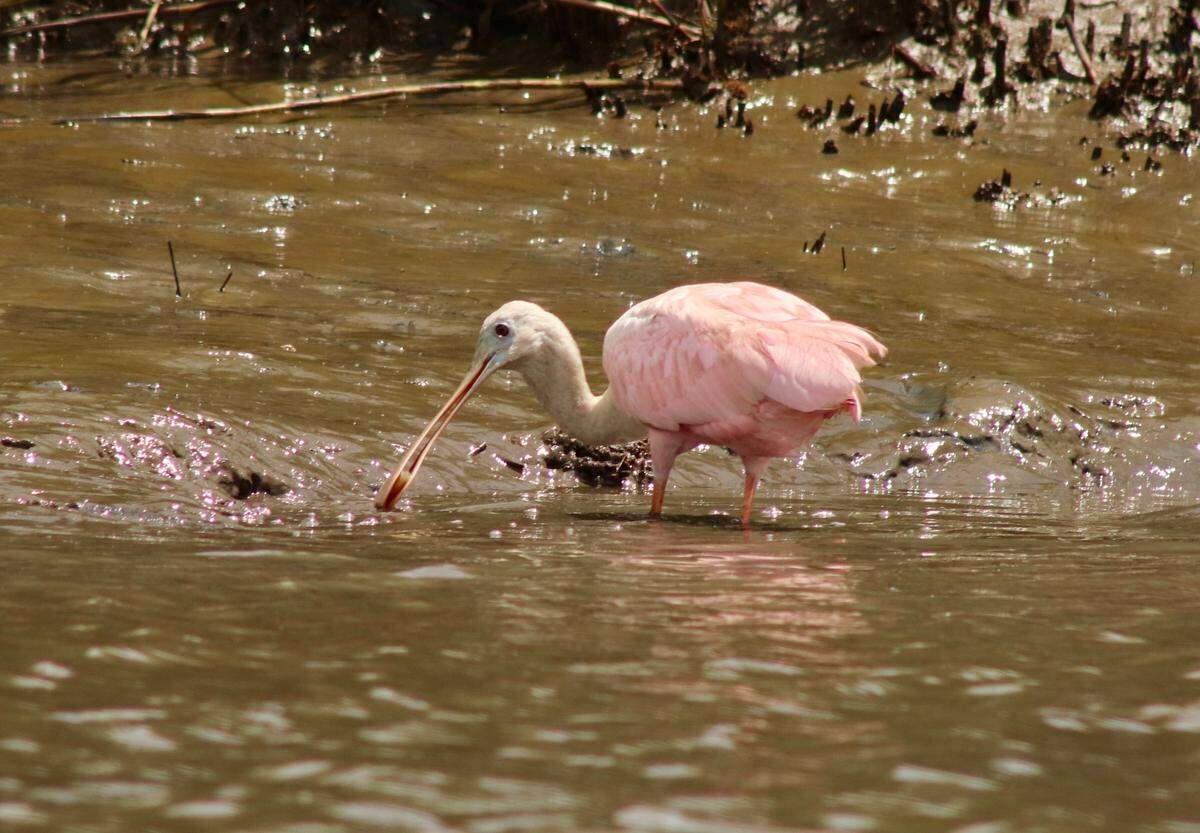
Shrimp dinner! A roseate spoonbill snaps up a Lowcountry treat in the shallows off Williman Island in the St Helena Sound Heritage Preserve.
Shrimp dinner! A roseate spoonbill snaps up a Lowcountry treat in the shallows off Williman Island in the St Helena Sound Heritage Preserve. Matt Richardson
  • The oldest recorded of its species was at least 15 years, 10 months old when it was recaptured and rereleased during a scientific study in Florida in 2006, according to All About Birds.

  • Both parents will feed their young, who may leave the nest after approximately 5-6 weeks and are capable of strong flight at around 7-8 weeks of age.
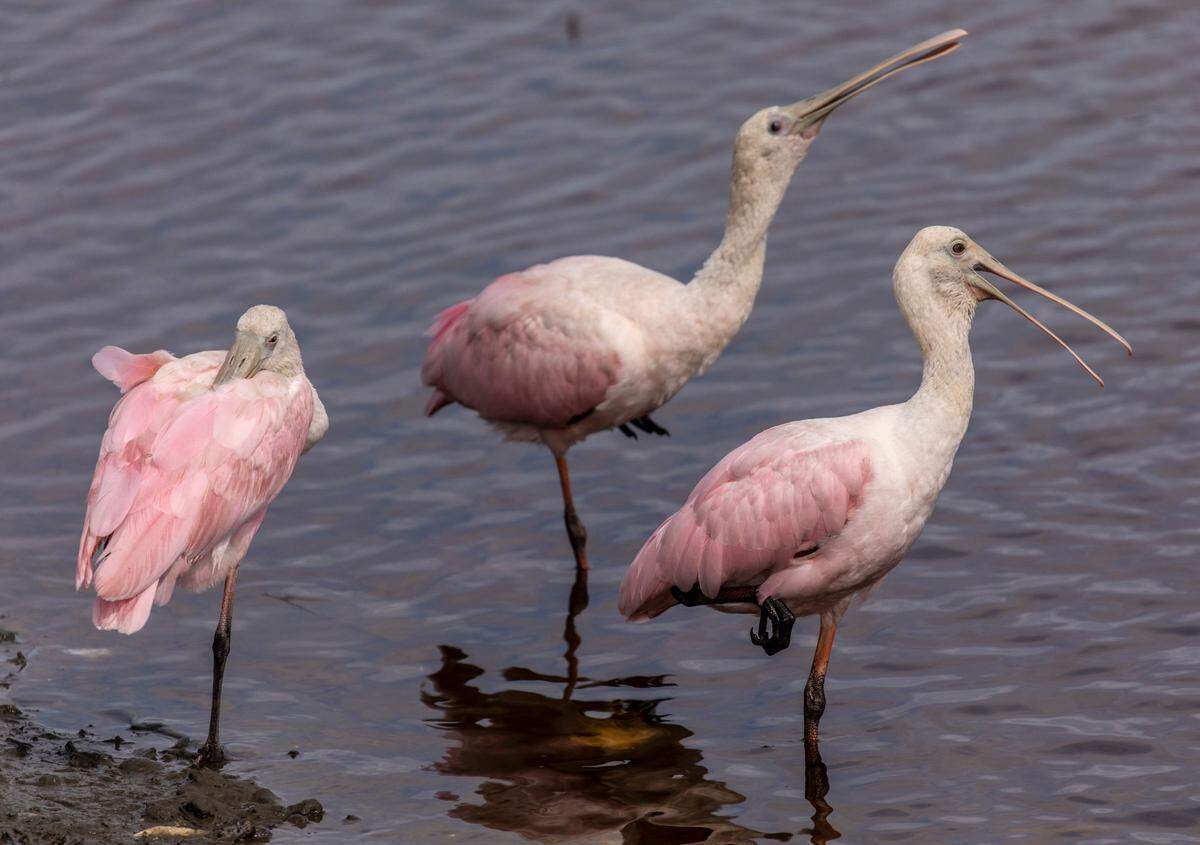
Roseate Spoonbills draw a crowd of bird watchers to Huntington Beach State Park in Murrells Inlet.September 23, 2020.
Roseate Spoonbills draw a crowd of bird watchers to Huntington Beach State Park in Murrells Inlet.September 23, 2020. JASON LEE
Sarah Claire McDonald
The Island Packet
Sarah Claire McDonald worked as a Service Journalism Reporter for The Island Packet and Beaufort Gazette. She specialized in writing audience-focused, unique, spotlight stories about people, places and occurrences in the Lowcountry. Originally from the Midwest, Sarah Claire studied news media, communications and English at the University of Alabama in Tuscaloosa, where she graduated in 2021.
Get unlimited digital access
#ReadLocal

Try 1 month for $1

CLAIM OFFER