‘Hoo goes there?’ Famous Hilton Head eagles’ nest is claimed by a new pair of residents
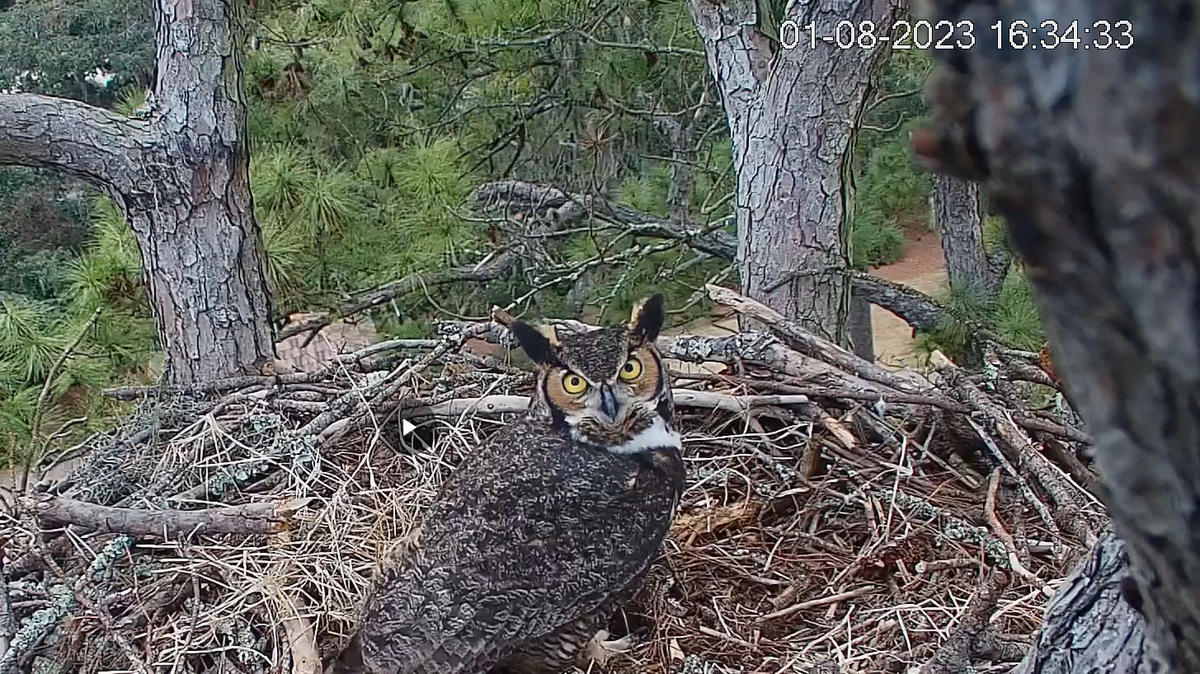
Birdwatchers on Hilton Head and across the globe were sad to learn that the beloved bald eagle duo, Harriet and Mitch, abandoned their nest late last year, months after the death of two eaglets. While the eagles haven’t been seen since around November, a new couple of squatters has conservationists excited.
A pair of great horned owls was first spotted in the nest from late November to early December, said George Banino, president of Hilton Head Island Land Trust. The birds have returned consistently since then, and Banino said he expects the owls will soon lay eggs, at which point the mother would be in the nest “almost continuously.”
The Eagle CAM — which has drawn over 1 million viewers — has been renamed the Raptor CAM, and anyone can tune in throughout the day to see a live feed of the nest with audio. Banino said the owls are mostly sighted in the evenings, from around 4:30 to 6:30 p.m., and throughout the night.
To see the owls live, go to https://www.hhilandtrust.org/eagle-cam
It’s unknown why the eagles abandoned the nest or where they moved to.
“Typically, eagles mate for life and come back to the same nest year after year. Whether or not they reacted to the fact that the two young eagles died last year, I don’t know, you’d have to ask the eagles,” Banino said. “They came back and kind of looked over the nest, but ultimately they abandoned it.”
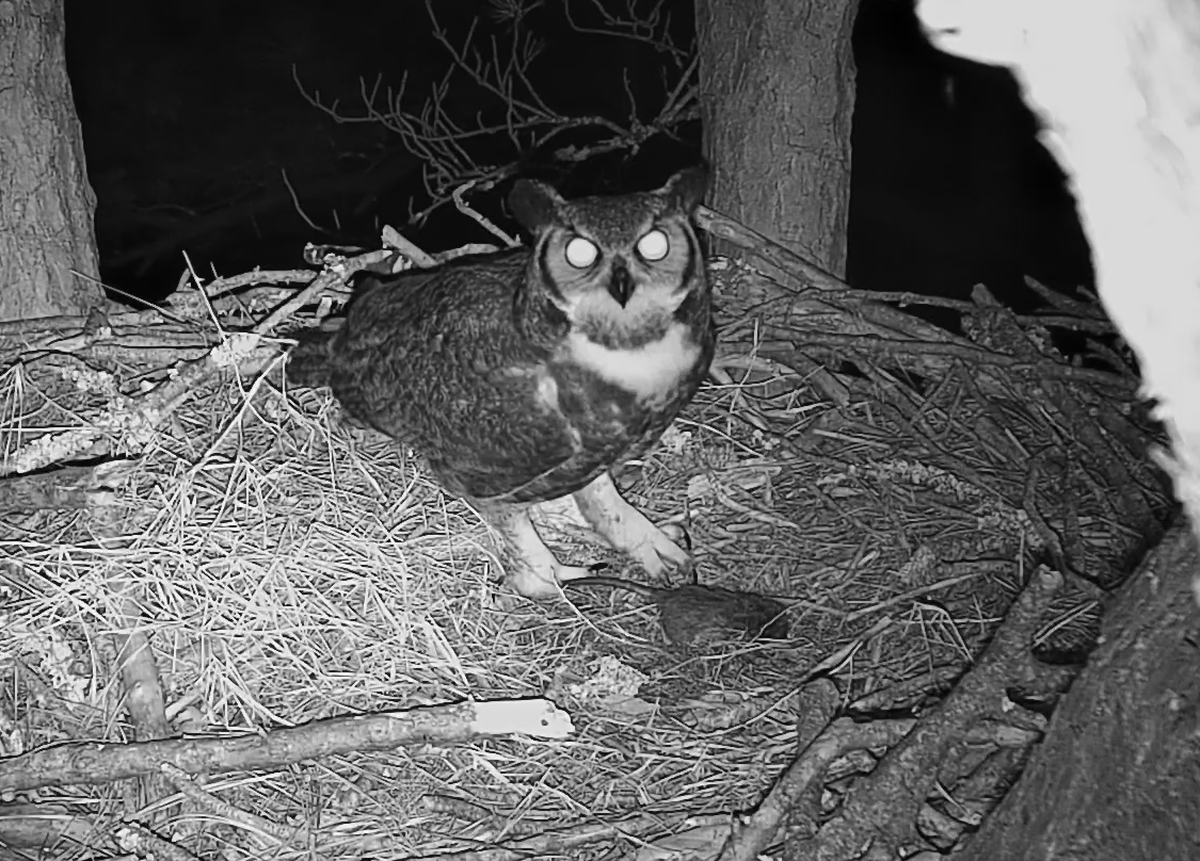
Taking an existing nest rather than building their own isn’t unusual behavior for the new birds, Banino said.
“Typically, great horned owls will take over an existing nest, particularly an abandoned nest. Or sometimes if they can find a large enough hole in a tree, they’ll take over that,” Banino said. “This is a pretty common behavior on the part of these particular birds.”
After claiming a nest or tree hollow, great horned owls add few materials of their own, but will sometimes bolster the nest with their own feathers, or fur and feathers from prey.
In the Lowcountry, great horned owls often lay eggs from December to January, according to information from the land trust, with clutches containing up to four eggs. One egg will be usually laid every two days, but a period of up to a week can separate layings.
Once owlets are hatched, viewers may see them leave the nest to climb nearby branches at 5 weeks old and take flight at around 9 to 10 weeks, according to the land trust.
This story was originally published January 13, 2023 at 9:00 AM.