Pluff mud in the SC Lowcountry can be dangerous. Here are 5 things you need to know
Ever gotten stuck in some suspicious-looking sand at a Lowcountry beach before? Chances are, it probably wasn’t just sand.
Unique to the Lowcountry, pluff mud is commonly found along salt marshes and occasional beaches.
If you’ve ever been to Fish Haul Beach on Hilton Head Island, there’s a good chance you’ve come across it, and it can be dangerous.
What is pluff mud?
Pluff mud, also known as “plough mud,” is a dark to light brown, gooey, soft mud and can sometimes be clay-like in appearance and consistency. It’s composed primarily of decaying matter creating a miasma which lines the coast and comprises the floors of Lowcountry salt marshes.
The entirety of our Lowcountry salt marshes’ ecosystem is built off of pluff mud.
Salt marshes occur along a majority of the Southeastern coast. There, the twice-daily tides routinely flood and drain vast low-lying areas just inland from the ocean. In total, South Carolina has about a half-million acres of salt marsh. This is more marshland than any other state along the Atlantic coast, according to the South Carolina Department of Natural Resources.
.JPG "Capers Island (4).JPG")
Why is pluff mud important?
Considered to be a foundational element for the local salt marshes, pluff mud is what the island is built on, and it is one of the features that makes Hilton Head a barrier island. It has the ability to absorb the energy of ocean-bred storms like a sponge and helps control coastal flooding, according to Outside Hilton Head.
Why does pluff mud smell so bad?
This “mud” is primarily made-up of decaying Spartina grass and other marsh grasses in addition to decomposing animals and other organisms brought in from the ocean and low-lying areas. This is what creates the smell that many visitors, unfamiliar with pluff mud, call putrid or comparable to rotten eggs, while many locals have grown accustomed to the smell and even find it comforting.
Many beginnings and endings of life cycles take place in the salt marsh for the small, and some not so small, animals that call it home.
Why is it dangerous?
Pluff mud isn’t itself inherently dangerous, but if someone wades into it too deeply or gets stuck without proper knowledge of how to get out, they may be in serious trouble.
For this reason, pluff mud can be quite dangerous for unsuspecting or curious visitors. Your feet can very quickly sink into the mud. Pluff mud, in how it acts in theory, is closely related to quicksand. Struggling to release yourself from the rapidly sinking hole will only make you sink faster.
Because of this risk, safety and rescue personnel use special shoes, which work similarly to snow shoes, allowing them to safely rescue anyone who may have gotten themselves stuck.
If walking out into pluff mud is absolutely necessary, make sure to wear thick-soled shoes that can be strapped to your feet. Unless tightly laced, the mud will quickly steal any shoes that are not well-fastened.
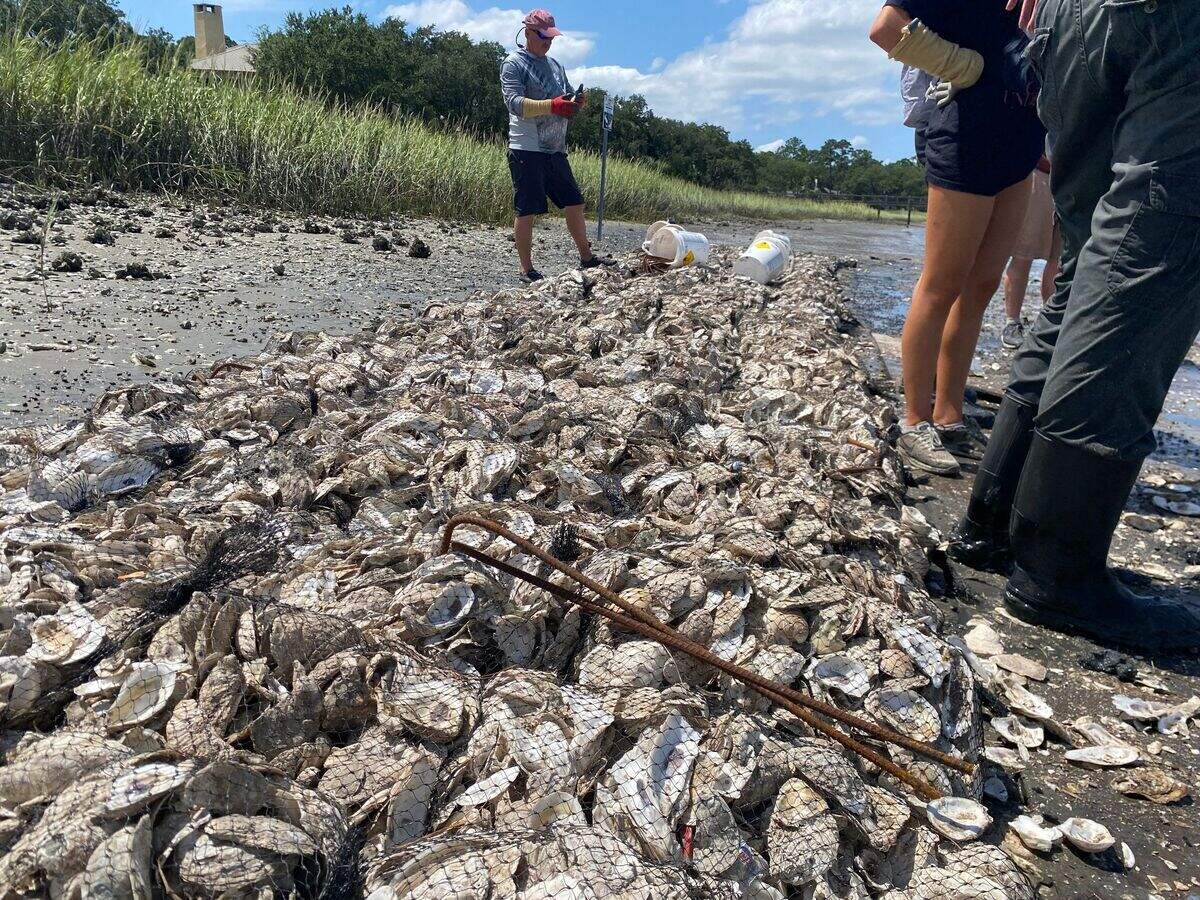
Oyster shells, lining the coast and seen vastly throughout local marshes, can be hidden, buried under the pluff mud. Stepping on these has the ability to slice through commonly worn shoes such as flip flops, so wearing shoes with more protection is essential. Stepping on oysters barefoot have sent many visitors and locals to nearby hospitals with serious injuries.
In addition to wearing the proper shoes, it is also a good idea to never venture near pluff mud without a partner present or without having a way to contact someone in case of an emergency.
How to get out of pluff mud
If you happen to find yourself a little more than foot-deep in pluff mud, precautionary steps should be taken to avoid a serious outcome.
- Try to disperse your weight, using yourself or nearby objects, as much as you can.
- If your foot or leg are stuck, do not yank. This will make you sink deeper and more quickly. Instead, wiggle and pull your foot back-and-forth a few times to loosen the surrounding mud.
- Try not to stand in one spot, especially for too long. The more stationary you are, the more likely you are to get stuck and the deeper you’ll sink.
When visiting beaches on Hilton Head Island, especially those that face Port Royal sound along the north end in areas such as Fish Haul beach, or other areas which face Broad Creek or Calibogue Sound, avoid areas where the dark-brown or clay-like mud is visible along the marsh grasses or edges of shorelines. Avoiding these areas is the best way to stay safe from potentially sinking into pluff mud.
This story was originally published May 11, 2022 at 5:00 AM.