
Mallards may be America’s most familiar ducks — but the males don’t actually quack
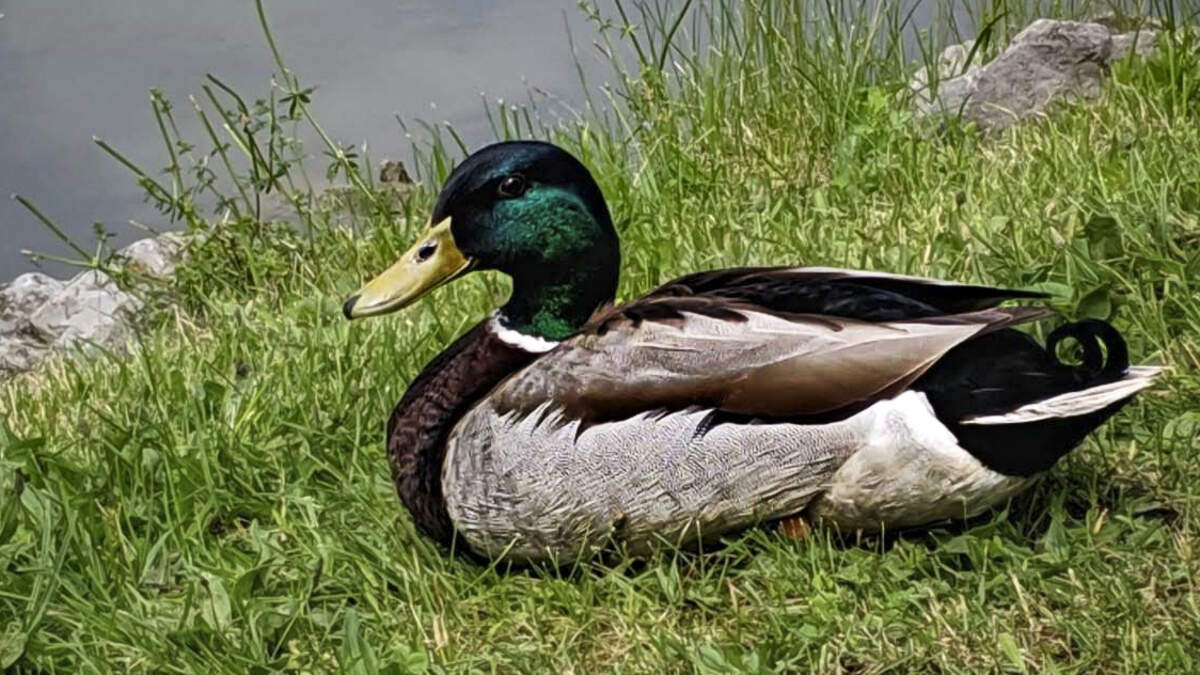
Mallards are arguably the quintessential ducks, familiar to most of us and found seemingly everywhere.
They’re common at freshwater habitats around much of the world, from ponds, lakes, rivers, and marshes to suburban duck ponds, city parks and zoos. Mallards are year-round residents in South Carolina, along with temporary migrants arriving each winter.
Males are easy to recognize by their iridescent green heads, yellow bills and thin white neck collars. Females are brown overall, though both sexes have a pair of blue wing patches with white borders.
Both sexes spend much of their time serenely cruising and floating, tipping forward now and then to graze on aquatic vegetation. For this reason, they’re called “puddle ducks” or “dabbling ducks” since they feed mainly near the water surface, rather than by diving.
Although most of their diet is plant material, Mallards also eat small frogs, fish, tadpoles and other aquatic animals. Sometimes they take to the land, wandering over farm fields to forage for grains, acorns, and insects and worms.
Pairs form in the fall and winter. The female builds a shallow nest, usually on the ground near water, made from grasses, cattails and other plants. Only the female incubates the eggs. Within a day after hatching, the ducklings enter the water and start feeding on their own under the watchful protection of the female, It can be as long as two months before they’re ready to fly.
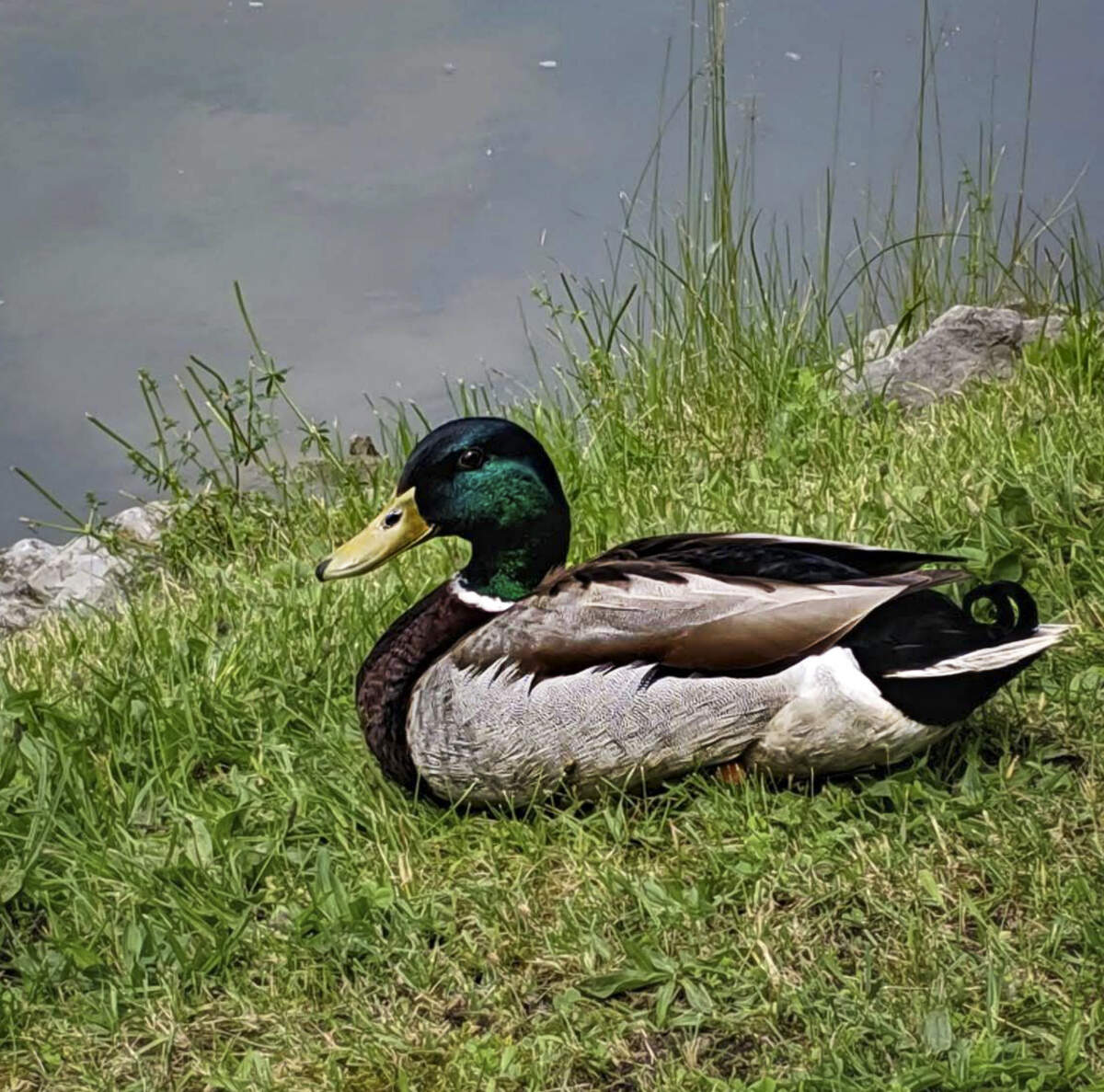
Mallard vocalizations include the stereotypical “quack, quack” – a sound familiar to children and adults everywhere – though it’s actually just the females that make this sound. Males do not quack, though they have other vocalizations, including quieter rasping or rattling sounds.
Although Mallards are the most heavily hunted ducks in North America, they’re also the most widely distributed and abundant. Nevertheless, like many other waterfowl, they face ongoing threats from habitat destruction, pesticides and oil spills.
Aside from humans, their many predators include foxes, coyotes, skunks, raccoons and crows. Adults typically don’t live for more than several years.
In captivity, though, and sometimes in nature, some lucky ducks survive much longer. The oldest Mallard on record reached the venerable age of over 27 years.