Get lost in the primitive beauty of SC’s Cathedral Bay and Ditch Pond Heritage preserves
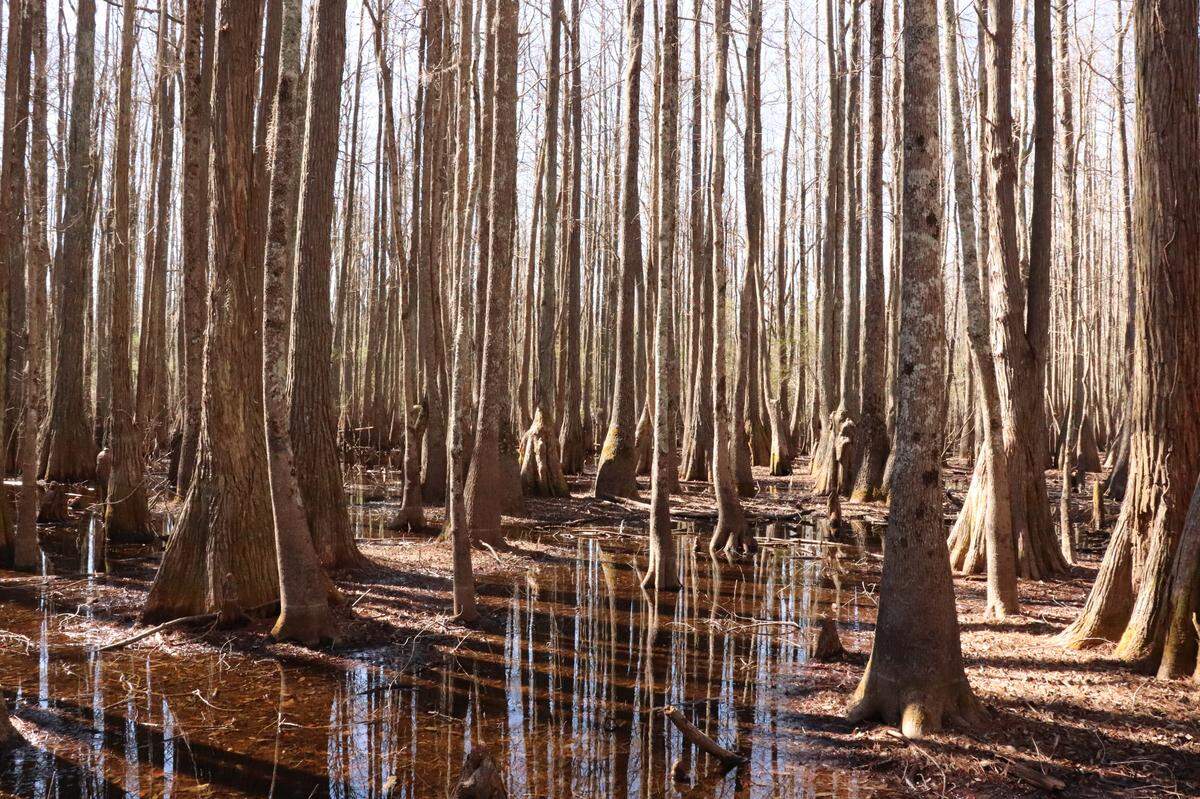
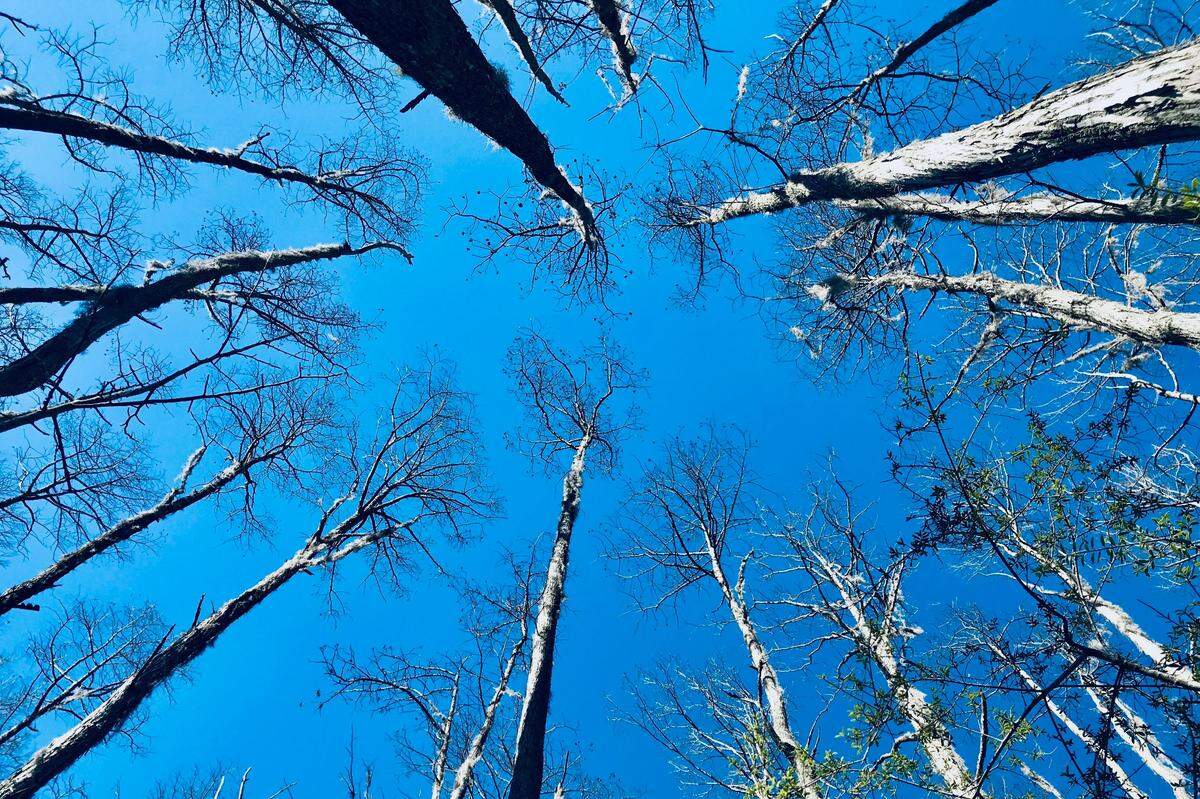
There is a cathedral in our state that is made entirely of water, wood, and light. A dome of blue sky forms its ceiling and mighty buttresses of cypress firmly anchor it to the sandy ground. Quiet, shallow waters form its floor, swirled by gentle breeze or small creatures while a choir of birds fills the air in between.
Where is this magical, beautiful place?
It is a remnant of the past known as Cathedral Bay Heritage Preserve. A Carolina bay is a natural wonder generally formed of cypress swamp, black water and unique wildlife. Carolina bays are elliptical shaped swamps that dot the Lowcountry and the sandy coastal plain of the eastern seaboard. Some ranging from a mere few acres in diameter, while others encompass large areas. These natural depressions in the earth are often filled with water, forming shallow ponds or lakes filled with rain or groundwater.
But where do they come from? Researchers have concluded that they may have formed some 30,000 or even 100,000 years ago. But how? Ancient ocean currents? Meteoric impact? Winds blowing over a vast sea of coastal dunes? No one knows. When viewed from the air, the bays can be startling in appearance, for they are always arranged along a northwest-southeast axis — strange ovals dotting the coastal countryside in an unmistakable pattern. This odd configuration only adds to the mystery and sense of wonder when contemplating them.
In recent centuries many of these wonders have been drained for farmland, used as bombing ranges or even filled in — but their allure remains and Cathedral Bay Heritage Preserve is a welcome place to discover this unique environment.
Located just outside the small town of Olar, South Carolina, at the intersection of S.C. 64 and U.S. 301, Cathedral Bay Heritage Preserve appears as an unassuming patch of swamp alongside a busy country highway. A green sign reveals it to be a heritage preserve and a small grassy turnout provides the only parking. Cathedral Bay Heritage Preserve is a swampy oasis, bordered by flat, busily cultivated farmland, and it beckons you to visit.
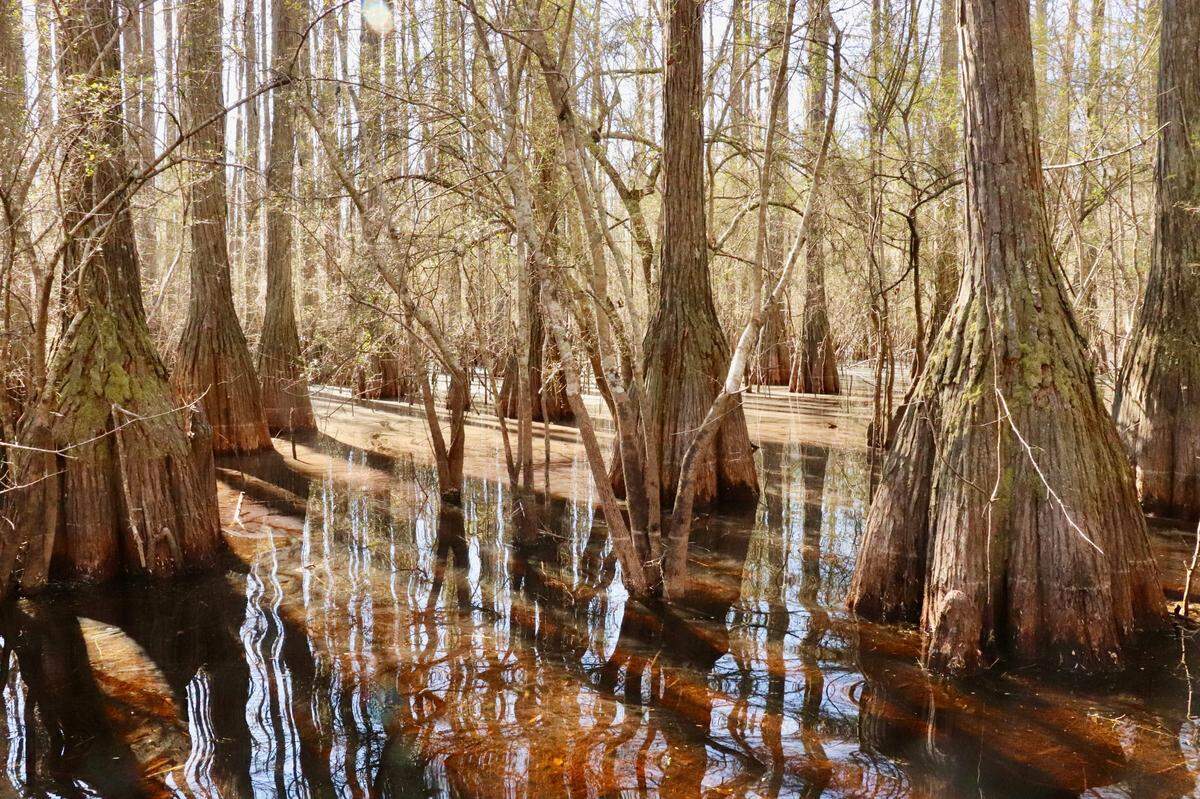
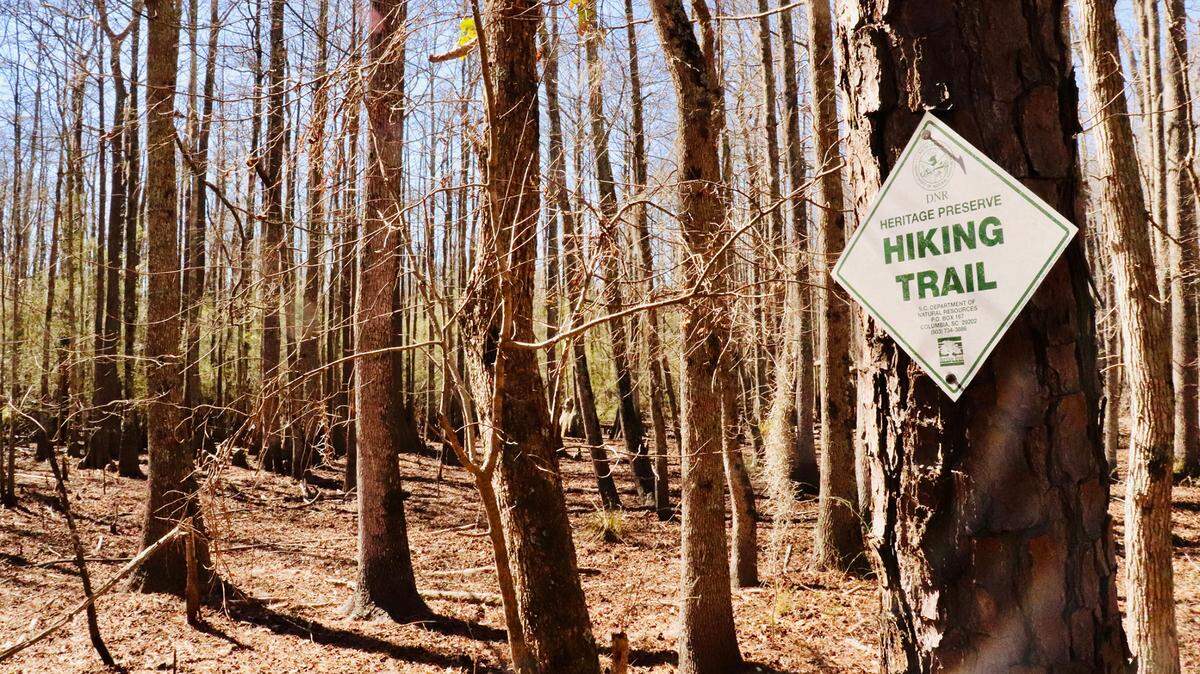
Numerous hiking trail signs lead you through a break in the pine and scrubby oak border of the swamp and into a wondrous interior filled with light, water and woods. Thick-based pond cypress trees stretch upward into the sky, forming a dome that is bare in winter and leafy green in summer. Birds dart among the branches and a woodpecker trills its call across the way. During wet seasons, water can reach up above knee-deep and during dry times the Bay has a carpet of leaves and plants. Despite the hiking markers, there is no distinct trail to be seen; you can simply walk the margin of the elliptical bay, or make your own path, depending on what the season allows. If rains have come, it is even possible to canoe or kayak into the deeper portions of the 54-acre bay and explore this strange world in quiet fascination.
I recently visited Cathedral Bay Heritage Preserve on a cool winter afternoon. The water among the cypress was cool and still and I waded in toward the center of the pond, entranced by the still beauty of the place. Migratory birds dated overhead and pollen-swirled water surrounded the cypress in lazy affection. Before I knew it, two or three hours had passed — while time seemed to be standing still.
Don’t overlook Ditch Pond
Half an hour northwest from Cathedral Bay, another Carolina bay can be discovered and explored. Ditch Pond Heritage Preserve is located on U.S. 78 just outside the town of Williston and it provides a very different experience. Compared to Cathedral Bay, the almost unpoetic name of Ditch Pond Heritage Preserve is a contrast. This 298-acre preserve is home to a large, pond-like Carolina Bay and a network of genuine hiking, horseback riding and mountain biking paths. Instead of cypress or tupelo trees, the shallow pond of Ditch Pond Heritage Preserve is filled with lily pads and other aquatic plants. It is a haven for wildlife and at least eight rare plant species have been discovered there.
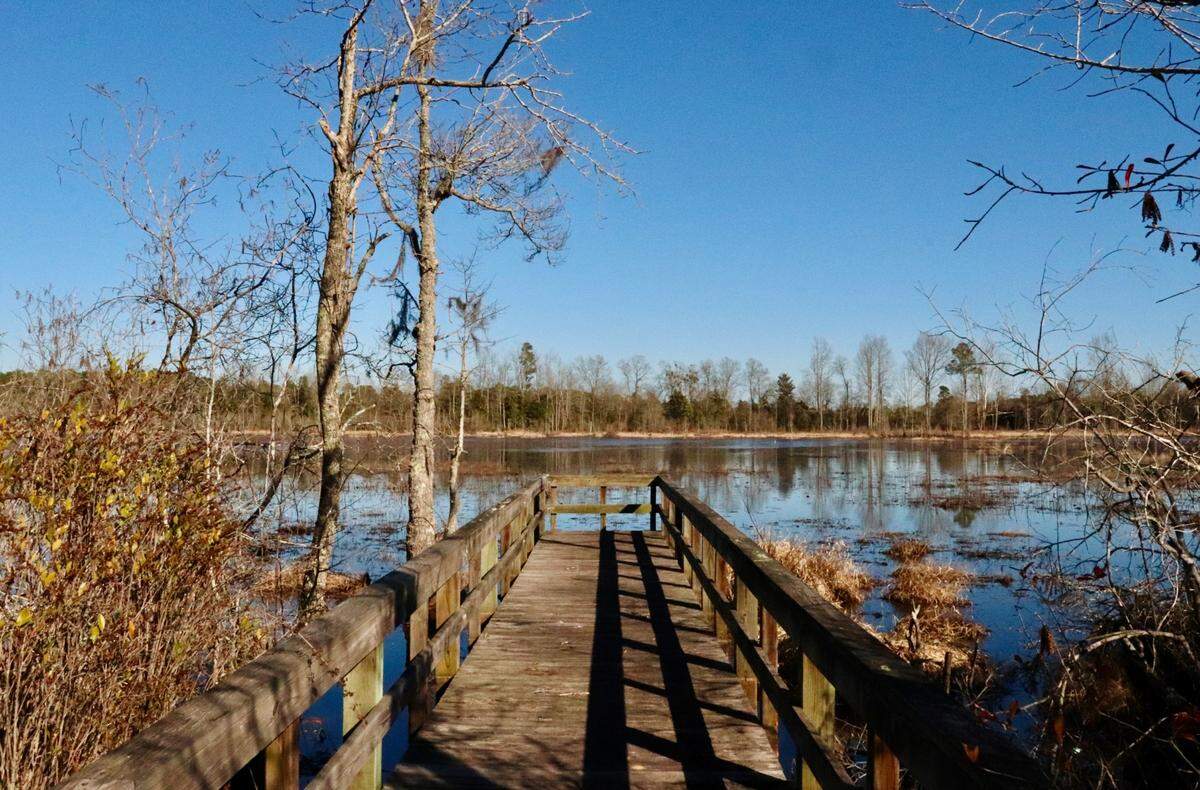
On a recent hike to Ditch Pond Heritage Preserve, I spied an old cemetery in the woods along the trail and saw evidence of old land management in the form of irrigation canals that belied the name of the preserve. A short trail led to a boardwalk observation deck above the water where a vista of blue water under blue sky was stunning in simple beauty.
If you are looking for an adventurous day outdoors and do not mind getting your feet wet or having your imagination stretched, then a visit to Cathedral Bay Heritage Preserve and Ditch Pond Heritage Preserve is in order. These two surprisingly accessible and incredibly beautiful, mysterious natural wonders are worth a drive to visit — and if you are up to it, to explore and discover.
Getting there
Cathedral Bay Heritage Preserve is located about an hour and a half from the Beaufort area at the intersection of S.C. 64 and U.S. 301 near the town of Olar. You can take U.S. 321 or U.S. 278 north for approximately 60 miles, and bear right onto U.S. 301. Look for the brown sign directing you to turn left for Cathedral Bay Heritage Preserve. Parking is limited and there are no facilities. If you come to explore, be aware of wildlife (including snakes and insects), and dress appropriately.
For more information on Cathedral Bay Heritage Preserve, visit https://www2.dnr.sc.gov/ManagedLands/ManagedLand/ManagedLand/675
Ditch Pond Heritage Preserve is located two hours from the Beaufort area just outside the town of Williston, near Aiken. A small parking area and information kiosk introduces you to the network of trails and descriptions of the abundant wildlife and plants native to the Bay. A short walk along a sandy road takes you to the edge of the pond and an opportunity to observe nature. Ditch Pond Heritage Preserve invites exploration by hiking, biking or horseback riding. You may canoe or kayak the bay and hunting is permitted in season and by arrangement with the South Carolina Department of Natural Resources.
For more information on Ditch Pond Heritage Preserve, visit https://www2.dnr.sc.gov/ManagedLands/ManagedLand/ManagedLand/103