
The Natural Lowcountry | Springtime means pollen days are here again
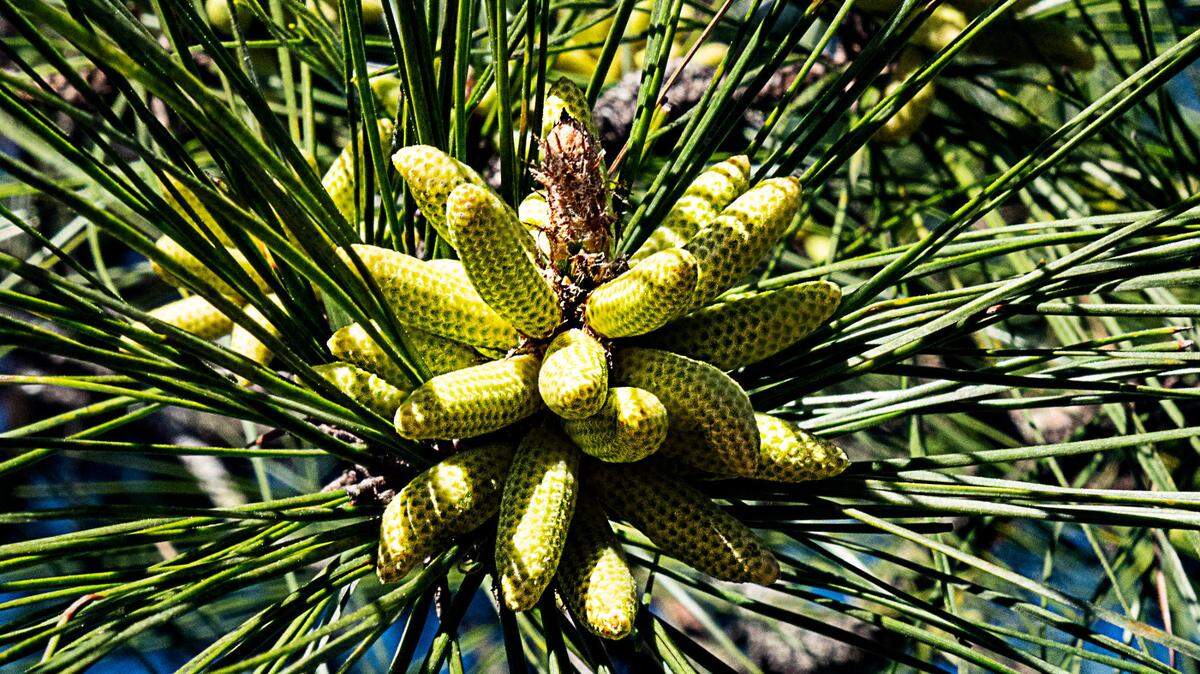
Spring is here — and it’s pollen season again.
For a while we’ve been cleaning off the familiar yellow film blanketing our cars, decks and driveways, and we’ve been watching the pollen scum floating on our lagoons.
Most of this powdery stuff comes from pines — loblolly, longleaf, and others — whose “male” cones are releasing enormous loads of tiny, wind-dispersed pollen grains, each equipped with two buoyant wings.
Pines are often blamed for spring allergies, and it’s true that clouds of pollen can irritate our eyes and nasal passages. But pine pollen is not to blame for most people’s allergies.
The major culprits are the lighter, nearly invisible pollen grains of many other trees — junipers, oaks and wax myrtles, for example — which are also produced in the spring.
Pollen production, for pines, is just one part of a complicated life cycle that lasts over two years.
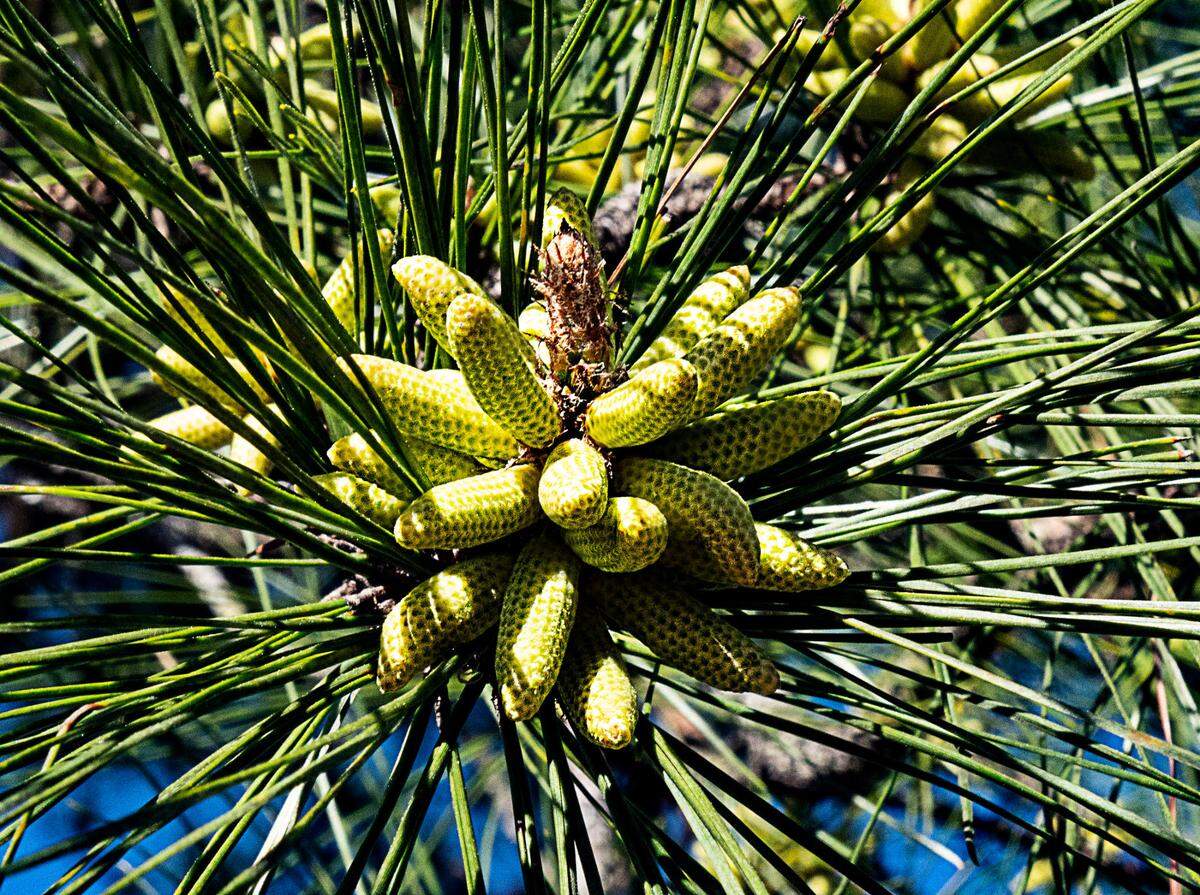
Like other conifers, pines don’t produce flowers. Instead, they bear two types of cones, both on the same tree.
The pollen cones are fairly small and inconspicuous, and they shrivel and fall to the ground once the pollen is shed.
The “female” cones are the larger, often prickly structures most of us associate with pine trees. They’re found higher up, near the top of the tree, and persist for much longer.
Not surprisingly, a single pine tree can release several pounds of pollen in just a few weeks. Most pollen grains don’t land too far from the source, but a recent study in North Carolina found that winds can blow loblolly pine pollen as far as 25 miles without loss of viability.
Most pollen grains fall on inhospitable surfaces, but now and then one hits its mark, landing on the opened scales of a young female cone. Then the pollen grain produces a microscopic tube that grows slowly toward one of the egg cells located deep within the cone’s reproductive tissues.
.jpg "unnamed (1).jpg")
All this takes time. After some 15 months, the egg is fertilized by a sperm carried in the pollen tube, and a tiny embryo starts to form. The cones scales close up, and the cone grows woody and hard. The embryo, along with food reserves, becomes enveloped within a seed coat with wing-like projections.
Pine seeds don’t mature till the fall of the second year after pollination. Then the cone scales open up again, releasing the seeds into the wind.
Pine seeds are generally considered edible, but most are too small to provide much of a meal. Some species, though, have larger seeds that are valued in cooking. These include the “pine nuts” produced by pinyon pines (Pinus edulis) native to the southwestern U.S.