
Kayak in northern Beaufort County, where a preserve offers glimpses of beauty, danger
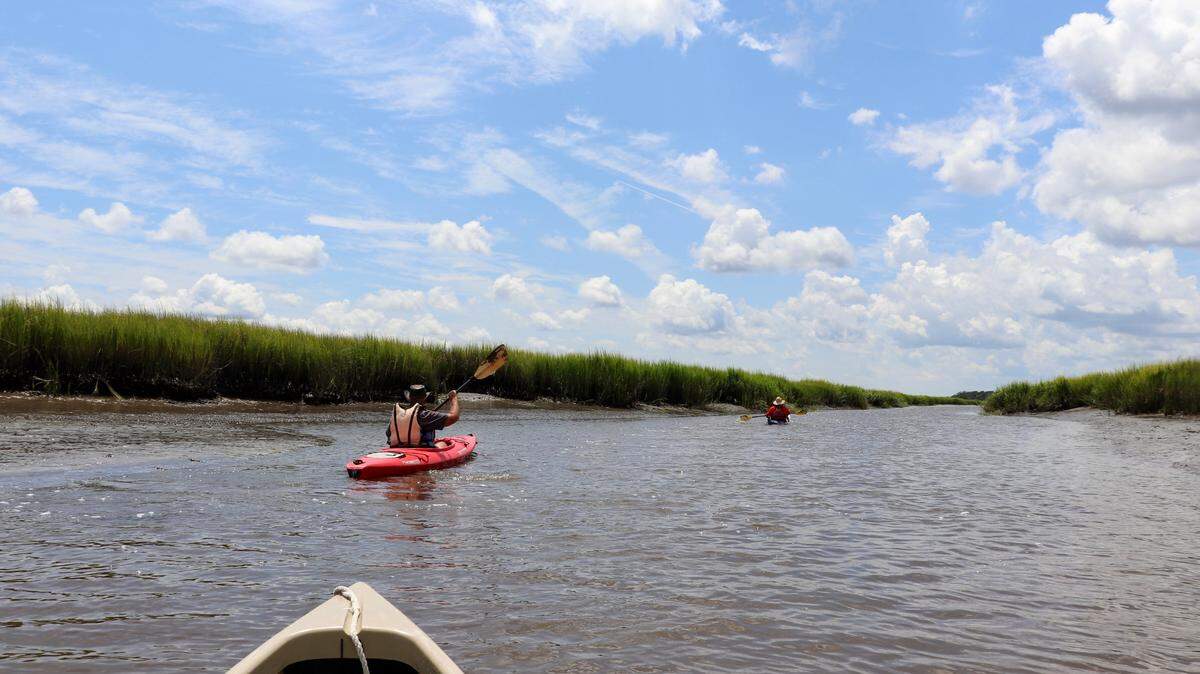
The Oxford English Dictionary defines “circumnavigate” as “to sail or travel all the way around (something, especially the world)” or to “avoid dealing with (something difficult or unpleasant).” If you are seeking to avoid dealing with some of the difficult and unpleasant aspects of modern life, there is always a local waterway that offers an escape.
One such place is the necklace of creeks and rivers surrounding Williman Island in northern Beaufort County. Part of the St. Helena Sound Heritage Preserve, the Williman Islands have a storied past and a beautiful peaceful present. The preserve is 10,000 acres of uninhabited islands and marsh wetlands in the heart of the ACE Basin. Managed by SCDNR, it contains dozens of islands interconnected by the tidal creeks and rivers and home to thriving coastal plants and wildlife.
South Williman Island is between the Combahee River and Wimbee Creek near Seabrook and sits like an emerald keystone in the heart of the preserve. Once home to Native Americans and early settlers, it was used as farm and plantation land and grazing ground for cattle. Innovative farmers even constructed a rock and oyster shell causeway across the tidal creek to drive the herd to nearby Kean’s Neck — an artifact that may still be visible at very low tide.
In the early 1900s Williman Island was sold for phosphate mining. Stripped of its very soil, South Williman Island was a scarred moonscape that quickly reverted to wild state to become a lush, green haven for wildlife. For generations it has been hunted and fished. With its tangled growth and myriad creeks and sloughs, South Williman is the haunt of rattlesnakes, moccasins and alligators. For the casual visitor it remains as inhospitable as it is beautiful.
The best way to experience South Williman Island is by boat or kayak. But be warned, this is not a trip for the meek. Maze-like creeks, rushing tides and almost no solid ground for landing make this a trip spent entirely on the water. And one miscalculated tide or weather forecast can make for a miserable day.
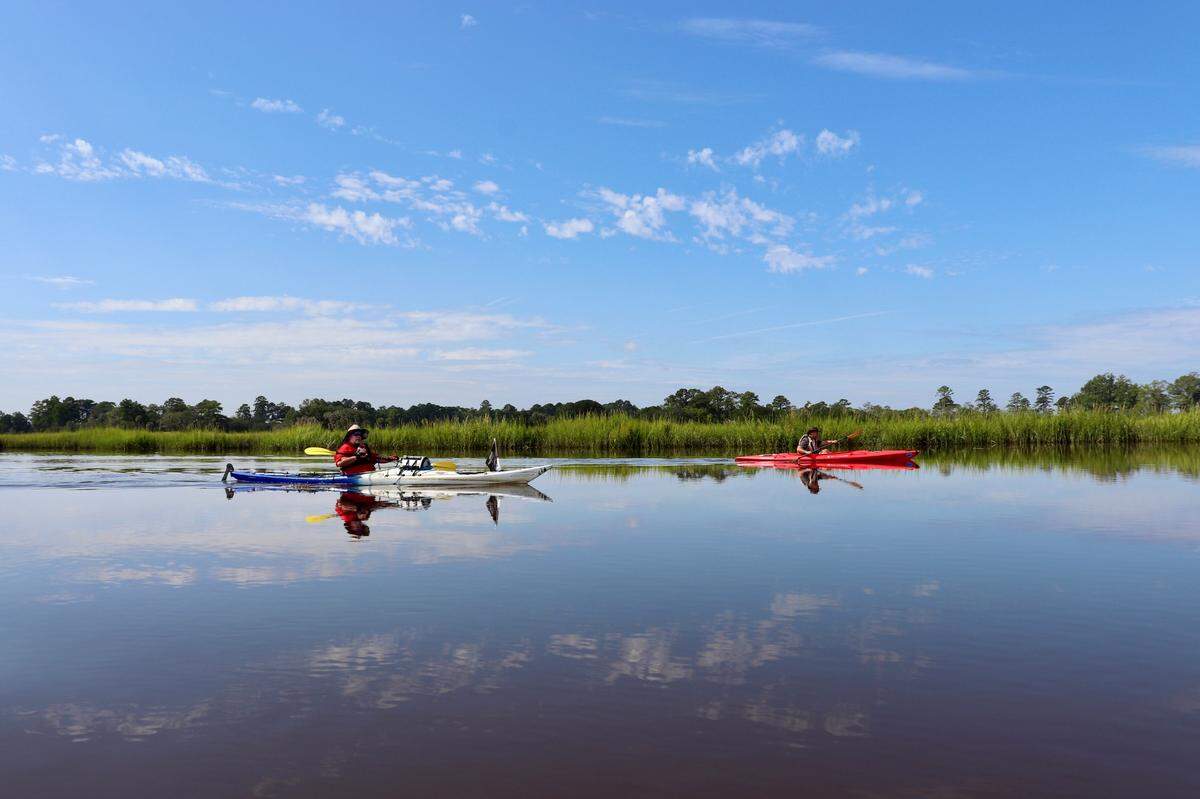
With proper planning, though, the 10-mile circumnavigation of South Williman Island in the St. Helena Sound Heritage Preserve is not only possible, it can be one of the best experiences on water you can have.
You can launch at the public landing at Wimbee Fishing Pier in Seabrook. Be sure to do this on a falling tide with the intent of reaching the apex of your journey as the tide changes to carry you back upstream. The waters of Wimbee Creek are swift and beautiful — and governed completely by the tides and current of the Combahee River system. Across from the landing lies North Williman Island. This island is bisected by the old Seacoast Rail Line and is now owned and managed by Beaufort County as a passive park.
As you travel down Wimbee Creek, you will follow the current to the left between North and South Williman Island along Schooner Creek. This deep channel is scoured by tide and river current and here, alligators can be spotted along the banks. Schooner Creek carries you into Williman Creek, where you enter the most remote part of the journey. The vast horizon of the ACE Basin unfolds before you, and at about this point you realize that your daily worries have disappeared.
As the tide reaches its low ebb, enter a large creek to your right and cut across the end of South Williman Island. Here you will re-enter Wimbee Creek and, if timed correctly, will be able to ride the tide upstream past the homes and farms of Chisolm Island and Kean’s Neck to take out once again at the ramp at Wimbee Pier.
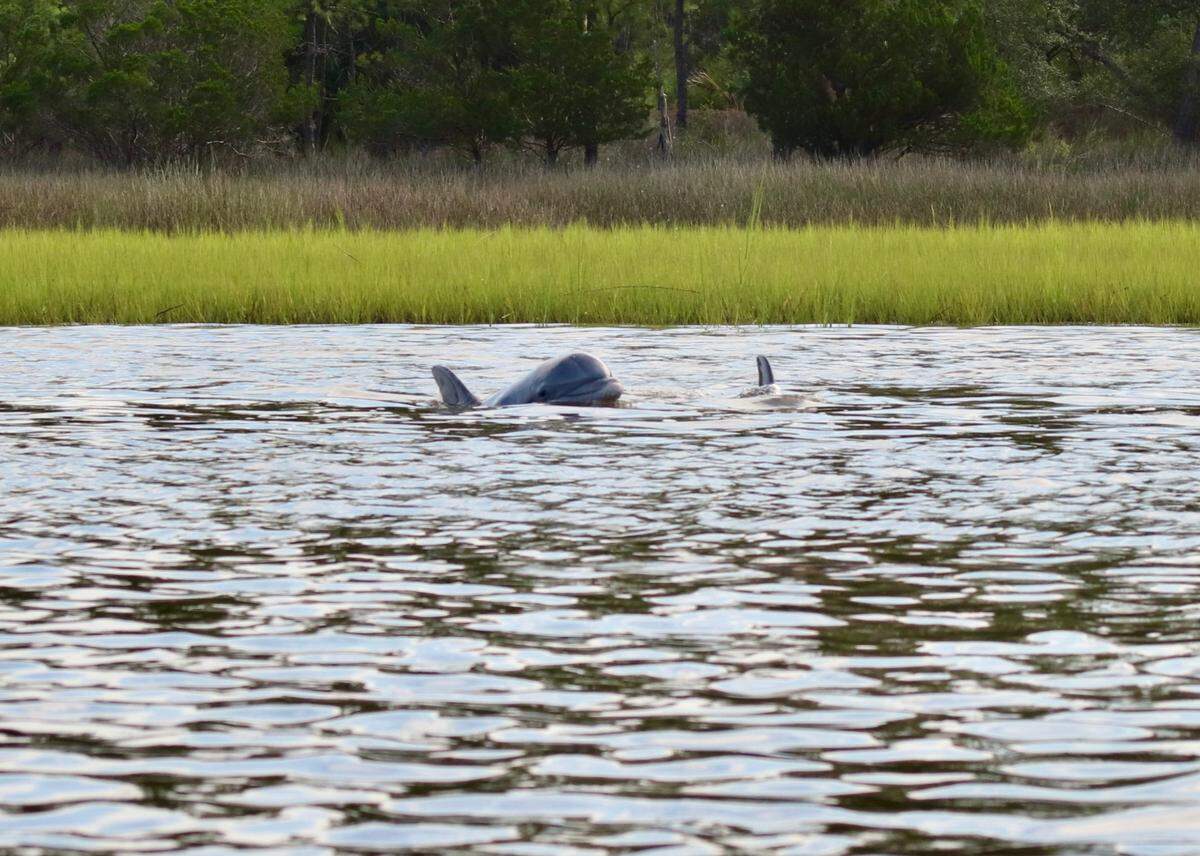
Friends and I recently circumnavigated South Williman Island by kayak and were amazed at the abundant wildlife and stark beauty of the region. Alligators, dolphins and sharks could be encountered, and the creeks teemed with redfish and shrimp. As we entered the marshy expanse of the St. Helena Sound Heritage Preserve, splashes of color against the pluff mud revealed dozens of roseate spoonbills fishing in the shallows. We returned to the landing as a summer storm rumbled in the late-afternoon distance, a reminder that we are but visitors to these wild places where the line between danger and relaxation can be blurred.
Getting there
South Williman Island is part of the St. Helena Sound Heritage Preserve, and the best access by boat or kayak is from the county boat ramp at Wimbee Pier. The landing, at 550 Wimbee Landing Road in Seabrook, is open dawn to dusk year-round. The distance for a circumnavigation around South Williman Island is 10 miles.
For a kayak trip like the one described here, plan to launch on a falling tide and allow for at least 3 hours to descend to the far end of the island. There are no facilities, and almost no place to land, so bring plenty of water and provisions for several hours on the water. Due to river currents and tidal pull, I highly recommend the course described above.