‘Magnificent’: 12-foot alligator stops traffic in Hilton Head gated community
Caution: It’s alligator crossing season on Hilton Head Island.
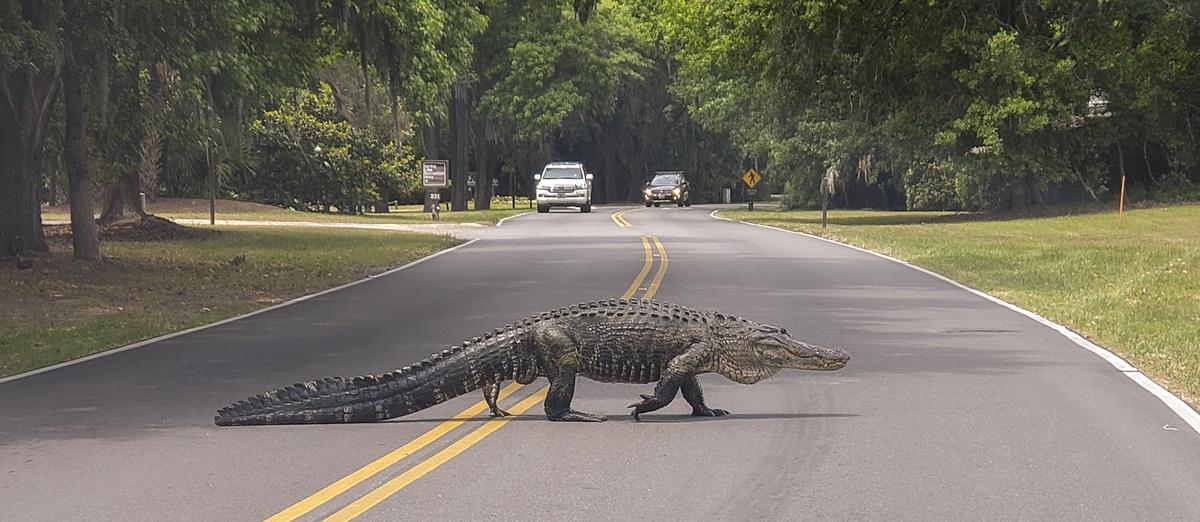
Bonnie Gutman shared a photo of a 12-foot alligator crossing Seabrook Drive in Hilton Head Plantation on May 10.
Cars kept their distance approaching the massive alligator.
The animal moved rather quickly across the road, Gutman said, and she and others yielded for only a minute or two.
“A friend suggests that this photo be a reminder to all that we share our environment with critters great and small, and that we need to be in awe of them, as well as very careful around these many different and magnificent species,” she shared with The Island Packet.
Spring is mating season for the American Alligator, so you’re more likely to see males moving among lagoons to meet their mates between late March and early June.
Hilton Head alligator safety
Alligators, native to Hilton Head and the Lowcountry, can grow to 12 feet or longer. They are often found sunning on the sides of ponds or lagoons. The animals are ectothermic, meaning they rely on external sources of heat to regulate their body temperature.
If you come across one, keep your distance. Approaching or feeding an alligator is one of the worst things you can do — for you and the animal — according to the S.C. Department of Natural Resources.
When alligators associate humans with food, they’re more likely to come toward them and be perceived as threatening. When they’re removed from backyards, properties or lagoons, they’re often euthanized.
Here are some tips for avoiding alligators during mating season:
- Scan the edges of lagoons for gator activity: Steer clear, no matter the size of the alligator.
- Never, ever feed an alligator: Alligators are more likely to approach people if they’ve been fed before, according to SCDNR.
- Remember that while alligators are mostly freshwater animals, they can survive in salt or brackish water for several hours or even days, according to the National Oceanic and Atmospheric administration.
If you’re approached by an alligator, wildlife expert Corbin Maxey told Business Insider that you should back away without turning your back on the alligator.
If you’re being bitten by an alligator, Maxey said, do not attempt to pry open the animal’s jaws. Instead, attack the animal’s sensitive snout and hit its eyes.
Most importantly, Maxey said, don’t play dead. Ideally, you’d stay out of the animal’s territory in the first place, he said.
What to do when you see an alligator...
- At the beach: If an alligator is swimming in the water or on the beach, tell a lifeguard and stay out of the water. Alligators can survive in salt water for only a couple of days.
- On the golf course: Clear the area and maintain safe distance. Allow the alligator to get to its destination while you warn other golfers. Report the alligator sighting to the clubhouse.
- On a bike path or in a public park: Keep your distance and encourage other riders or park users to do the same. Allow the animal to pass.
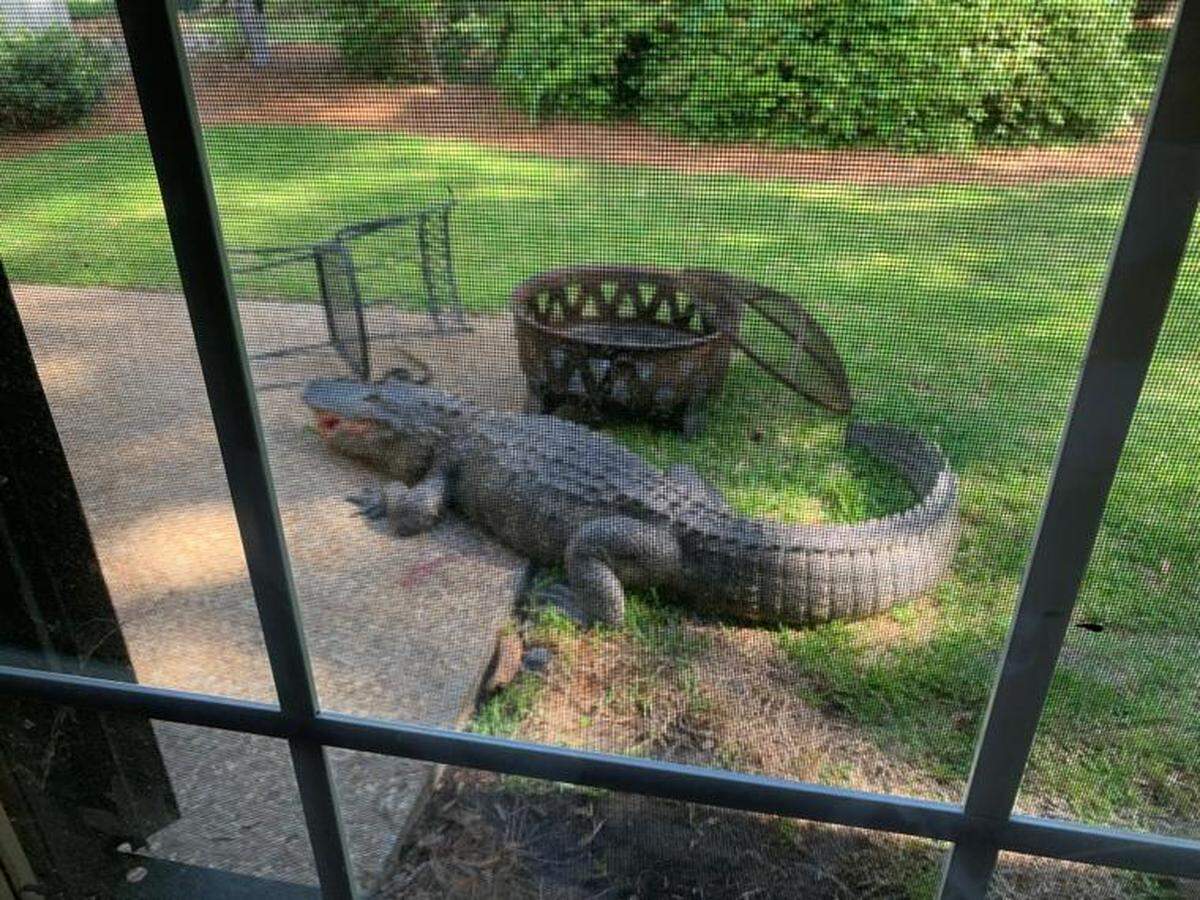
- In your backyard: Stay inside and keep track of children and pets. Report the alligator to your property owners’ association or, if necessary, the Beaufort County Sheriff’s Office.
If an alligator does not appear aggressive, keep your distance; leave the animal alone in nearly all circumstances.
When an alligator begins to threaten people or pets, it may be time to discuss the gator’s removal with the SCDNR.
SCDNR’s helpline, (800) 922-5431, will connect you with a biologist and help you determine the next steps, according to agency spokesperson David Lucas.
Not all alligators have to be removed and euthanized. Community security guards sometimes relocate small alligators to other lagoons in the same neighborhood.
This story was originally published May 26, 2021 at 10:40 AM.