
Natural Lowcountry / Gregarious, noisy bird is coming to a marsh or golf course near you
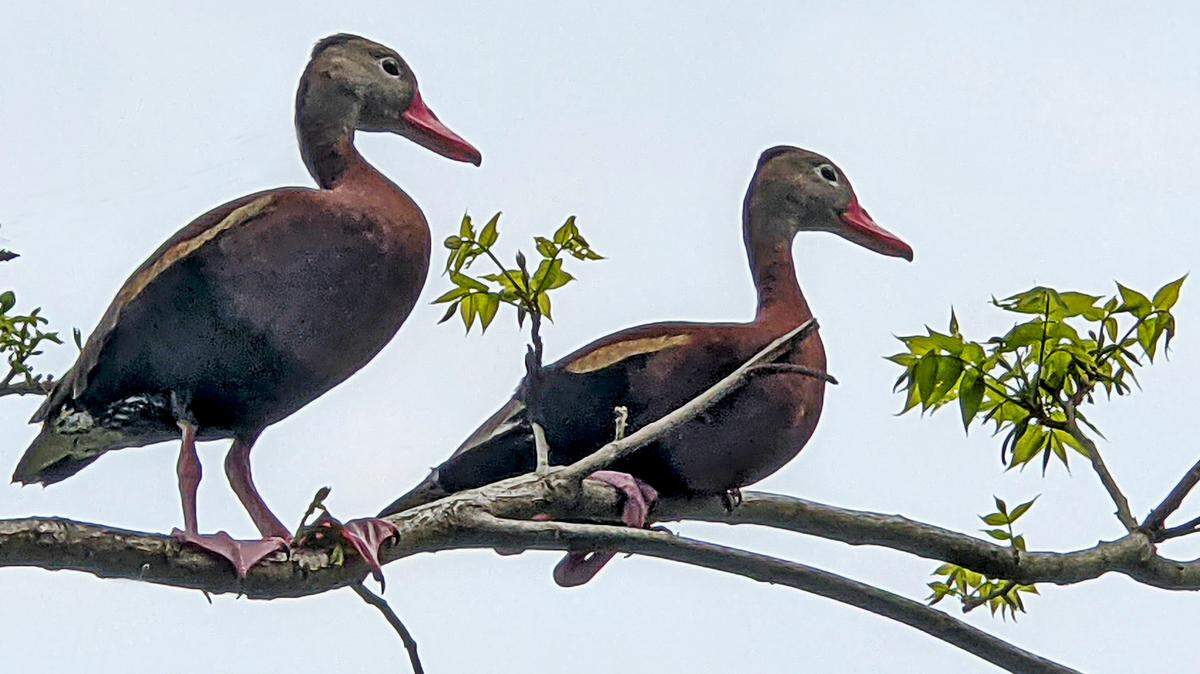
Black-bellied Whistling-Ducks have been expanding their range into South Carolina, including the Lowcountry.
These big, goose-like birds are common throughout much of Mexico and Central and South America, and over the past few decades they’ve been spreading from the Gulf Coast into parts of the southeastern U.S.
They’re easy to recognize by their chestnut body, black belly, and pinkish-orange bill, legs and feet. The sexes look similar. When the birds are flying, look for their hunched back, long necks and white wing bands.
Whistling-ducks are attracted to ponds, reservoirs and freshwater marshes, favoring areas with dense thickets of trees and other vegetation. They’ve also become adapted to parks, golf courses and other human-altered habitats.
The birds feed on a wide variety of aquatic plants, plus assorted invertebrates, both during the day and at night. You may also see flocks on pastures and agricultural fields, foraging on grasses and cultivated grains.
Whistling-ducks often perch in trees, balancing on their broad webbed feet with surprising grace and stability.
Mated pairs may nest on the ground, but frequently they occupy natural tree cavities up to 20 or 30 feet above the water or ground. Nesting can be in communal groups, and pair bonds are long-lasting, reportedly for life.
A single nest may contain a dozen or more whitish eggs — or sometimes many more, since some female whistling-ducks deposit eggs into the nests of other pairs. Such behavior — called “egg dumping,” or brood parasitism — occurs in various forms in some other species of birds. In Black-bellied Whistling-Ducks, clutch sizes in parasitized nests can be 50-60 or more. One study recorded a huge nest containing 101 eggs.
Male and female take turns incubating all these eggs, even the “foreign” ones. But sometimes parents may take long breaks, leaving the nest unattended for an hour or longer. Presumably, such absences provide unintended opportunities for other females to add still more eggs.
It’s complicated, but some research suggests that hatching success in “dump nests” is, as one might expect, lower than in single-pair clutches.
After hatching, the ducklings leave the nest after a day or two and start foraging for their own food. If they find themselves in a tree cavity, they jump or tumble down onto the ground or into the water. They’ll stay close to their parents till they’re about six months old, reaching full maturity after a year.
Black-bellied Whistling-Ducks are gregarious, noisy birds, but do they actually “whistle”? They do have a distinctive whistle-like call, uttered in flight and while they’re on the ground or in the water.