
Natural Lowcountry: Sometimes confused with poison ivy, this vine is far less toxic
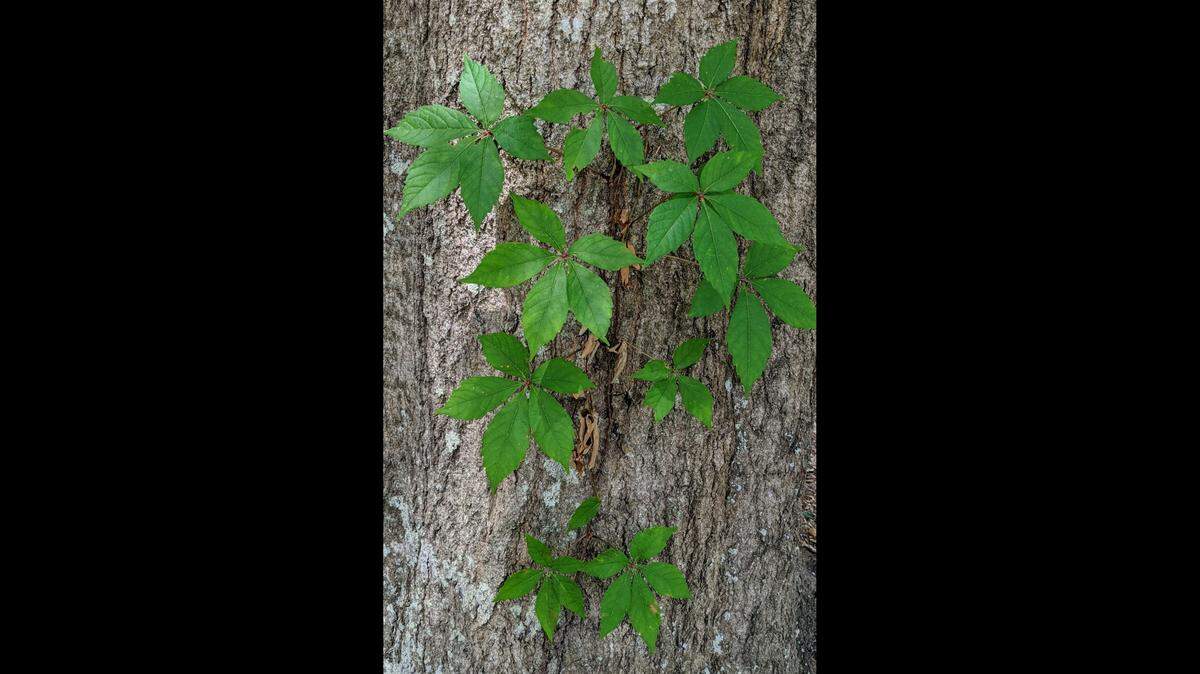
Although sometimes confused with poison ivy, Virginia creeper (Parthenocissus quinquefolia) doesn’t have that vine’s notorious toxicity.
Both of these common woody vines occur in the Lowcountry and throughout much of the eastern U.S. Sometimes both may be found climbing the same tree.
But Virginia creeper leaves have five leaflets, whereas poison ivy leaves have only three.
And contact with Virginia creeper is unlikely to leave you with the severe, itchy rash associated with poison ivy. But the leaves of Virginia creeper do contain needle-shaped calcium oxalate crystals (raphides) that occasionally cause skin irritation after prolonged handling of the plant.
Virginia creeper produces clusters of small, whitish flowers in late spring. These give rise to bluish, grape-like fruits, which also contain raphides and can be toxic if eaten in large quantities.
Although Virginia creeper often spreads vigorously across the ground, it also climbs up fences, trees, telephone poles and walls to heights of 50 feet or more. Its stems readily attach themselves to substrates via tendrils ending in oval, adhesive discs.
Masses of the vine growing against a building can look very attractive, especially in the fall, when the leaves turn bright red. However, over time, all those sticky disks can damage stucco, mortar and painted surfaces.
Virginia creeper doesn’t usually harm the natural supports it grows on — bushes and trees — since it’s not parasitic. Its profuse tangles of growth sometimes shade out other less vigorous plants.
And once in your yard or garden, it can sink its roots deep into the ground and eventually form large, woody rootstocks, making it difficult to eradicate.
Nevertheless, Virginia creeper is a valuable plant for wildlife and for an environmentally friendly backyard. Mice, skunks, squirrels, and other mammals eat the leaves, and so do the caterpillars of several small moths. The fruits provide winter food for some 35 different species of birds.
Even humans have used the plant in the past, making the bark and twigs into cough syrup.