
Natural Lowcountry: A prickly tree with warts and healing qualities is citrus, not ash
Common names for plants can be colorful, descriptive — and sometimes misleading.
For example, southern prickly ash (Zanthoxylum clava-herculis) isn’t a true ash tree but is actually related to lemons, grapefruit, and other members of the citrus family (Rutaceae).
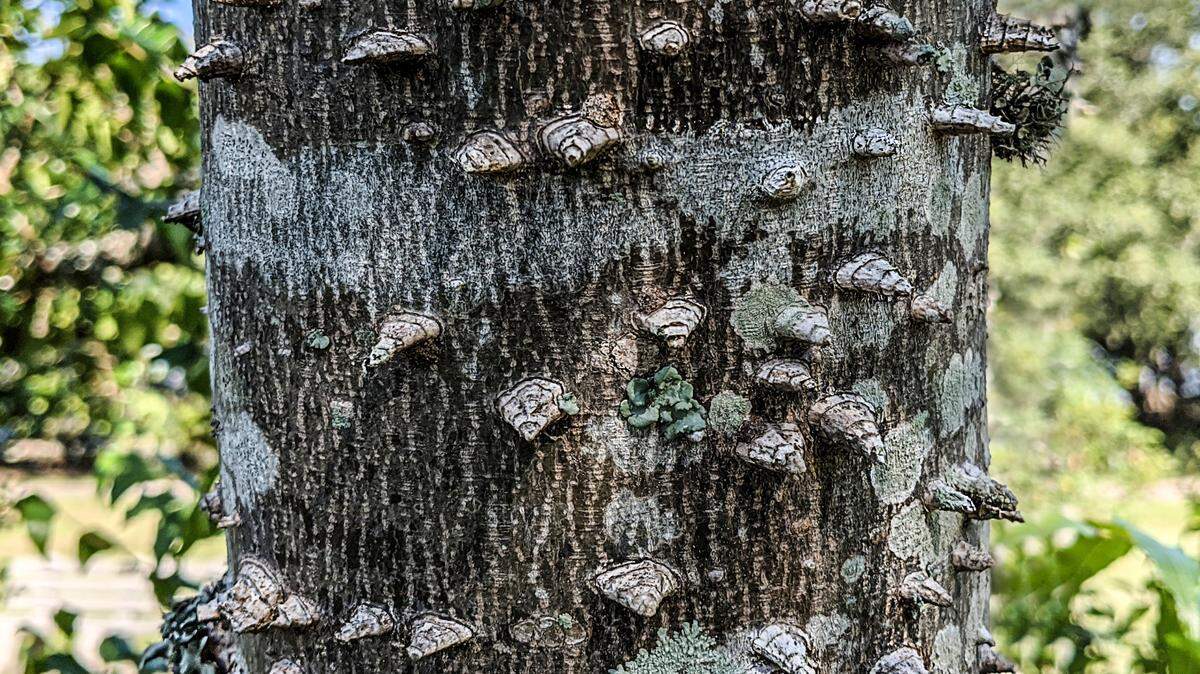
However, it does have prickles, lots of them, on its twigs. Even more conspicuous are the thick, wart-like, corky projections along its trunk. These have given rise to another common name, Hercules’ club.
The species is native to the southeastern U.S. and found from Virginia to Florida, west to Texas and Arkansas. A close relative, common prickly ash (Z. Americanum) has a more northerly distribution in the U.S. Both species are sometimes confused with an unrelated tree (Aria spinosa), which has some of the same common names.
Here in the Lowcountry, southern prickly ash often grows near the coast in sandy fields and near dunes and the edges of maritime forests. Although leafless during the winter, it can still be recognized by its distinctive warty trunk.
From spring to fall, the tree bears compound leaves, each with 7-19 leathery, aromatic, green leaflets with scalloped edges. These are food for caterpillars of the Giant Swallowtail butterfly.
The flowers are small and whitish, giving rise to clusters of black, berry-like fruits.
Both southern and common prickly ash were used by Native Americans and European settlers to relieve toothache, since chewing on the leaves, bark, or twigs produces a tingling, numb feeling in the mouth. This feature has given rise to other common names: toothache tree, pepperbark, tickletongue.
Herbalists have traditionally used prickly ash to treat various other ailments, including joint pain, fever, colds, coughs, indigestion, circulatory disorders, menstrual cramps, kidney problems, and dysentery.
According to recent chemical analyses, the leaves and bark of southern prickly ash are packed with essential oils and other bioactive substances.
Further studies are needed, though, on the therapeutic potential and safety of this interesting species.