
Natural Lowcountry: the reclusive, iridescent Green Heron
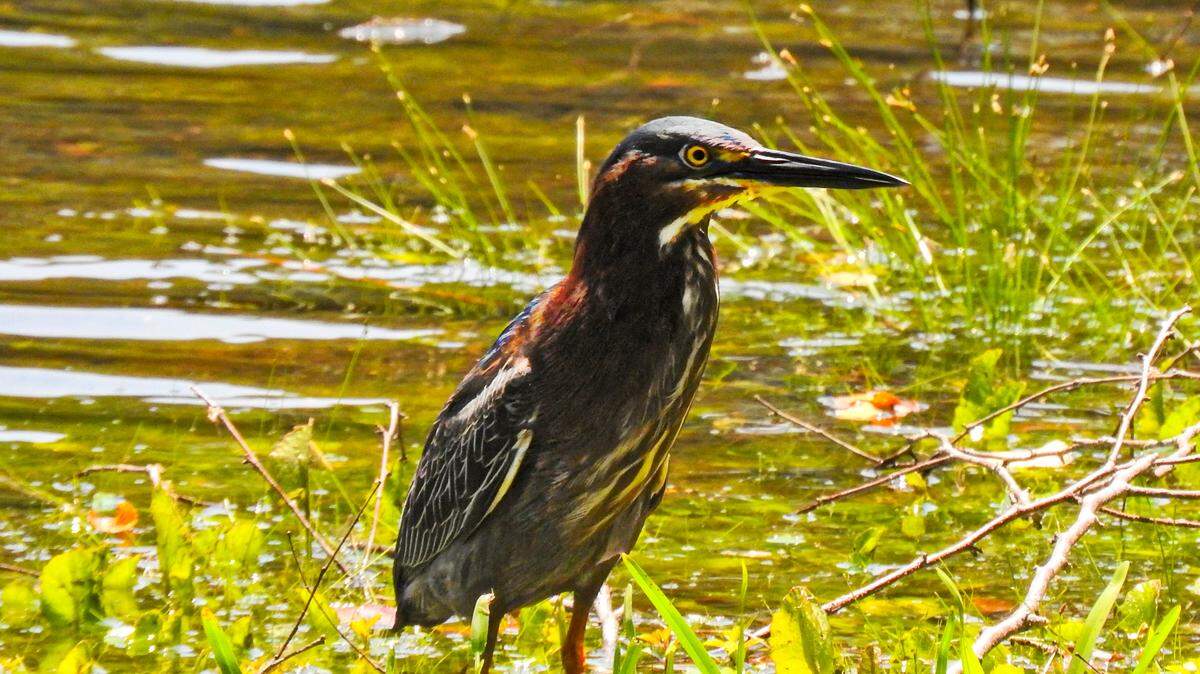
As wading birds go, Green Herons are smaller and less conspicuous than some of their more flamboyant relatives.
They’re members of the family Ardeidae, which includes some 64 species, including Great Blue Herons, Great Egrets, and Snowy Egrets — all familiar and iconic birds of the Lowcountry.
By contrast, Green Herons are relatively solitary and reclusive. Look for them at lakes, ponds, swamps and marshes, often close to shore.
They’re stocky birds, with rather short legs (for a heron), and necks often drawn up next to their bodies. From a distance, Green Herons look dark overall, but when viewed up close and in the sunlight, they’re quite colorful, with an iridescent green back. The breast and neck are reddish-brown with white streaks. The sexes look similar.
During the summer breeding season, Green Herons are found throughout the eastern half of the U.S. and along the West coast. In the fall, they migrate southward, though resident populations occur along the coast in the Southeast and in California.
Green Herons usually breed in isolation, though sometimes in small, loose groups. Members of a pair cooperate in building a platform nest of sticks, often in a shrub or tree close to water. Both parents feed the young.
Green Herons spend much of their time standing motionless or moving slowly near the water’s edge, searching for prey. Their gait — in the words of 19th century naturalist and painter John James Audubon — is “light, but firm.”
They feed mostly on fish, as well as frogs, tadpoles, snails, insects, crustaceans, and other small prey in or near the water.
A rarely observed, but reliably documented, behavior of foraging Green Herons is their use of “bait.” Some birds have been seen dropping insects, leaves, twigs or other debris onto the water surface. These objects are thought to attract fish within striking distance.
How this foraging tactic originated — as well as how well it works— is still not fully understood.