
End of summer ritual: grasshoppers in the Lowcountry, camouflaged but not silent
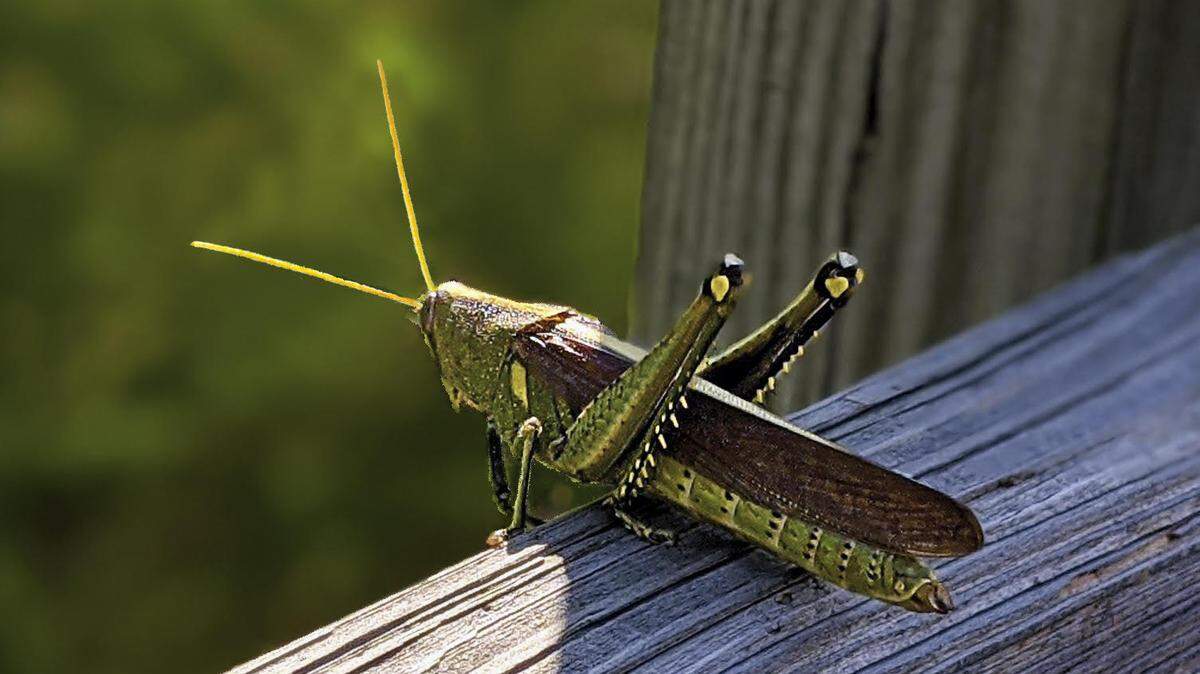
Grasshoppers are among our most familiar and ancient insects, with ancestors dating back some 300 million years.
Worldwide, there are about 11,000 kinds, including 600 species in North America and dozens in South Carolina alone. They’re closely related to katydids and crickets, which have longer, more prominent antennae.
In the Lowcountry during these warm, late summer days, look for grasshoppers in meadows, farm fields, roadsides and gardens.
Grasshoppers develop from eggs laid in pods deposited below the soil surface by females during the summer. A single pod can contain 10 to as many as 300 eggs. After a winter dormancy period, the eggs hatch the following spring or summer into nymphs — miniature, undeveloped versions of the adults.
Like adults, nymphs have sturdy jaws equipped for chomping on a wide variety of plants. In fact, they spend most of their time eating, periodically shedding their exoskeletons to accommodate their increasing size.
Over the next six weeks or so, nymphs also become sexually mature and, in most species, develop functional wings.
Because of their voracious appetites, grasshoppers can cause damage in gardens and farms, but only a few species have become notorious pests.
In 1875, for example, the Rocky Mountain locust (Melanoplus spretus), now extinct, caused unimaginable devastation to crops in the Midwest. Migratory swarms of these gregarious grasshoppers contained billions of individuals, each able to eat its own weight in a single day.
Today, periodic infestations by other species of locusts still threaten croplands in East Africa, Southwest Asia, the Middle East, and elsewhere in the world — though fortunately not in the Lowcountry.
Overall, in fact, grasshoppers play an important ecological role by being food themselves for rodents, birds, snakes, raccoons, spiders, praying mantises and many other predators.
They also exhibit a wide array of anti-predator defense mechanisms.
Most have the familiar, if startling, habit of launching themselves explosively from the ground when approached. Large grasshoppers can leap distances of three feet — about 20 body lengths — thanks to strong muscles in their hind legs.
After landing, a grasshopper usually runs a short distance and then turns, ready to jump again in a different direction. This tactic may confuse a predator about its exact location.
Many species, such as bird grasshoppers (Schistocerca spp.), also make short, evasive flights when disturbed.
And when they’re motionless, most grasshoppers are hard to spot, since they’re well camouflaged by their green or brownish body coloration.
Eastern lubbers (Romalea microptera), though, are more conspicuous. These robust, three-inch-long insects, common in the Southeast, vary in color pattern, but many are yellow or tawny with pink and black accents.
Lubbers can’t fly, and they’re poor jumpers. Instead, they deter predators by sequestering toxic alkaloids from plants in their diet. Their brighter colors serve as “warning coloration,” advertising their unpalatability.
If grasped by a predator, many grasshoppers regurgitate a dark, repellent liquid (“tobacco spit”). Lubbers go even further, releasing a noxious, frothy substance and producing loud hisses by forcing air out of small breathing holes along the body.
Grasshoppers also produce sounds by scraping a row of pegs on their hind legs against the thickened edges of their forewings. These “stridulations” are species-specific and typically performed by males to attract females.
Compared to katydids and crickets, famous for their loud, buzzy, rasping songs, stridulating grasshoppers are fairly quiet.
But their reliable abundance in our fields and gardens this time of year is a familiar sign of the end of summer and the coming of fall.