
Before you drop a line in SC waters, know the regulations. It might save you a hefty fine
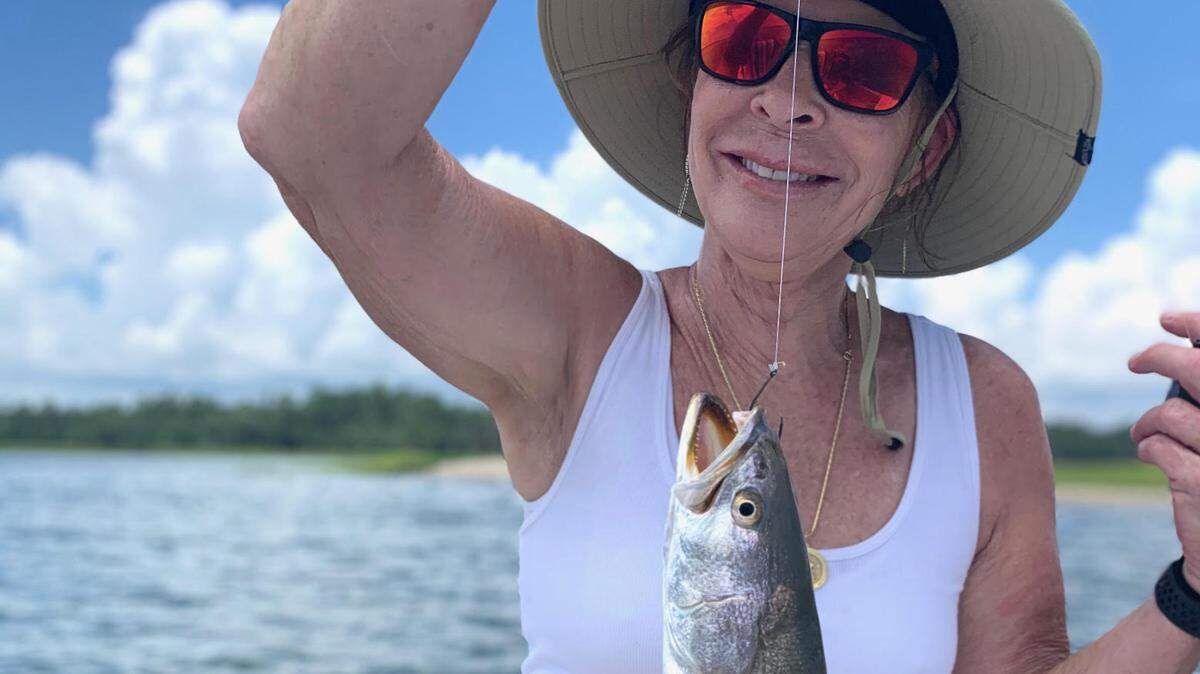
The other day I was walking my beagle near the Alljoy Boat Landing in Bluffton when I ran into a DNR officer as he was pulling his boat out and putting it on a trailer.
He leaned down, petted my beagle and we chatting about this and that. But there was one question in particular I was dying to ask.
Since I am known for blurting out whatever is on my mind at the moment, my question finally spilled out of my mouth: “Did you write any tickets today?”
He looked at me for a second and finally answered “yes” so I took it one step further, asking if there had been “any fish violations?”
Though he didn’t get specific, he did say he had a number of cases for folks who didn’t have saltwater fishing licenses. There were others for keeping undersized fish, oversized fish, too many fish and even some for fisherman who tried to hide fish.
His answer didn’t surprise me one bit because many of the new boaters I guide have absolutely no idea what the regulations are regarding the size of the fish they can keep or how many fish they can have.
So, who is at fault for these problems?
On that front, I have mixed opinions. Even with getting regular updates through my e-mail, I sometimes find myself confused about the legal size of a particular fish - mostly offshore fish.
Inshore, I have it down pat but because more fishermen fish our inshore waters than offshore waters. I am constantly surprised when people I am teaching to fish have no idea what the regulations are.
The most commonly caught species inshore are redfish, trout, sheepshead, black drum and flounder. Occasionally you might nab a species not commonly found around here, but those five species are the ones you need to familiarize yourself with.
Here’s what you need to know:
- Redfish: Three per person per day, between 15”-23” tail length.
- Trout: 10 per person per day, 14” tail length and over.
- Sheepshead: 10 per person per day with a boat limit not to exceed 30 fish, 14” tail length and over.
- Flounder: 10 per person per day with a boat limit not to exceed 20 fish, 15” tail length.
- Black drum: 5 per person per day, 14”-27” tail length.
The “tail length” is what you need to watch. Just so you know, if you’re checked by DNR, officers will squeeze the tail like you squeeze a lemon with two fingers. My advice is if you squeeze the fish’s tail and it is only the slightest bit past the legal length, release it.
It’s sure better than being ticketed.
Of course, you have those who simply can’t help themselves.
This group has two categories:
The first being those who don’t fish much and either don’t know the regulations or are hell bent and determined to have a fish fry that evening.
The second group are just plain gangsters who know full well they are breaking the law and will go to any length to catch as many fish as possible, no matter what the size, and try to get back in without being caught. I have seen this last group more times than I can count. In any sense of the definition, to me at least, they don’t qualify as sportsman. I’ve watched them catch undersize cobia, gaff them boat side and then drop them overboard to die.
A few years back I watched one guy catch nearly fifty undersize redfish and put every single one in his cooler. I hate being a tattletale but it made me so angry I made the call. I am not sure how much his fine was, but it had to be way up there.
Ignorance may be bliss in many cases but I feel DNR could do better educating anglers.
A couple of things that might help are whenever a person purchases a saltwater license, they also receive a list in both English and Spanish of the most commonly caught species with size and limit regulations on a business card size booklet that anglers can keep in their wallet. Those same cards can also be distributed to any place that sells bait or tackle and should be free to the public.
Another possibility is to post the regulations at all state-maintained boat landings. I also think these, too, should be bi-lingual since we have such a large Hispanic population.
DNR already distributes long sticky back rulers with the regulations on them, but I seriously doubt many folks carry these in their pocket.
Lastly, here in South Carolina the cost of a saltwater license is a joke - meaning it’s way too low.
An S.C. resident license is only $10 and is good for fishing, shrimping, crabbing and shellfish harvesting 365 days of the year.
Since I travel to Georgia, Florida and North Carolina, I know their licenses are double or even triple that cost.
I have talked to many of my angling friends and almost without exception, we all would gladly pay twice the current annual fee if those funds were used to improve fish stocks, enhance our reef program and possibly give the Waddell Mariculture Center the money it needs to run at peak efficiency.
Our state government needs to move into the 21 st century. You would think DNR would lead this cause but by rules, it can’t. It will have to be put on the shoulders of private citizens organizing the cause with help from our state representatives.
My final suggestion regarding questionable catches of a particular fish is this: If you aren’t sure if it meets current regulations, release it.
If you don’t, and get stopped by DNR, you might just find yourself with a very expensive ticket instead of that grand ‘ol fish fry you had in mind.
This story was originally published August 20, 2020 at 1:24 PM.