
Giant Swallowtail’s 6-inch wingspan adds exotic touch to Lowcountry backyards
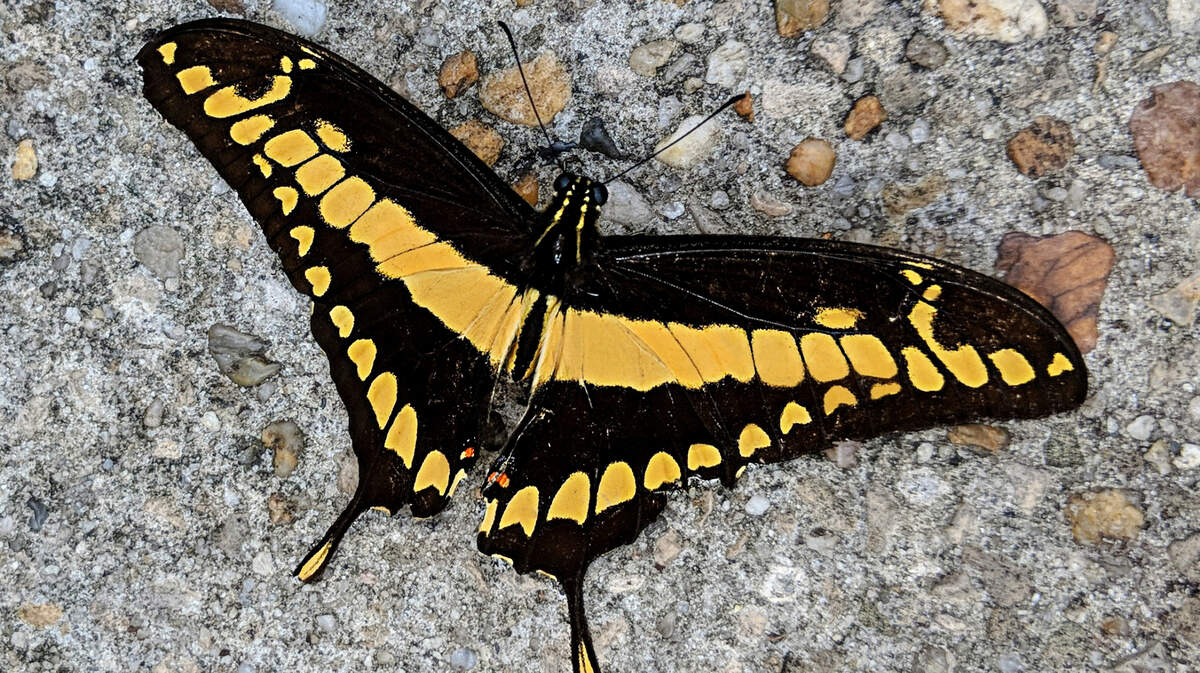
With wingspans up to five or six inches, Giant Swallowtails (Papilio cresphontes) are arguably the largest butterflies in North America.
Both males and females have blackish wings with conspicuous bands of yellow spots. As in most other swallowtails, each hindwing bears a terminal projection (“tail”), which in Giant Swallowtails is black with a yellow spot.
These exotic-looking butterflies are common throughout much of the U.S., including the Lowcountry and other parts of the Southeast. Look for them in fields, open woods, backyards, and gardens, especially near citrus plants, on which females often lay their eggs.
Giant Swallowtail larvae are as arresting as the adults. At first glance, you may even mistake these blotchy, brown and white caterpillars for bird droppings, especially when they’re resting motionless on the surface of a leaf. This deceptive coloration, or mimicry, presumably deters investigation by wasps, birds, lizards, and other potential predators.
The larvae have another anti-predator tactic. When threatened, they extrude a fleshy, reddish-orange scent gland that resembles a snake’s forked tongue and emits a foul odor.
This structure, called an osmeterium, is present in other swallowtail caterpillars and has been shown to repel ants, small spiders, even preying mantises.
Giant Swallowtail larvae can be defoliating pests in citrus orchards, where they’re known as “orange dogs.” They also eat the leaves of several other plants, such as Hercules-club, prickly ash, and rue.
Adult butterflies, on the other hand, drink nectar from zinnias, lantana, goldenrod, and other flowers via a long straw-like mouthpart that coils up when not in use.
And as odd as it sounds, look for Giant Swallowtails perched near puddles or other wet places, sipping muddy liquids. This “mud-puddling” behavior, typically performed by males, provides them with extra nutrients needed to make the sperm packets transferred to females during mating.