Sea Pines beachgoers got up close and personal with manatee herd. Why were they there?
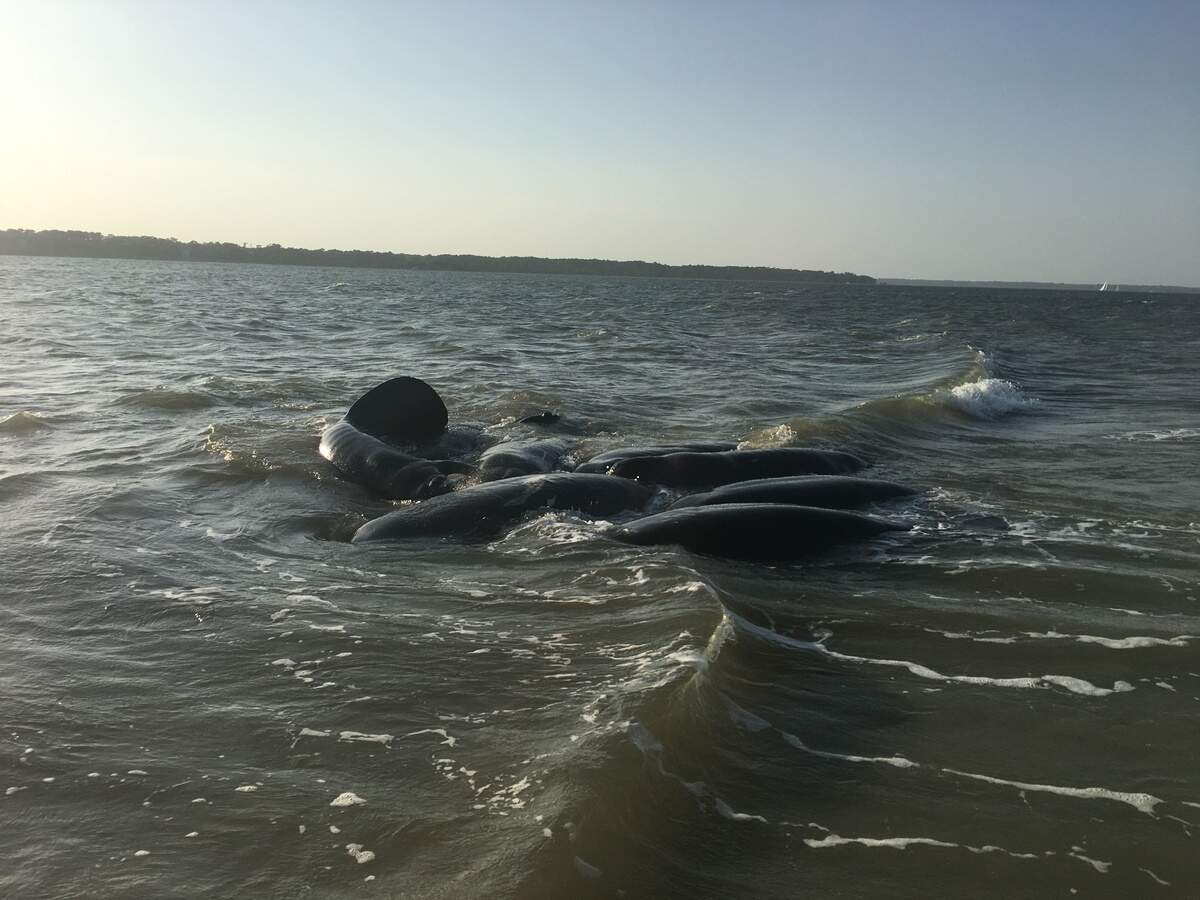
A herd of eight manatees was spotted by beachgoers in Hilton Head Island’s Sea Pines Friday evening.
Their large bodies were visible in the surf around mile marker 5, leading some to ask if they were injured or somehow ill.
The answer is: “Er.... not exactly.”
The group of manatees was mating, according to the S.C. Department of Natural Resources.
Manatees are mammals that typically do not form groups or keep hierarchical structures.
They migrate from Florida to the South Carolina coast when the water is warm, and they’re often spotted in areas like the Shelter Cove Marina or Palmetto Dunes on Hilton Head.
But there are exceptions.
Manatees form “mating herds,” or groups of several males in search of receptive females, during the breeding seasons, which are generally spring and summer, according to the Save the Manatees Club.
Mating herds follow females in heat for a few days or weeks until some of the group succeed in mating.
Hilton Head typically sees manatees in the late spring when the water reaches at least 68 degrees.
In November, an 850-pound manatee nicknamed “Wilson” was rescued when the animal swam into Palmetto Dunes’ lagoon system and got stuck around the 9th and 10th holes of the the Robert Trent Jones golf course.
Rescue teams from Sea World were called to help relocate the manatee to the Orlando facility for rehabilitation. Palmetto Dunes CEO Andrew Schumacher said it took nearly three hours for the trained kayak team to coerce Wilson to enter a large underwater net and be hoisted to shore by a backhoe.
As many as 13,000 West Indian manatees, large, aquatic relatives of the elephant, can be found in warm waters of shallow rivers, bays and estuaries of the Caribbean basin and Southeastern U.S. In 2017, the U.S. Fish & Wildlife Service downgraded the status of the West Indian manatee — of which the Florida manatee is a subspecies — to threatened from endangered under the federal Endangered Species Act.
Florida manatees — gentle, giant creatures that eat seagrass and other aquatic plants — are at risk of exposure to red tide, cold stress, and disease in the wild.
Human-caused threats include boat strikes, crushing by flood gates or locks, entrapment and entanglement in or ingestion of fishing gear.
The manatees off the Sea Pines beach didn’t appear to be distressed on Friday. Just frisky.