
Lady’s tresses: When wild orchids move into your Lowcountry SC lawn
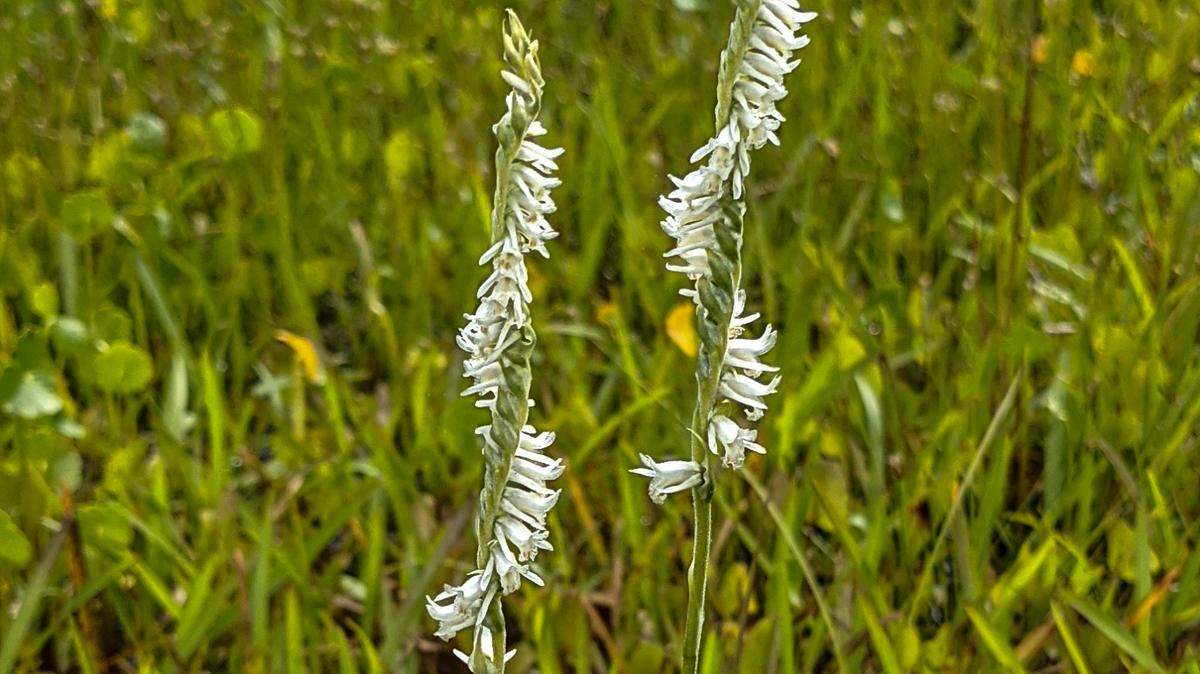
Although we usually associate orchids with the steamy tropics, over 200 kinds are found in North America, including South Carolina.
In fact, the orchid family (Orchidaceae) comprises some 28,000 species distributed in various habitats around much of the world. Although most orchids live as “epiphytes,” using trees and shrubs for support, a few live on rocks, and many others grow in the soil of fields, grasslands, woods, and wetlands.
Every summer in the Lowcountry, I look for a little orchid called lady’s tresses (or ladies’-tresses), which projects here and there from the grasses bordering the lagoons near our house. Sometimes it’s even been an unexpected resident of our lawn.
Lady’s tresses belongs to the plant genus Spiranthes, a taxonomically confusing group of dozens of related species.
These are slim, delicate-looking orchids, easily overlooked. Most have small white or greenish flowers, variously arranged in a loose cluster at the end of the stem, or in an arresting spiral. The leaves are often attached at the bottom of the stem and are less noticeable than the flowers.
Some species are reported to produce seeds in the absence of pollination, but lady’s tresses are also regularly pollinated by bumblebees and halictid bees, which visit the flowers to collect nectar.
Not surprisingly, some lady’s tresses are now imperiled because of habitat destruction. For me, spotting one of these fragile little plants in the wild is an unforgettable sight.