
Cudweed? How to woo these Lowcountry ‘painted ladies’ into beautifying your yard
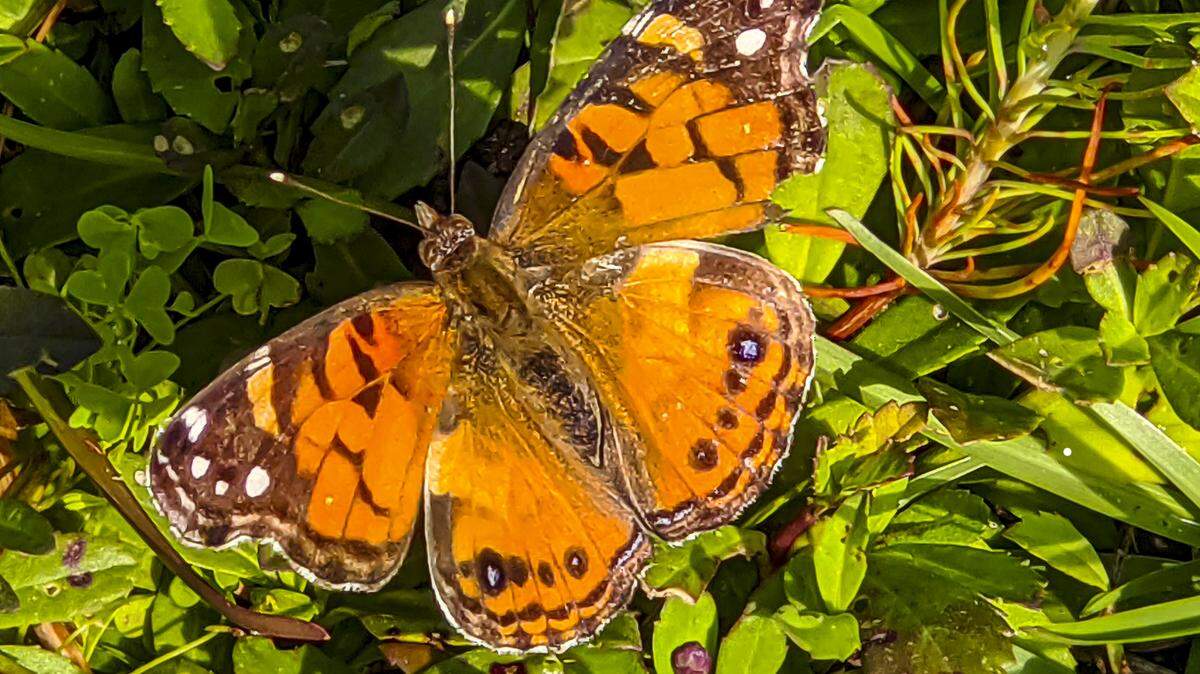
The American painted lady (Vanessa virginiensis) is one of several medium-sized, orange-brown butterflies you’ll see fluttering over lawns, fields, and gardens in the Lowcountry this summer.
On the upper surface, the wings are marked with blackish patches, spots, and streaks, plus assorted white spots. Look also for a small white spot on each forewing, plus two large “eyespots” on the under surface of each hind wing.
Although common in the Lowcountry all summer, American painted ladies are active, wary butterflies and may be hard to approach closely.
To further complicate matters, there’s a similar looking butterfly called the painted lady (V. cardui), though it’s less common here. It lacks both the small white spots on the upper side and the two big eye spots.
American painted lady caterpillars are variable in appearance, with narrow stripes and a yellowish or black coloration. They feed on the leaves of cudweeds and related plants (Gamochaeta, Gnaphalium, Pseudognaphalium) — common but nondescript weeds of lawns and waste areas.
In typical caterpillar fashion, larvae eat voraciously, shedding their exoskeletons as needed to accommodate increasing growth. They spend the rest of their time seeking shelter within individual nests on the food plant, made by weaving together leaves and silk.
Once fully grown, each caterpillar enters the pupal stage, forming a yellowish or grayish chrysalis within which it gradually morphs into an adult butterfly.
If you’re interested in attracting American painted ladies to your garden and notice any cudweed in your yard, consider leaving some patches as food for the larvae. Female butterflies will lay their eggs directly on the leaves. Adults of both sexes drink the nectar from verbena, salvia, goldenrods, daisies, and many other flowers.
Also, male American painted ladies are drawn to puddles and muddy areas, where you can see them extending their straw-like mouthparts to suck up the muddy water. This “mud-puddling behavior,” which occurs in many other butterflies, gives them sodium and other salts not found in nectar. During mating, males transfer these nutrients to females, along with their sperm, to be used in egg production.