
These delicate wildflowers are an early sign of spring, but still easy to overlook
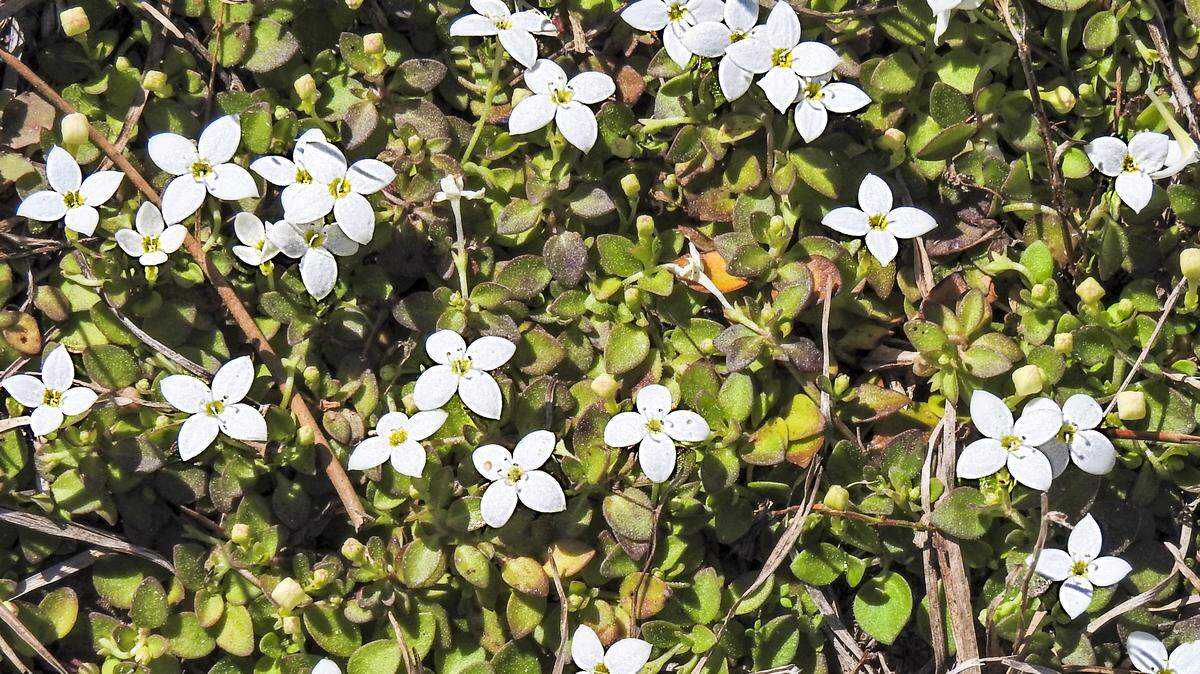
This delicate little plant may be easy to walk past (or step on) unless you’re looking down at the ground.
It’s called creeping bluet (Houstonia procumbens), and it’s a common spring wildflower in the Southeast. The plant has rounded, green leaves, a low, mat-like growth form, and small, white flowers with yellow centers.
There are some 20 different kinds of bluet, all native to North America. They’re in the same plant family as coffee, gardenias, pentas, and the cinchona tree that gives us quinine.
Bluet flowers are shaped like minuscule tubes with four petal-like lobes. Some species do have blue flowers, but in others the blossoms are white — as in creeping bluet — or purple, lavender, or pink.
Some bluets have other common names that are quite charming: star-violet, Quaker ladies, innocence.
Creeping bluet grows in mixed hardwood forests, pinelands, and sand dunes. Also look for it on disturbed sites such as lawns, roadsides, and the edges of parking lots. Beginning as early as mid-February, we start seeing bright clumps of creeping bluet scattered along the sandy banks of our lagoon.
Flowering continues throughout spring and into summer, during which time creeping bluet serves as a early nectar source for butterflies and small bees.