
These unassuming-looking fungi play important role recycling nutrients in your garden
You may not notice this ragged, cup-shaped fungus at first, since its drab, brownish color blends in with the soil or mulch around it. But look closely and you may see others popping up among the bark chips in your garden.
This rather unassuming-looking fungus belongs to the genus Peziza, which includes dozens of species, many of them difficult to sort out without close examination under a microscope. Most are of uncertain edibility.
Peziza, in turn, is in the family Pezizaceae, which comprises some 230 kinds of cup fungi whose “fruiting bodies” typically assume cup-like or saucer-like shapes. Spores are formed on the inner surface of the cup, and wind and raindrops (or your sprinkler) help to blow or splash them far and wide.
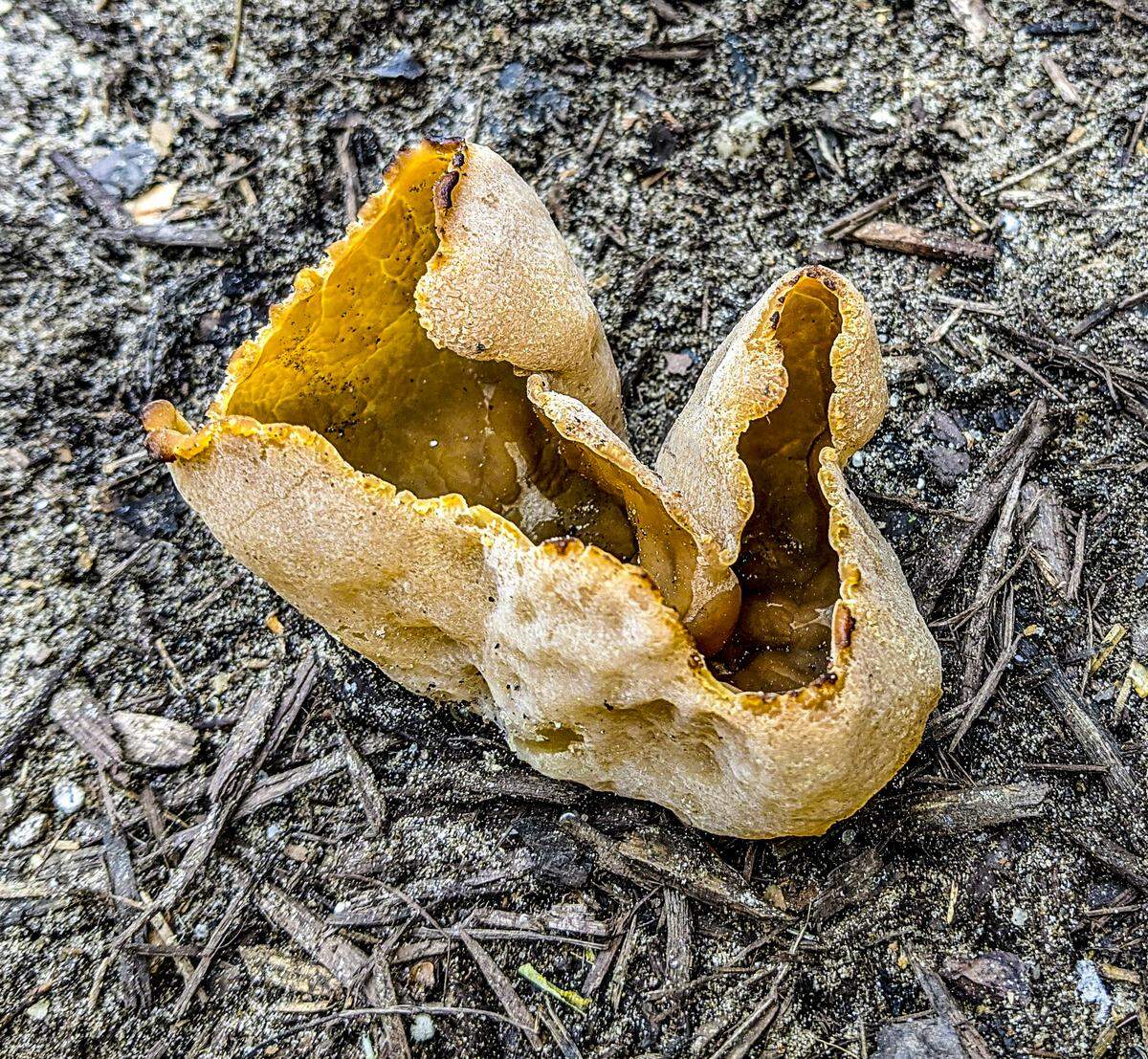
Any spores landing in spots suitable for germination give rise to networks of threadlike filaments (hyphae) that spread throughout moist substrates. Cup fungi, in fact, spend most of their time living inconspicuously underground as hyphae, except when conditions are right for cup production, which is often in the spring.
Like truffles, morels, yeasts, and other fungal relatives, cup fungi lack flowers, fruits, and seeds. They also lack chlorophyll and don’t produce their own food by photosynthesis.
Instead, they feed by decomposing dead organic matter. In the process, Peziza and other cup fungi perform an important ecological role in your yard by recycling nutrients and making them available to the roots of green plants.
This story was originally published March 4, 2020 at 5:30 AM.