
These non-native doves are spreading across the Carolinas, and all of the world
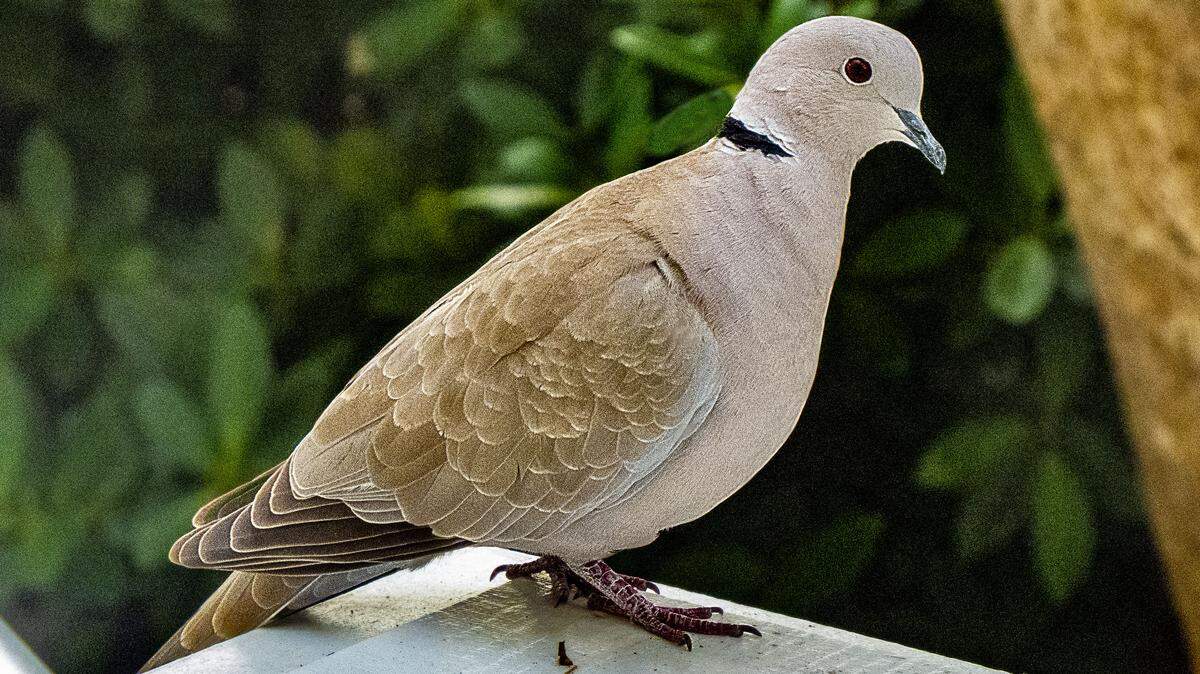
Native to Europe and Asia, Eurasian Collared Doves (Streptopelia decaocto) are pigeon-like birds that are spreading throughout much of the world, including the Carolinas.
These unprepossessing, grayish-tan birds have a crescent-like black “collar” and a squared-off tail.
They’re bigger and chunkier than Mourning Doves, but smaller than Rock Pigeons, the familiar pigeon common in cities worldwide.
Eurasian Collared Doves arrived in Florida in the 1980s, apparently via the Bahamas, and since then they’ve colonized much of the U.S. — except for the Northeast (so far), for reasons still unclear. Typical habitats include farmyards, fields, cities and suburbs.
Concerns have arisen about the potential invasiveness of this non-native species, given its high dispersal ability and ready adaptation to human environments. However, ongoing studies have yet to show adverse impacts on native American birds.
Eurasian Collared Doves don’t migrate, and during colder months they may form winter flocks in areas with ample food supplies. They’re ground-foragers, feeding mainly on seeds and cereal grains, along with berries and small invertebrates.
During the breeding season, male doves fly to trees or other high perches and advertise for females via a mournful “koo-KOO-kook” (or “ooh-OOH-ooh”) call. Courtship takes the form of ritualized flights and “bowing” displays.
Pairs nest in trees, tall shrubs, and sometimes on buildings. Nest construction is a cooperative venture: the male gathers supplies and the female makes a simple platform of sticks, feathers, string, and other materials, on which she lays a white egg or two.
Pairs are monogamous, and in Florida and other warm parts of the species’ range, they can produce multiple broods throughout most of the year.
Like other members of the dove family (Columbidae), Eurasian Collared Doves start their young nestlings out on “pigeon milk,” a high-protein, high-fat secretion from the lining of their crop, a portion of the digestive tract. This nutritious baby food is produced by both parents.
Predators include owls, hawks, cats — and humans, as the species is a popular game bird throughout much of its range.
In captivity, Eurasian Collared Doves live more sheltered lives, with record lifespans of 19 to 20 years.