
Honking pests? Don’t give up on Canada Geese. They still add beauty to our landscape
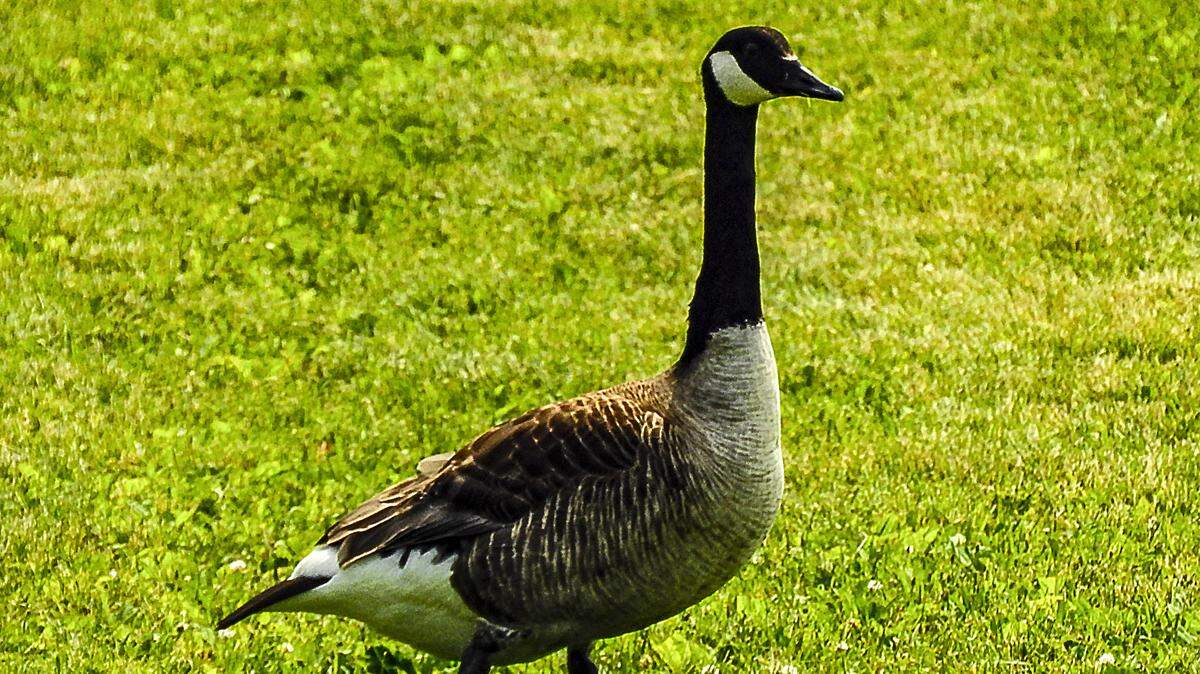
Canada Geese (Branta canadensis) are among the most widely distributed and easily recognized waterfowl in North America.
They’re those large birds with long, black necks and white cheek patches common at lakes, ponds, marshes, and cultivated fields. You’ll also see them at city parks, golf courses, and other wide expanses of lawn, pecking at grasses, their favorite food.
Geese also eat submerged aquatic vegetation, cat-tails, clover, berries, and other plant material. On farm fields they graze on agricultural crops such as corn, oats, barley, and wheat. They’ll also forage, to some extent, on small invertebrates.
Canada Goose taxonomy is complicated. At least 11 different forms, or subspecies, have been recognized, varying in size, with the smaller ones breeding in the more northerly parts of the species’ range. The four smallest variants are now grouped into a separate species, the Cackling Goose (Branta hutchinsii).
Migrating flocks of “honking” geese flying in V-formation are, of course, traditional markers of fall and spring. Actually, not all Canada Goose populations migrate. Those breeding in colder habitats, throughout Canada and Alaska do fly south to overwinter in the United States and parts of northern Mexico. But breeding populations in the more southerly portions of the species’ range, including much of the U.S., migrate shorter distances, if at all.
Here in South Carolina, resident flocks of Canada Goose are found year-round, along with small populations of Canadian migrants during fall and winter.
In the spring, the migrants leave, and resident flocks start breaking up as pairs peel off to reproduce. The female selects the nest site (often on the ground, near water), builds the nest, and incubates the eggs.
Both parents, especially the male, aggressively defend the nest and eggs against coyotes, raccoons, skunks, crows, foxes, and other predators, as well as unsuspecting humans who approach too closely.
In full threat display, a Canada Goose can be quite intimidating. It bends and extends its neck, sticks out its tongue, vibrates its neck feathers, vocalizes loudly, and may chase, peck, and attack intruders with its wings.
Parental protection extends to the goslings, which can walk, swim, and feed by themselves within 24 hours, but still need defense from their parents until they’re able to fly.
Non-migratory Canada Goose populations have increased dramatically in North America over the past few decades, particularly in urban and suburban areas, where geese are well adapted to living in close proximity to humans. The birds prefer open, grassy areas near fresh water, which provide them with ample food, plus unobstructed views of potential predators.
Unfortunately, the geese are not often welcome co-habitants of human spaces. Their copious, bacteria-laden droppings damage property and pose human health hazards, sometimes leading to the temporary closing of beaches or parks. Geese destroy or consume agricultural crops, while also competing with sheep and other grazing livestock for food. When in flight, particularly in large flocks, they may be potential hazards to aircraft.
Despite these negative impacts, there are benefits, too. Through feeding, Canada Geese help disperse the seeds of native plants, and their droppings, when present in moderation, enhance soil fertility. Adults, eggs, and goslings all serve as food for a variety of predators. Nesting families of geese also add beauty to our landscapes, providing pleasure to birdwatchers and naturalists.
Canada Geese are protected under the Migratory Bird Treaty Act of 1918, although hunting is permitted during designated seasons and subject to various state and local regulations.