Jellyfish on Hilton Head beach has ‘excruciatingly painful’ sting. More may be coming
A bright blue jellyfish washed up on Hilton Head Island’s beach near the north end of Sea Pines Monday afternoon. Some have called it “beautiful.”
However, this one comes with a strong warning from Shore Beach Service: “DO NOT touch it.”
The venomous Portuguese man-of-war is also known as a “bluebottle” jellyfish and can deliver an “excruciatingly painful” sting to humans even weeks after it’s dead, according to scientists at the Photo Ark Project at National Geographic.
“They are covered in venom-filled nematocysts used to paralyze and kill fish and other small creatures. For humans, a man-of-war sting is excruciatingly painful but rarely deadly,” according to National Geographic.
Shore Beach Service warned beach goers that the man-of-war’s venom is “much stronger” than the typical jellyfish that wash up on the beach on Hilton Head.
The animal typically extends about six inches above the waterline, but its tentacles can reach 30 to 100 feet below its sail-like body, according to the National Oceanic and Atmospheric Administration.
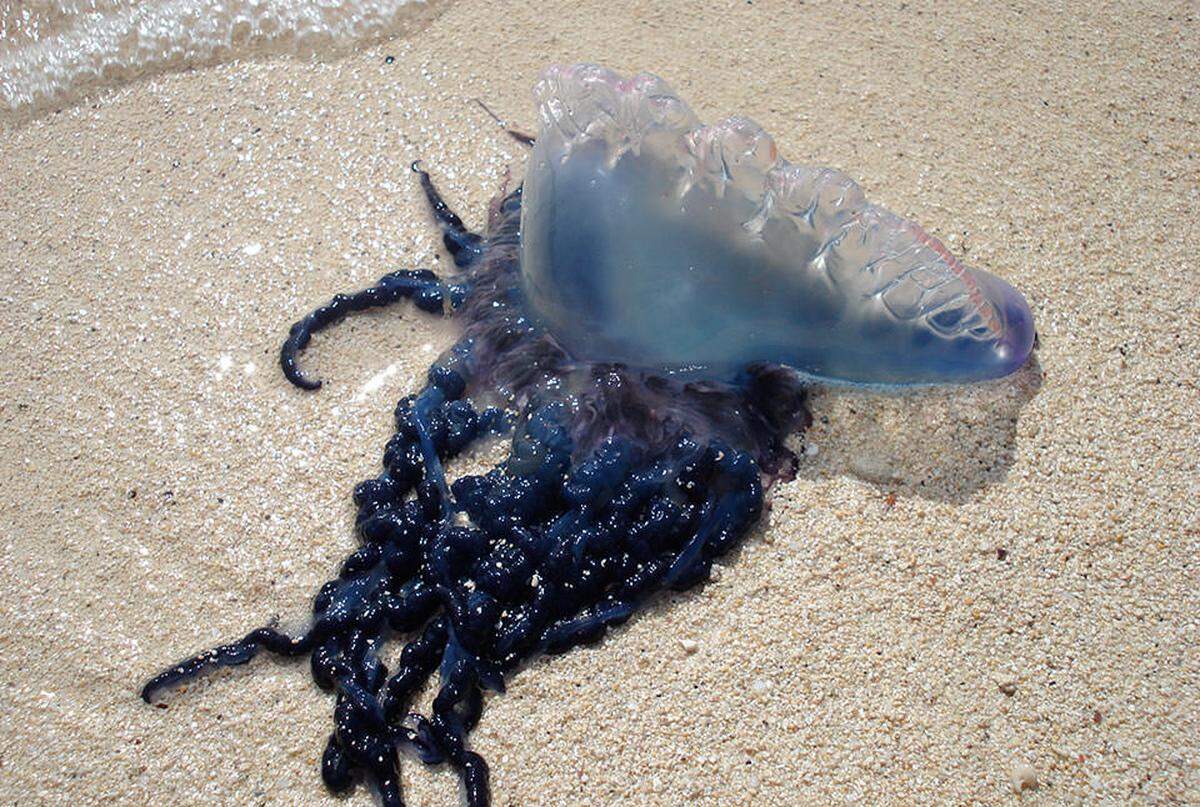
NOAA and National Geographic also report that, although the man-of-war looks like a jellyfish, it’s actually a species closely related to the jellyfish called a siphonophore.
“Not only is it not a jellyfish, it’s not even an ‘it,’ but a ‘they,’” according to National Geographic. “The Portuguese man-of-war is a siphonophore, an animal made up of a colony of organisms working together.”
This is the first documented man-of-war on Hilton Head Island this year, but Shore Beach Service operations manager Mike Wagner said lifeguards spot a few each year on the beach.
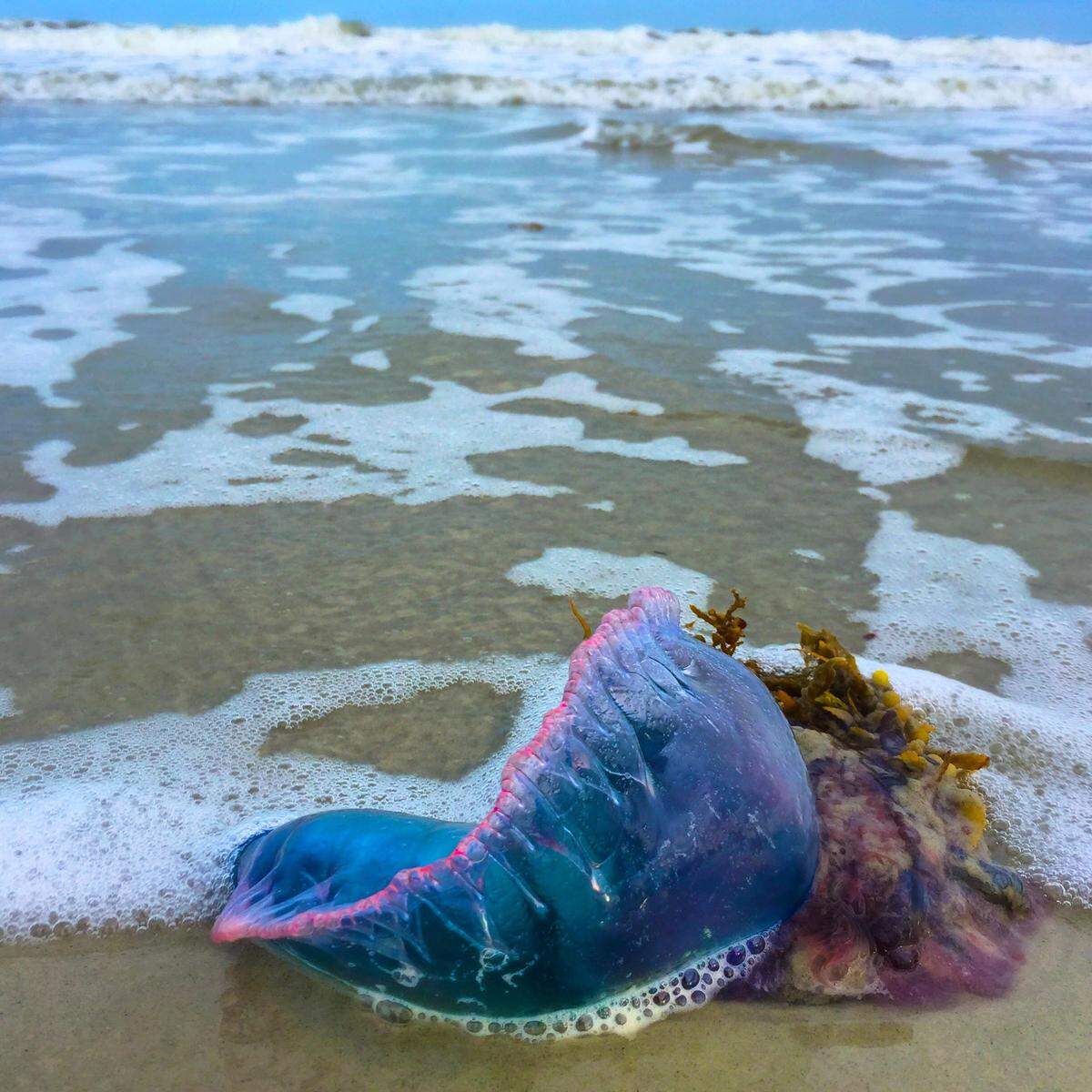
The creature, which Wagner said was about a foot long, was buried in the sand by lifeguards.
He warned there are likely to be more coming our way.
“Typically when we have them, it’s not like there’s just one,” Wagner said Tuesday. “If we got one, we might get a dozen more.”
National Geographic reports that men-of-war can travel in groups of 1,000 or more in warm waters.
“They have no independent means of propulsion and either drift on the currents or catch the wind with their (bodies),” according to National Geographic.
What to do if you’re stung by a jellyfish
If you’re stung by a man-of-war jellyfish, Wagner said to flush the sting area with ocean water or hot water.
If there’s any part of the jellyfish still on your body, Wagner said to remove it with a gloved hand or stick — not with your bare hands.
After you leave the beach, Wagner said flushing the area with hot water is a good remedy for any sting.
However, man-of-war stings can cause much more severe reactions including welts on the skin, according to Wagner and NOAA.
“You definitely want to monitor those more closely,” he said Tuesday. “Seeing a doctor with those is probably a good idea.”
This story was originally published May 21, 2019 at 11:44 AM.