
This Lowcountry plant can kill cows, pigs and your kids. It makes noise while it does it
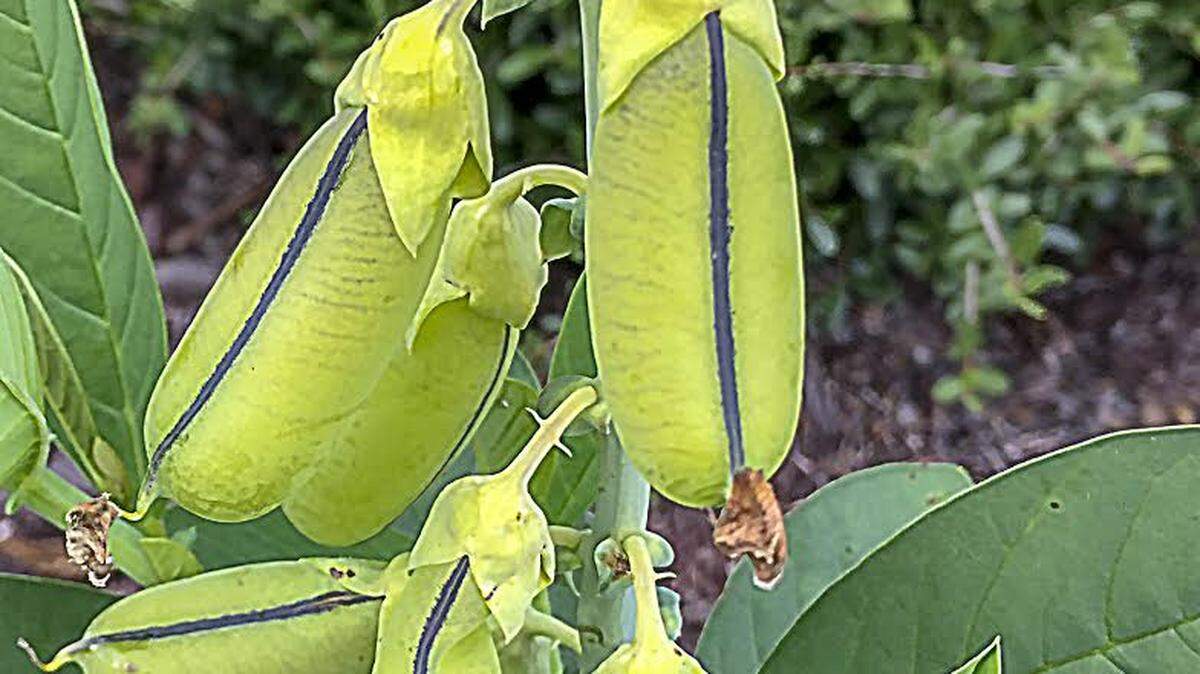
Native to Africa and Asia, showy rattlebox (Crotalaria spectabilis) is a strikingly beautiful plant with waxy, green leaves and tall stems of large, yellow flowers.
True to its name, it produces sausage-shaped seed pods that, once brown and dry, produce a pleasingly loud rattle when you shake them. The plant is one of some 600 Crotolaria species found worldwide, and it’s in the same family as peas, beans, and other legumes.
In the early 1900’s, showy rattlebox was introduced to the U.S. as a soil-building cover crop particularly suited to nutrient-poor, dry, sandy soils. Since then, the plant has spread throughout the Southeast in cultivated fields, waste areas, and other disturbed sites. In fact, showy rattlebox — like many introduced exotic plants— has become invasive. The South Carolina Exotic Pest Plant Council now labels it a “significant threat” because of its potential to change the make-up of natural plant communities.
But the major problem with this otherwise attractive plant is that it’s turned out to be toxic to a variety of farm animals —from chickens and goats to sheep, pigs, and cattle. All parts of the plant are poisonous, but the seeds are the worst. Toxicity comes from an alkaloid called monocrotaline, which causes fatal liver failure and other problems in livestock that ingest the plant. For this reason, it’s wise to keep pets, as well as children, away from rattlebox plants.
Certain caterpillars, though, feed voraciously on the leaves and seeds without apparent ill effects. These are the orange-and-black striped larvae of the bella moth (Utethelsa ornatrix), a small pinkish-orange patterned moth common in the Southeast. Not only do these tiny caterpillars feast on rattlebox, they also sequester its toxin within their bodies, thereby making themselves unpalatable to spiders and other predators. Larvae even compete with one another for “ownership” of individual seed pods and their toxin-rich contents.
Even after bella caterpillars morph into moths, they carry their poisonous attributes with them into adulthood. For them, rattlebox is key to survival.