
Like long walks on Lowcountry beaches? Expect this little plant to come with you
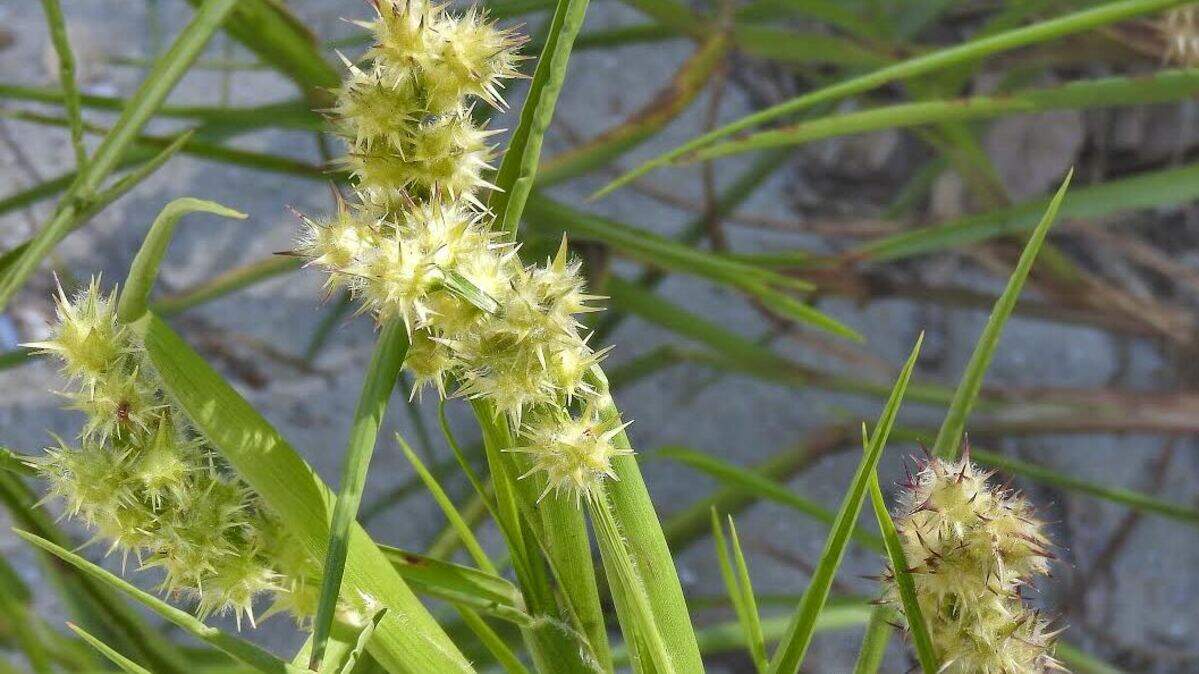
It takes just one unpleasant encounter with sandburs to create a lasting impression.
The dry, prickly fruits (burs) of these common weeds readily adhere to shoes, pant legs, and bare feet. And once embedded in the skin, the tiny spines from the burs can be very painful.
Sandburs, or sandspurs (Cenchrus spp.), belong to the grass family, and there are some two dozen kinds distributed around the world. In the Southeast, we have several common species, typically found on sandy or arid soils. Watch out for them growing near sand dunes and in dry fields, roadsides, waste areas, and other disturbed habitats.
They’re sprawling grasses a foot or two high, with long, narrow leaves that have a rough texture, like sandpaper. In late summer they produce clusters of tiny, wind-pollinated flowers, followed in the fall by those spiky burs. The tendency of the burs to detach from the plant, then re-attach firmly to passing humans and other animals, helps disperse the seeds inside them.
In India and the Sudan, sandbur fruits are sometimes cooked into cereals and bread when other foods become scarce. In Mexico, the plants played a role in folk medicine to treat tumors. And a sandbur called buffelgrass (C. ciliaris) is used extensively in tropical and subtropical areas around the world as a nutritious fodder for livestock. This non-native species was introduced into Arizona pasture lands in the 1930s, but it has since become an invasive weed in the West, crowding out native vegetation, depleting soil fertility, and decreasing biodiversity.
Here in the Southeast, sandburs can be troublesome weeds in sandy or untended lawns. And in late summer and fall, watch where you walk, especially with bare feet.
However, at Lowcountry beaches, sandburs play an important ecological role: their spreading root systems help stabilize our dunes.
This story was originally published August 8, 2018 at 6:15 AM.