
Ruins Over Water: paddling to the Coal Tipple industrial site in Charleston Harbor
Do you know what a “coal tipple” is? No, it’s not the name of a festive cocktail or an old-fashioned dance craze. The name refers to a facility where materials such as coal can be transferred to and from railroad cars and loaded onto ships or containers for transport. Here in the Lowcountry, the “Coal Tipple” is the nickname for the “Charleston Export Coal Terminal,” an abandoned industrial site in Charleston Harbor.
The Coal Tipple site is located on Town Creek along the marshy shore of Charleston Harbor on the Cooper River side of the city. The site contains a cluster of crumbling brick and concrete structures — and several hundred yards of charred and blackened railroad pilings. Once an important industrial facility, it has been long abandoned and now stands in majestic decay on the edge of nature and within sight of the city that has moved on to more modern energy needs.
More than just a relic of the past, the Coal Tipple site makes for a fascinating boating or kayaking destination. It is close to home and offers stunning views of the Lowcountry landscape and the mysterious allure of industrial ruin. Just be sure you keep a safe and respectful distance.
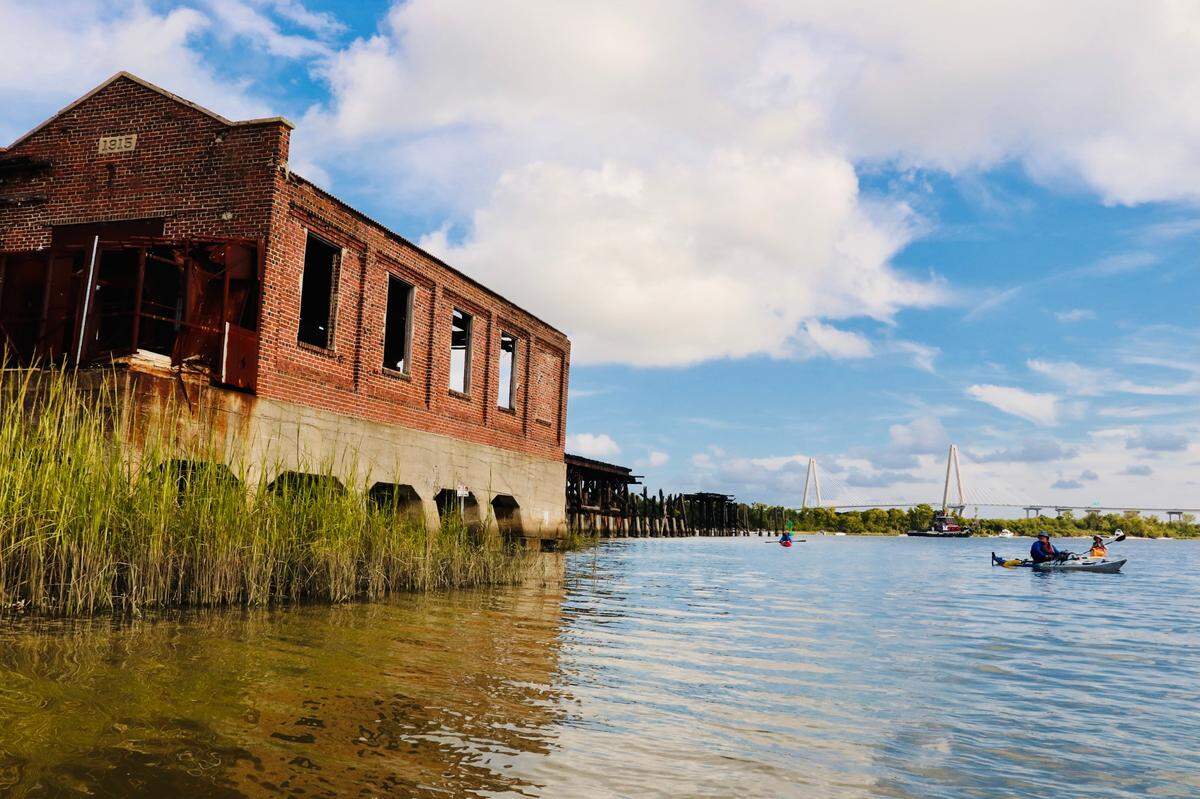
The Coal Tipple site was established in 1915 as the Charleston Coal Export Terminal. Land was acquired from nearby Magnolia Cemetery. Coal was the dominant energy source for America’s cities, homes and industries at the turn of the 20th century, and this new Charleston location was to be the only coal terminal south of Virginia on the eastern seaboard. Originally owned by Southern Railway Company, the Coal Tipple site was said to handle 2,000 tons of coal per hour in its heyday.
The Coal Tipple site changed hands over the years, and by the 1950s it was closed and purchased by the State Ports Authority. The site languished for several decades and fell into ruin. Fire in the 1970’s destroyed much of the trestle, and the Coal Tipple faded into history.
Various plans have been put forward to preserve or develop the site, but today it still stands empty. For now, the crumbling brick buildings and burned trestle of the Coal Tipple site offer a view of the stark beauty of contrasts and is fairly easy to reach by boat. You just need to mind the traffic.
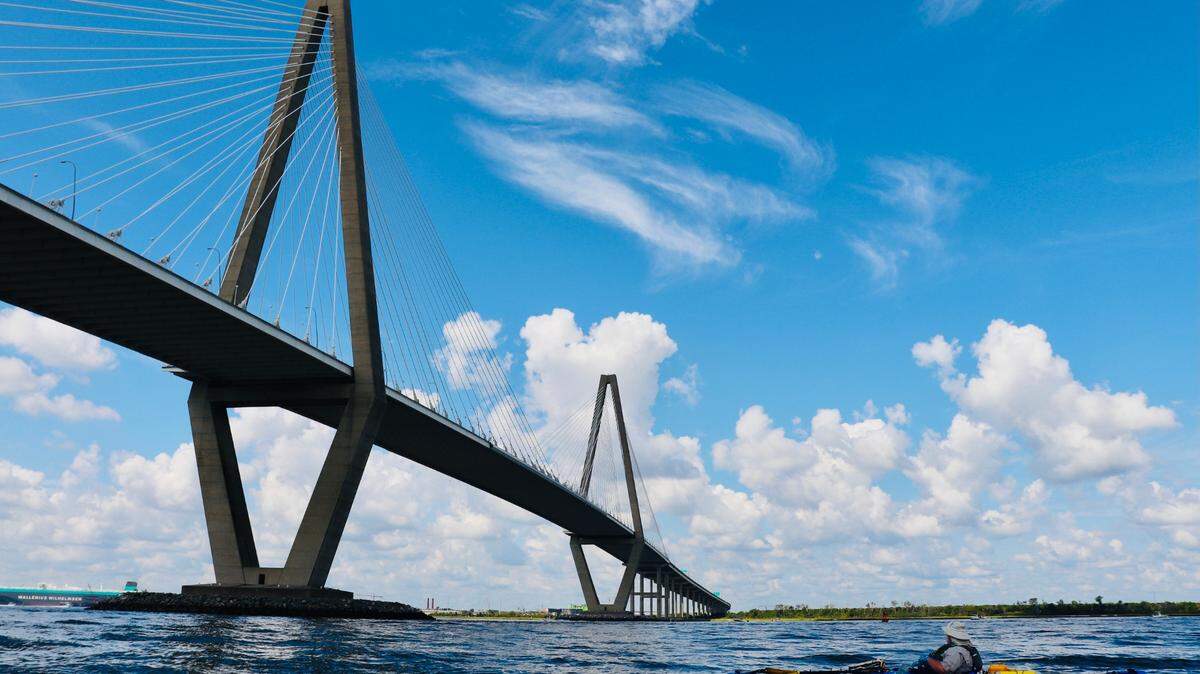
The Coal Tipple site can be seen from the Arthur Ravenel Bridge crossing the Cooper River in Charleston and is directly across from Remley’s Point Public Boat Landing in Mount Pleasant. From there it is about a one-mile paddle across the water and along the northern edge of Drum Island.
Once close to the Coal Tipple site, you will come to appreciate why it holds the fascination of Lowcountry photographers and boaters. Brick ruins loom above the deep green marsh, open to the elements, and the fire-blackened trestle stretches like a row of dragon’s teeth across the blue waters of Town Creek.
The Coal Tipple site is private property, and the ruins are dangerous to explore, so no trespassing is allowed. It can be enjoyed from a safe distance, along with other places in the harbor that can be easy to visit.
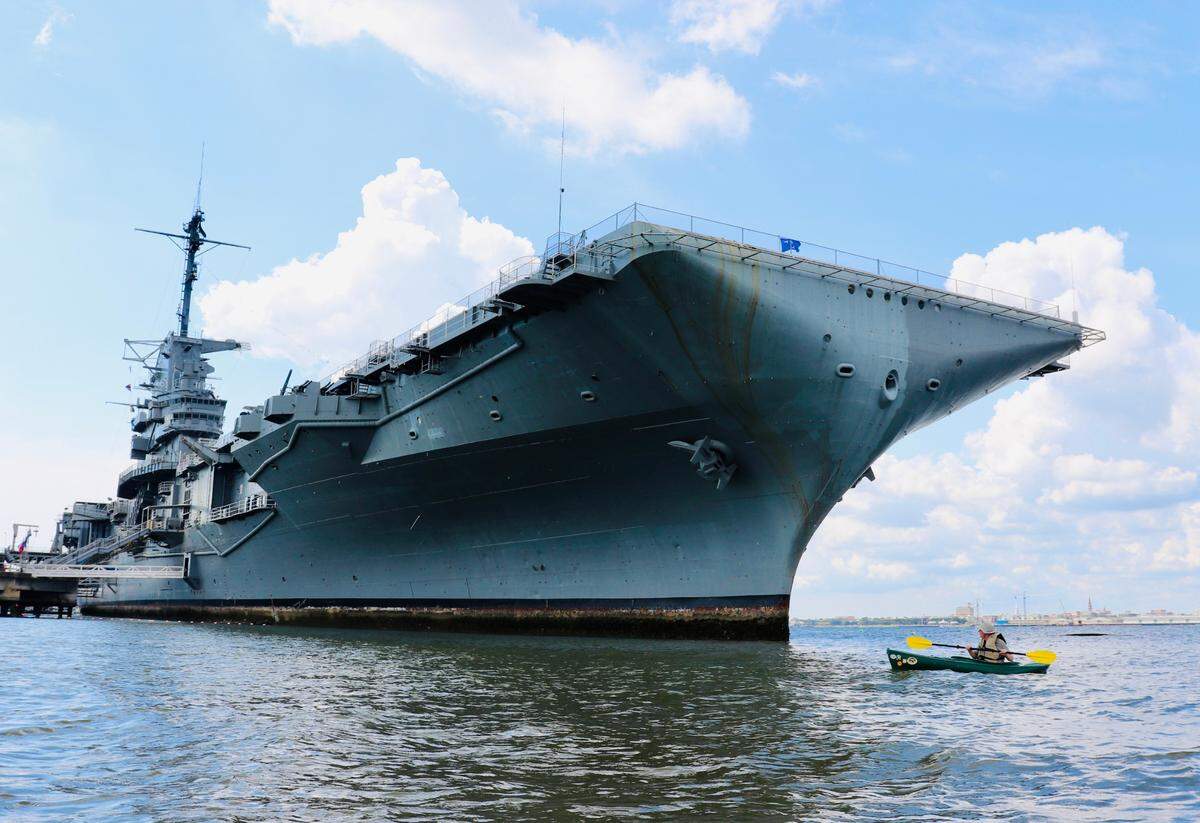
One of these is the Patriot’s Point Naval & Maritime Museum in Mount Pleasant. Here, the mighty USS Yorktown aircraft carrier and other historic vessels are moored as a floating museum. Within sight of the Remley’s Point Public Boat Landing, Patriot’s Point is also easy to reach by boat or kayak and offers an adventurous water-level view of the exhibits.
Recently, I kayaked to the Charleston Coal Tipple site and to Patriot’s Point with a group of friends. We launched at Remley’s Point Boat Landing on a falling tide for a short visit to the ships at Patriot’s Point. As the tide shifted we rode the rising current up Town Creek to inspect the Coal Tipple site. A few hours’ journey on favorable tides netted us an exciting day filled with the history and beauty of the “Holy City” and the Lowcountry.
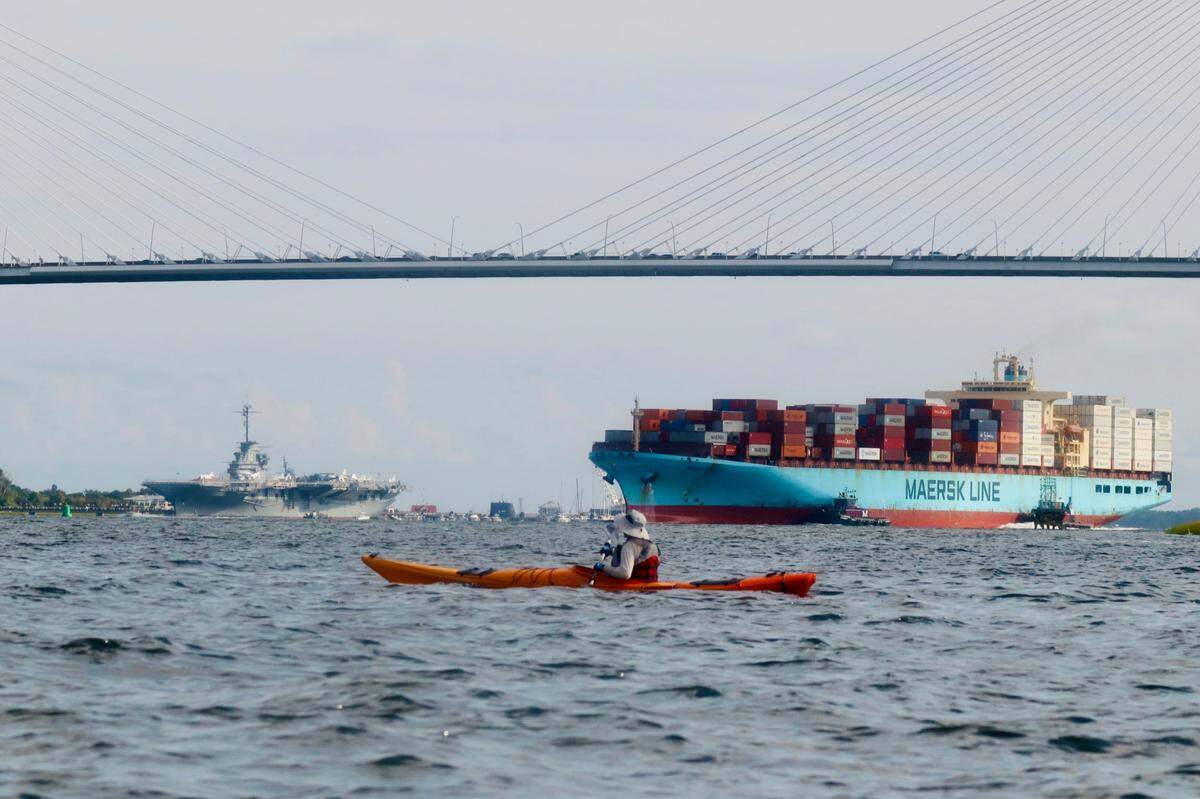
The only challenge we faced on our visit was the busy traffic of container ships and tugs plying the harbor. Charleston is a very busy port, and large ships do not stop for tiny kayaks or boats. Nevertheless, this simply stood as a reminder that times may change and industries may fade, but the Lowcountry remains as beautiful as ever.
Getting there
The Coal Tipple site is on the edge of the marsh near Charleston’s Magnolia Cemetery along the Cooper River at Town Creek. It is inaccessible on foot — and is a dangerous ruin on private property — but it can be readily viewed by water with a boat or kayak.
Remley’s Point Public Boat Landing is located at 112 2nd St., Mount Pleasant, about a two-hour drive from Beaufort County. The landing is open dawn to dusk year-round, and there is ample parking. There are no facilities at the landing, the Coal Tipple site, or other sites on the Harbor.
The paddle to the Coal Tipple site can be a challenge for those unused to strong tides or busy shipping traffic. On Charleston Harbor proper, south of the Arthur Ravenel Bridge, water conditions can change rapidly as weather and tide shifts can cause large swells and whitecaps on short notice. It may be best to stay as close to shore as possible. Container ships and other vessels move much faster than they may appear. There can be a real danger of collision for the unwary or inexperienced paddler or boater. Please use caution, have a plan and be prepared for a challenging but rewarding day on the water.