
Good food, nice folks, adventure - and monks! - in Moncks Corner. Where to go
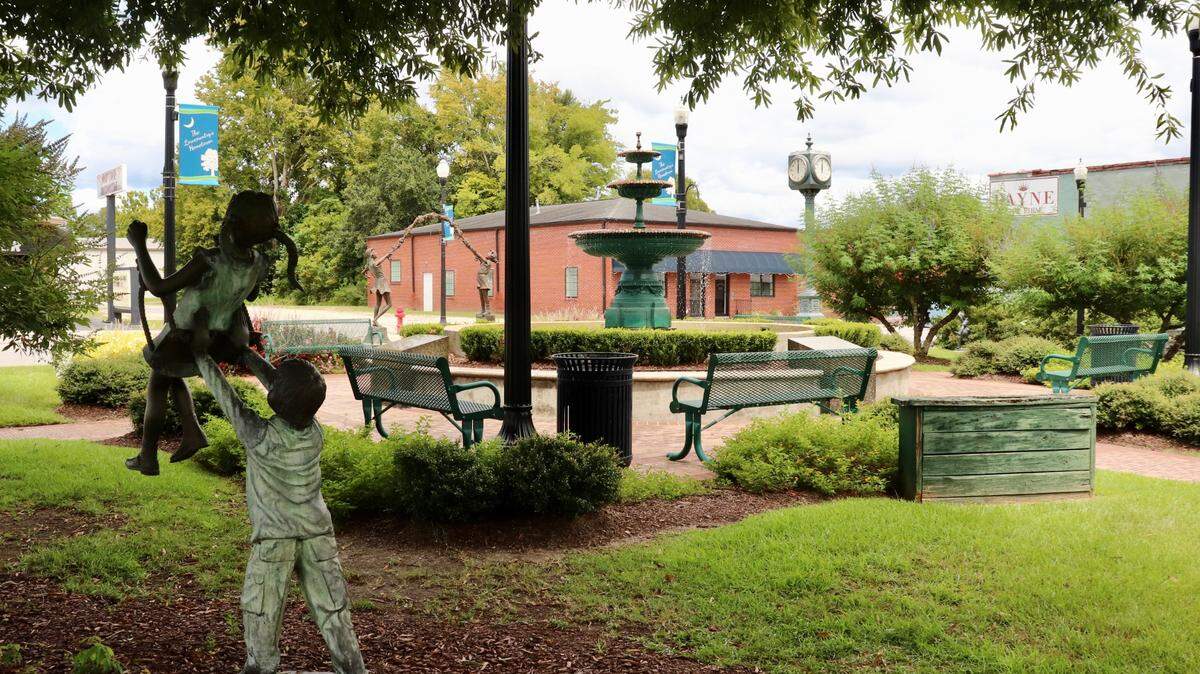
“Why did they name this town ‘Moncks Corner,’ Dad? Is it named after monks? Do monks live here or something?”
I looked in the rear-view mirror at my young son in the back seat. He was staring out the window at the scenes passing by of small town life. I thought about his question.
“Well, no. Moncks Corner is not named after monks ... but monks, in fact, DO live in Moncks Corner.”
My family and I were spending the day in and around the Lowcountry town of Moncks Corner, a small community less than an hour north of Charleston and about two hours from the Beaufort area that offers a variety of things to see and do.
If you appreciate the charm of a small town, meeting friendly people, and experiencing the natural beauty of the Lowcountry woods and waterways, then a visit to Moncks Corner will not disappoint.
Moncks history
Moncks Corner was formally established in 1885 and incorporated in 1909 as a vital hub of the Northeastern Railway, which had run since 1856 between Charleston and central North Carolina. The railroad brought commerce and a depot, but Moncks Corner’s origins go back much farther than that.
The town lies at the edge of Santee River country and was first settled by native Americans. Later, during colonial times, families of French Huguenots came there. These religious refugees from persecution flocked to the Lowcountry in the 1680s and settled along the Santee River bottom. There, they carved profitable plantations out of the land and into the cream of South Carolina society, adding names like Mazyk, Manigault, Huger and Marion to social registers.
Sometime around 1728, a landowner named T. Monck settled in the area and left his name to a growing community forming on the Charleston road. When the fires of revolution came, “Moncks Corner” became the site of battles between British and Patriot troops, including the men of General Francis Marion, the “Swamp Fox,” who led a guerrilla war along the region’s backroads and wilderness.
Since then, Moncks Corner witnessed the construction of the nearby Santee Canal (preserved at Old Santee Canal Park, 900 Stoney Landing Road), the coming of the railroads and, in the 20th century, the building of the vast Santee-Cooper lakes that serve the energy needs of millions — while providing a haven for wildlife and a paradise for anglers and boaters.
Breakfast, shopping
When you visit Moncks Corner today, you will find a small town that stands at the edge of the vast modern development around Charleston and the wild Santee country beyond. A visit offers you a taste of modern life as well as a trip down memory lane — and the option of a day of outdoor adventure to boot.
The first thing you must do: Bring a big appetite and good sense of humor, because you are eating breakfast at Howard’s Restaurant. Howard’s, at 336 E. Main St., boasts the “Best food on the Corner since 1960.” Here you will find excellent Lowcountry cooking — but no menus. The owner will come over to let you know what’s being served, or take your order as you like.
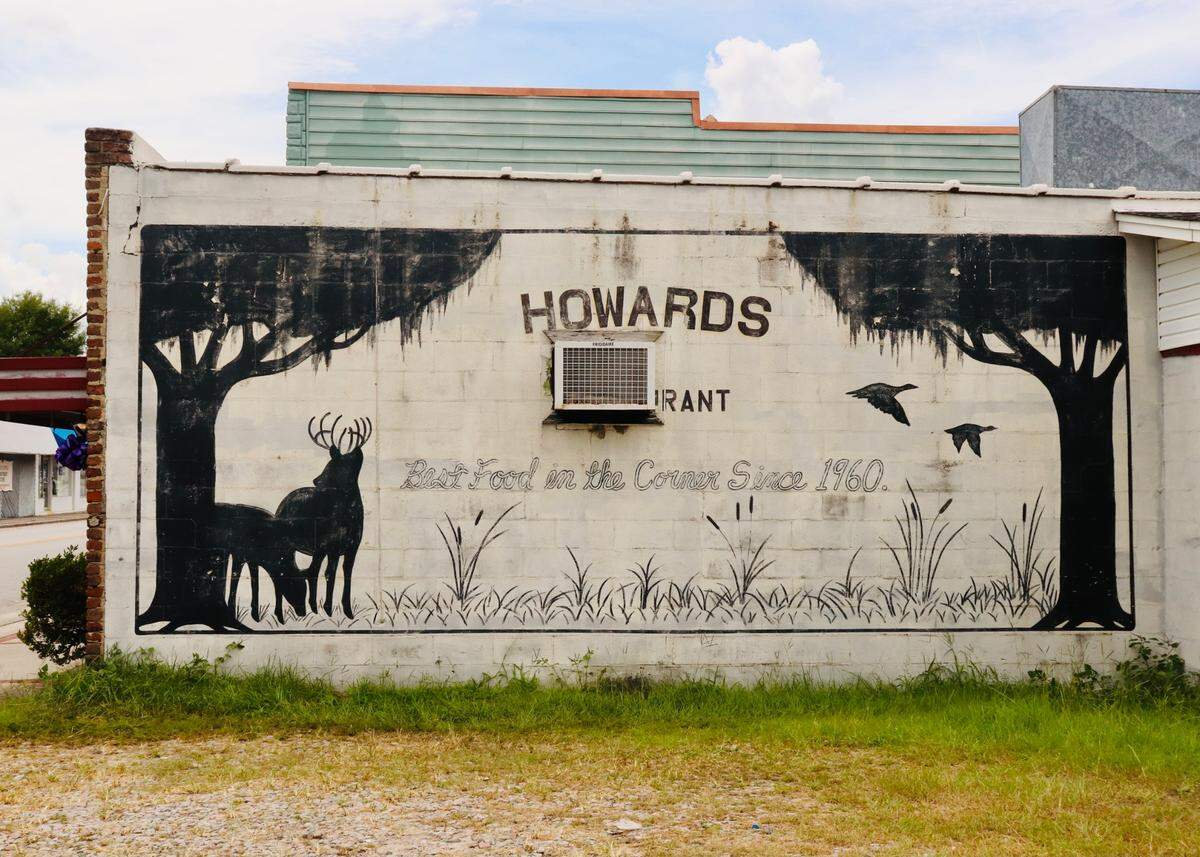
I first visited Howard’s years ago with friends, and when one asked for a menu, he was asked, “Don’t you know what you want for breakfast? It’s breakfast. How hard can it be?” A plate of eggs, bacon and French toast later, and breakfast proved to be easy indeed. (Howard’s is open 5 a.m. to 3 p.m. Monday through Saturday. Call 843-761-8565 for more info.)
Moncks Corner has great small town shopping in the downtown and in the surrounding community. My family and I enjoyed a visit to Collectors Corner Antiques at 308 E. Main St. “We sell a variety of eclectic stuff,” says Ann, a shop employee, “from antiques to home decor.”
Each of us bought some form of old treasure that was needed for a collection — or would add just the right touch to a worthy corner of our home. (Collectors Corner Antiques is open 10 a.m. to 5 p.m. Monday through Saturday. Call 843-899-1886 for info.)
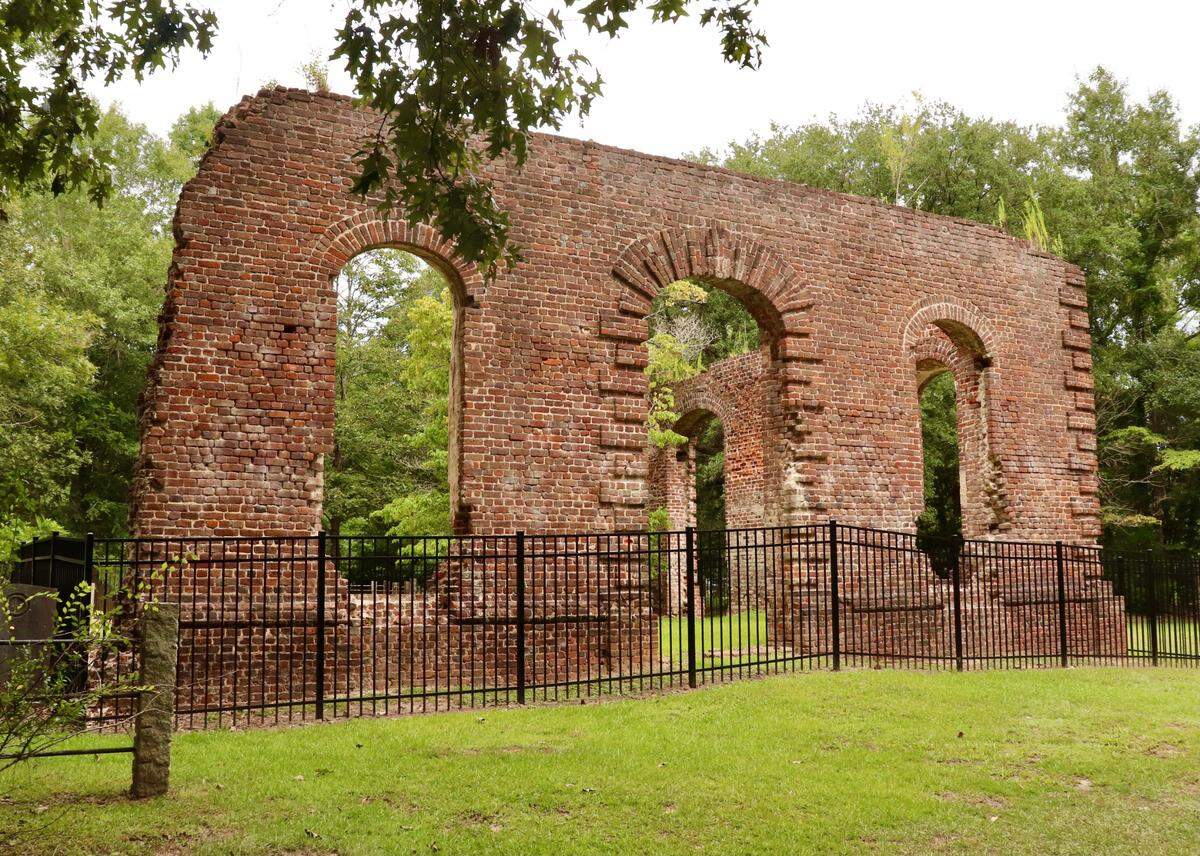
Prizes in hand, we soon left town to explore the countryside. Our first stop was the Biggin Church Ruins, at the intersection of S.C. 402 and Carswell Lane. This brick edifice was once the Parish Church of St. John’s Berkeley before being burned by British troops in 1781. It stands today as a hollow shell, a reminder of the destruction of war and the enduring hope of a people seeking freedom from tyranny.
Monks in Moncks
The last stop was Mepkin Abbey, at 1098 Mepkin Abbey Road in Moncks Corner. Founded on the site of Mepkin, a Colonial-era rice plantation, the abbey is home to a religious community of Trappist monks. Here, they live and worship, and their community is open daily to the public. A reception center serves as a gift shop and front door for visitors. Tours can be arranged and gifts can be purchased here, including locally made candy, honey and other items produced at the Abbey. You also can get directions to quietly enjoy a walk of the grounds, the Nancy Bryan Luce Gardens, and the historic Laurens Family cemetery. (Mepkin is open 9 a.m. to 4 p.m. Tuesday through Saturday and 1 to 4 p.m. Sunday. Call 843-761-8509 or visit the website, https://mepkinabbey.org/day-visits/)
My family and I headed back home, but we could have explored more, for just beyond Mepkin lies the community of Childsbury, where a historic church and a few homes are all that remain of a once-thriving plantation community. In the forest beyond Childsbury lies Bonneau Ferry WMA and the ruins of Comingtee Plantation — where a haunted tree is rumored to still grow. Read about this historic and mysterious place in a previous Packet column.
If you are looking for a day out and place to visit that offers a variety of adventures and experiences for all ages, check out Moncks Corner.
Getting there
Moncks Corner is about two hours from the Beaufort area and easy to visit on a day trip. Take U.S. 17 north toward Charleston and turn left onto S.C. 165 in Ravenel for 21 miles to Summerville. In Summerville, turn right onto U.S. 17-ALT/N. Main Street and drive for 15 miles to Moncks Corner.
Biggin Church and Mepkin Abbey are off U.S. 17 ALT/U.S. 52. Take S.C. 402 East to Biggin Church Ruins and continue on S.C. 402 East to Dr. Evans Road/S-8-44 for 5.6 miles to Mepkin Abbey.