
Resilient pineapple weed can grow in poor soil and survive cars driving over it
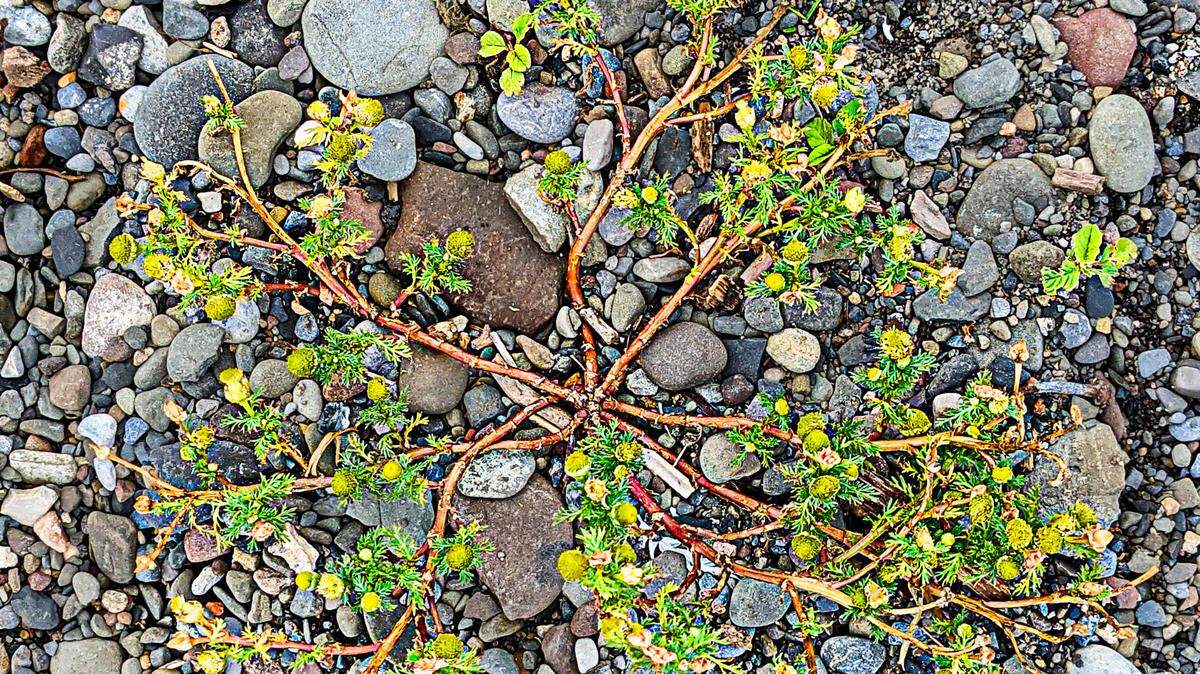
Pineapple weed (Matricaria discoidea) is an inconspicuous little plant whose lovely fragrance lives up to its name. When crushed, the foliage and tiny flowers do have a fruity, spicy, pineapple-like scent.
Native to Asia, the species is now found throughout most of the United States, including South Carolina. Look for pineapple weed in sunny, open places — roadsides, sidewalk cracks, weed lots, waste areas and other inhospitable places where most other plants can’t grow.
Like many other weeds, the plant tolerates drought and hard-packed, poor soils. It’s also amazingly resistant to trampling. You can step on it, even jump on it, and its tough wiry stems, feathery leaves and dense flowerheads just bounce right back.
Under favorable conditions, pineapple weed can reach heights of up to a foot or so. But on harsh, disturbed sites, it’s only a few inches tall, or it grows as a sprawling mat hugging the ground. Cars may drive right over it, but it survives.
This resilient little plant is related to sunflowers, daisies, and other members of the aster family, but it’s far less showy, with cone-shaped flower clusters only a third of an inch across.
Each flowerhead contains dozens of minuscule, tube-shaped “disc” flowers (florets), packed tightly together, much like the yellow center of a daisy. Missing are the strap-shaped white parts (“ray” florets) — often mistaken for petals — which daisies have, as well.
Native Americans used pineapple weed as an insect repellent and perfume, as well as medicine to treat intestinal and menstrual problems, infections and fever.