
Natural Lowcountry / This white butterfly is a pest, but also key to scientists’ research
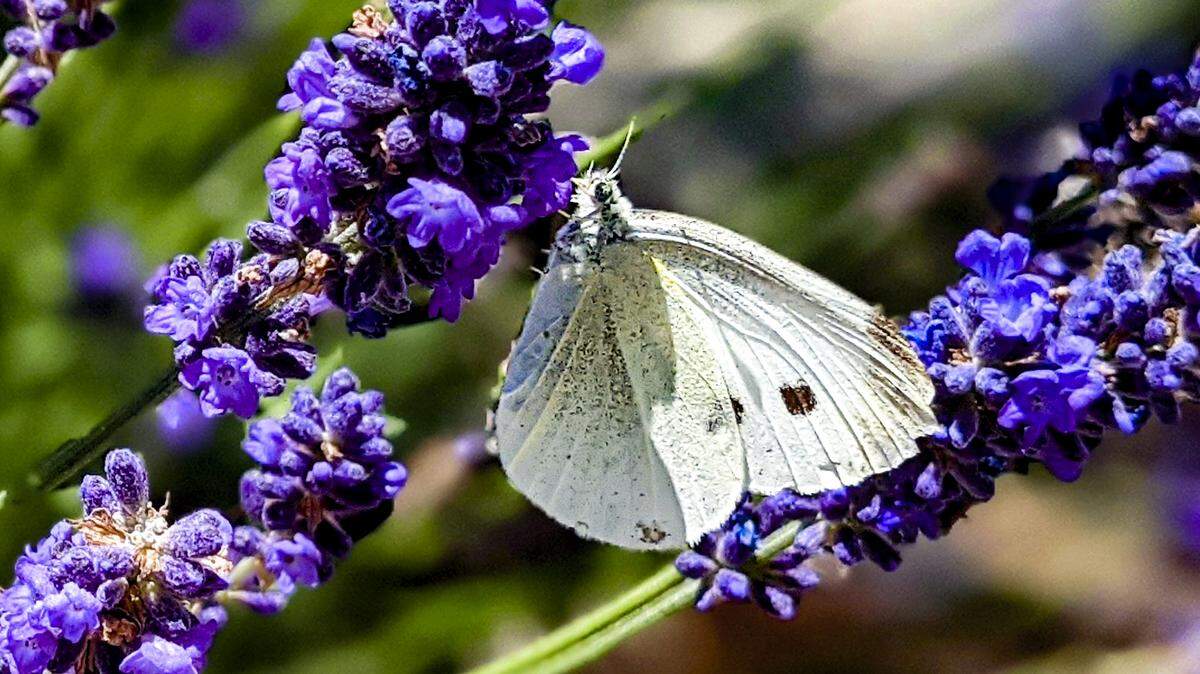
The butterfly, a cabbage-white,
(His honest idiocy of flight)
Will never now, it is too late,
Master the art of flying straight . . .
— Robert Graves
The Cabbage White (Pieris rapae) was probably the first butterfly I ever noticed, long before I learned its name.
This rather nondescript insect may be among the most familiar butterflies worldwide. Native to Europe, Asia and North Africa, it’s now spread throughout most of North America, as well as Australia and New Zealand.
It’s a small, white butterfly, not flashy like many of its bigger and colorful relatives. Males have a single black spot on each forewing; females have two.
You’ve probably seen Cabbage Whites patrolling along roadsides or fluttering erratically over weed lots, meadows, farm fields, lawns and gardens.
Adult butterflies spend much of their time foraging for nectar, preferring blue, purple and yellow flowers and locating food by sight and smell.
But they start life as small, green caterpillars feeding on the leaves of broccoli, cauliflower, turnips, kale, cabbage and other plants in the mustard family. As larvae, Cabbage Whites have voracious appetites. Although relatively minor pests in home gardens, they can cause significant damage to agricultural crops.
It’s no surprise, therefore, that many scientists studying this species have focused on pest control. But Cabbage Whites are also interesting because of their reproductive behavior.
In general, when butterflies mate, the male transfers a sperm packet (spermatophore) to a specialized pouch, or bursa, within the female. In Cabbage Whites and many other species, the spermatophore also contains proteins and other substances that nourish the female and boost egg production.
These nutrients are enclosed deep within the spermatophore’s tough outer coat. The female, though, has a pair of jaw-like structures in her bursa that are specialized for chomping away at this outer layer, breaking it down bit by bit. And right after mating she sets to work. She also secretes enzymes that help expedite the process.
Still, it takes a female Cabbage White a full day or longer to chew through the spermatophore’s coat and access the nutrients inside. Meanwhile, the sperm themselves have moved to a different internal chamber to be used for fertilization.
As you might expect, nutrient-packed spermatophores are metabolically costly for a male butterfly to produce. And male Cabbage Whites live only a few weeks. So the number of spermatophores a male can make (still unclear) will have a big impact on his reproductive success.
The female, meanwhile, needs spermatophores to lay successive batches of eggs. Once she stores the sperm and then depletes the accompanying nutrients, she may mate with another male. After each mating, of course, she gets a new spermatophore.
Cabbage White females tend to mate two or three times, sometimes more.
Scientists are just beginning to unravel the complexities of butterfly reproduction — not just overt behaviors like pair formation and mating, but also the interplay of physiological and anatomical factors behind the scenes.
These studies connect to broader questions about the evolution of reproductive behavior in other animals. And the ubiquitous, unassuming Cabbage White is one of many key study species that may provide some clues.