
Natural Lowcountry: Leaf-footed bugs may want to move in with you
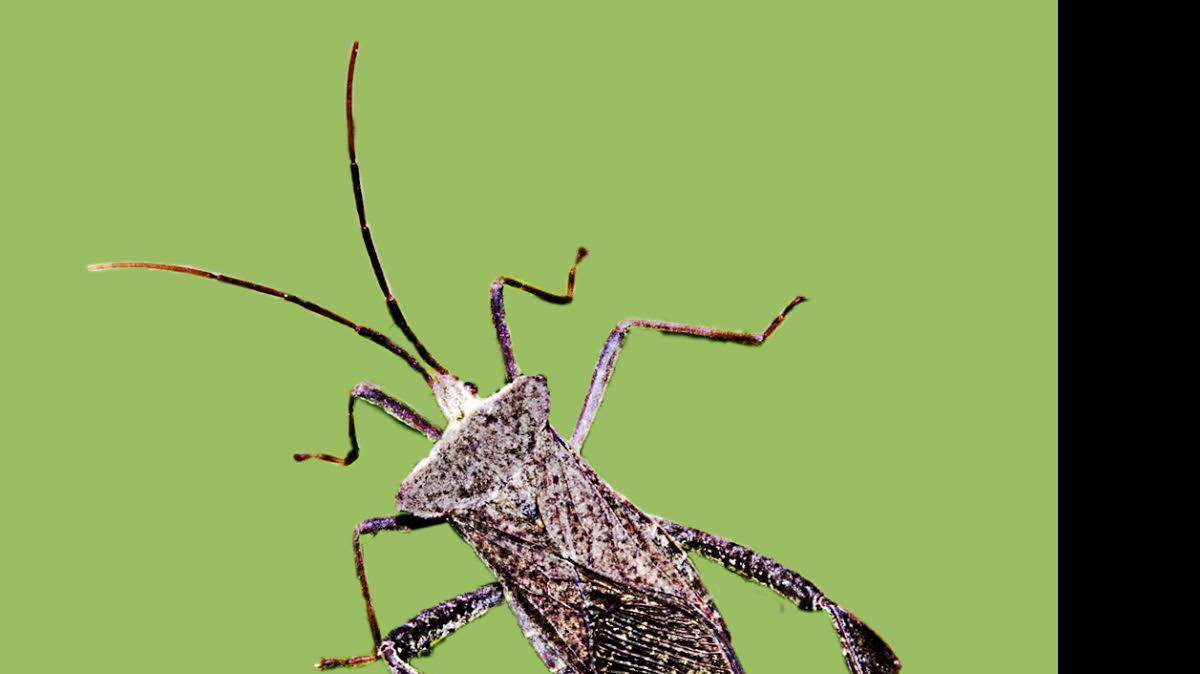
It's hard to ignore leaf-footed bugs.
They're big, with long legs and antennae and a tubular, piercing "beak." When viewed from above, they seem to have a "X" marked across their backs.
Their most conspicuous and peculiar feature is a pair of flat, leaf-like expansions on their hind legs. Whether these structures have any specialized function (courtship? camouflage?) is unknown.
This time of year, you may find leaf-footed bugs in your garage or service yard, or even indoors.
Throughout the summer they congregate on plants, sucking up the juices from leaves, shoots, and fruits.
The Southeast has many species of leaf-footed bugs; some are pests of tomatoes, peaches, pecans, sunflowers, cotton, and other crops.
Males attract females from afar via specialized scent glands in their abdomens. The eggs hatch into bright orange "nymphs," which feed voraciously on plant juices and shed their outer skins several times to accommodate their increasing size.
After several weeks, the nymphs attain sexual maturity and wings, plus full-sized leg expansions of their own.
When fall arrives, adults invade warmer places, overwintering there until the following spring.
Despite their rather intimidating appearance, leaf-footed bugs are harmless, slow-moving creatures.
Although they can fly, you're more likely to see them creeping slowly over window sills or screens. They don't sting or bite, but they may release a foul-smelling secretion if disturbed.
Vicky McMillan, a retired biologist formerly at Colgate University, lives on Hilton Head Island.
This story was originally published November 28, 2015 at 7:37 PM with the headline "Natural Lowcountry: Leaf-footed bugs may want to move in with you."