Hilton Head begins removing abandoned, derelict boats from local waterways
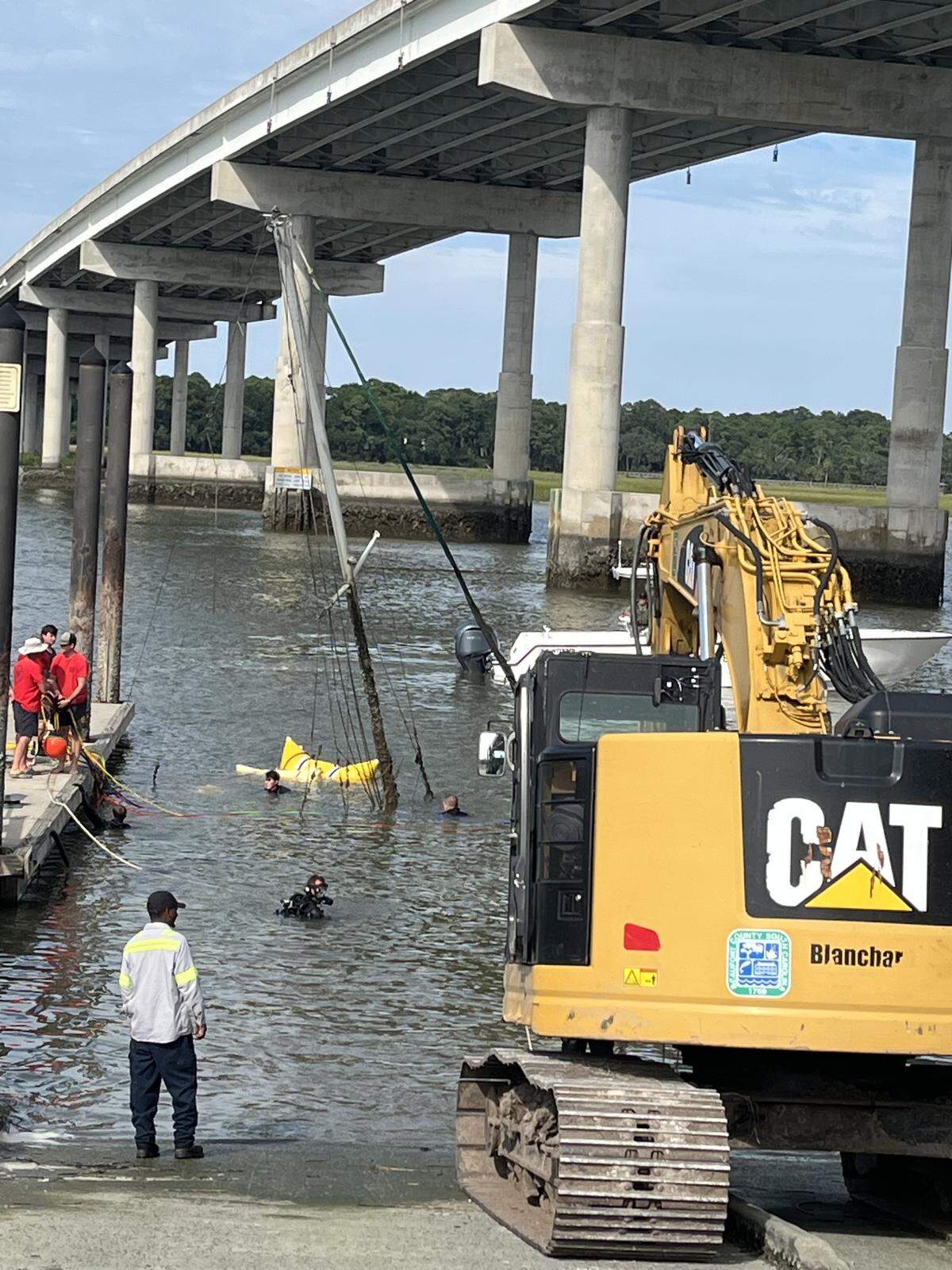
The sailboat had seen better days. Sitting in the water at Hilton Head’s Cross Island Boat Landing, it’s brown with rust and mud. The boat’s mast pokes above the water as cars rushed across the the bridge above.
Now, the boat is on its final journey. Crews with Beaufort County were ready to pull the boat out of the water and deposit it into a nearby dumpster. It’s one of 11 abandoned and derelict boats removed from the water surrounding Hilton Head in the past month.
A new law passed by the South Carolina legislature earlier this year has allowed Hilton Head and other municipalities to better address the pervasive issue. In the past month, the Town of Hilton Head Island, Beaufort County and the South Carolina Department of Natural Resources have removed 11 abandoned boats from the waters surrounding the island.
“We all know that abandoned and derelict vessels are more than eyesores,” Larry McElynn, a Beaufort County Council member who represents part of Hilton Head, said.
As abandoned and derelict vessels degrade, they pollute sensitive marsh environments across the Lowcountry and create a safety hazard for other boaters. A slow-moving, expensive and complicated legal process has historically slowed down their removal, inspiring a recent change in state law that imposes harsher penalties on the owners of abandoned boats and creates an avenue for speedier removal.
New rules after years of frustration
Under the new system, law enforcement attaches a notice to the vessel and tries to contact the owner upon identifying an abandoned boat. If the owner doesn’t remove the boat themselves or submit a plan to do so within a certain time period, then law enforcement can have the boat removed and charge the owner with a misdemeanor. The charge carries up to a $10,000 fine and a prison sentence of 60 days.
State law defines an “abandoned” boat as a “wrecked or junked” vessel without a visible identifier that’s been in state waters or nearby public property for at least ten days after it receives notice. A “derelict” vessel is a boat with visible identification that stays in the waters for at least 21 days after notice.
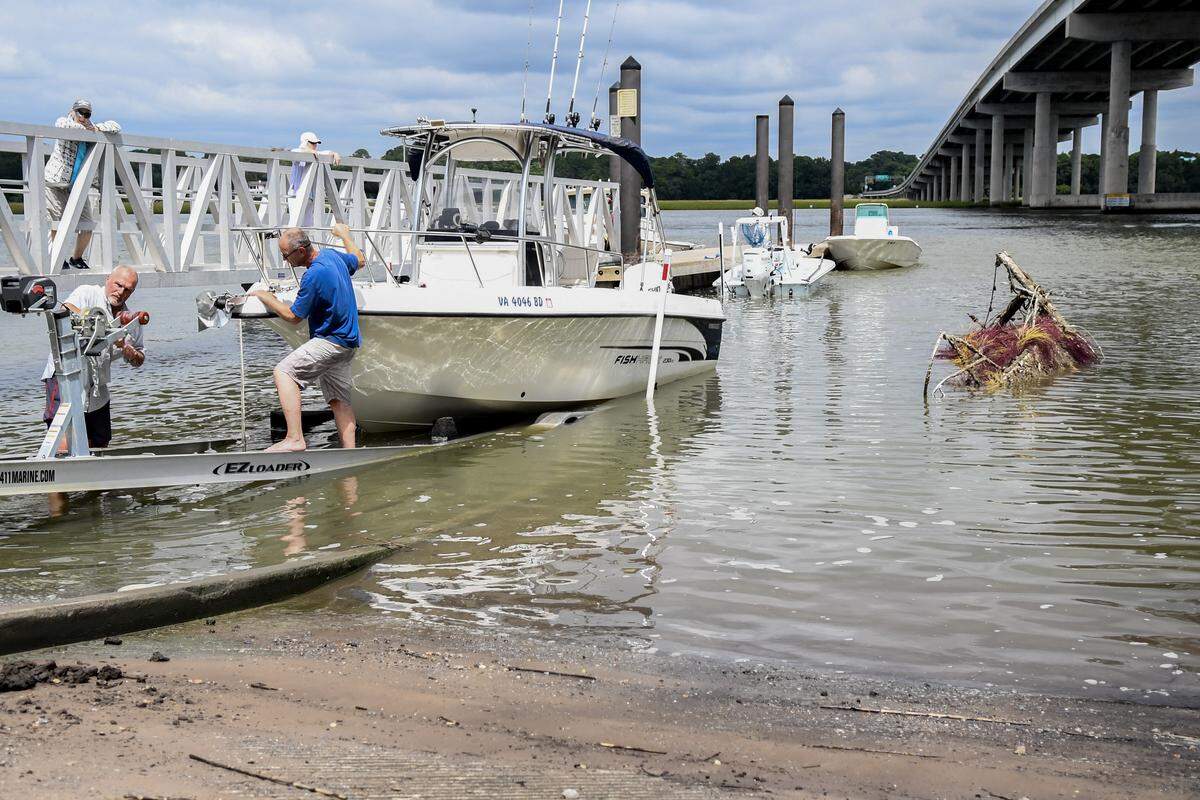
The new law allows anyone to sue the responsible party to cover removal costs. If boats are sunk and require divers to remove, the cost can exceed $9,000, Craig Jones, a lawyer with the DNR, said.
In June, the DNR announced that the agency had arrested Samuel Kodaimati, who bought a navy vessel in an auction, only to abandon it in a creek near Charleston. He was the first person to be arrested under the new statute.
Before the new law passed, Russell Patterson, a Hilton Head resident and lawyer, had for years worked to remove abandoned boats from Hilton Head’s waters through the local nonprofit Hilton Head Reef Foundation.
He would spend copious amounts of time trying to track down the owners of abandoned vessels and try to convince them to sign the boat over to the nonprofit. Simultaneously, the Hilton Head Reef Foundation would purchase anchors and lights to prevent anyone from hitting the vessel. If he was successful, a group of volunteers would work to remove the boat and Beaufort County would dispose of it, Patterson said.

A group effort
The removal of abandoned boats from Hilton Head’s waters comes as the Bluffton town council voted unanimously to adopt the state definitions of “abandoned” and “derelict” boats. The vote allows Bluffton to coordinate with other jurisdictions to remove vessels in waters near the town.
Stephen Steese, Bluffton town manager, said that the town will tag abandoned and derelict boats, and the DNR then removes them.
“One of the reasons we wanted to adopt [the ordinance] when the county did was several of the boats in the May River are within 100 ft. or so or less of being out of our jurisdiction. So literally if we adopted and the county didn’t, some of those boats could just move to the opposite side of the river,” town manager Stephen Steese said.
Hilton Head is also looking to adopt similar language and other mooring regulations before the end of the year, Heather Woolwine, spokesperson for the town, said.
Laura Finaldi contributed reporting to this story.