As shorelines erode in Beaufort County, the humble oyster lends a helping hand
South Carolina’s coastlines are falling apart, and it’s happening alarmingly fast. But one of the biggest projects in South Carolina Department of Natural Resources history is relying on the humble oyster to restore the Lowcountry shoreline.
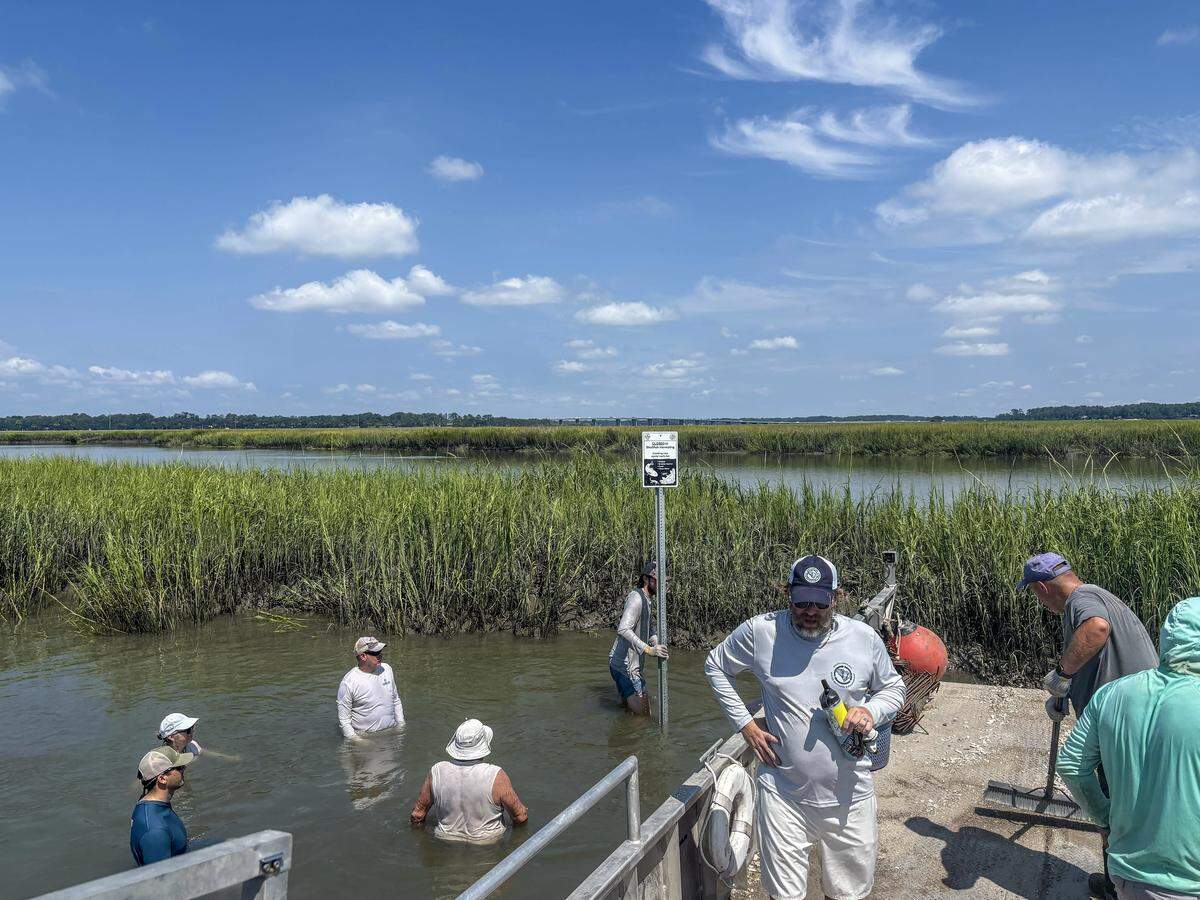
The final step in that process begins at the Parris Island boat ramp on a humid August morning. Armed with oyster shells, the group of volunteers and DNR staff prepare to head out to Archers Creek. The shoreline on the north end of Parris Island is rapidly eroding, with little to no oysters growing in a place they should be thriving.
As storms get stronger, boats get bigger and development intensifies through South Carolina’s Lowcountry, the DNR and other environmental advocacy organizations are increasingly turning to methods that rely on natural solutions to address the rapid erosion along the region’s tidal creeks and rivers. To accomplish that, the DNR often turns to groups of volunteers who are ready to get down in the pluff mud and work to restore the landscape they have come to love. They call it “sweat equity.”
Amy Fordham is one such volunteer. A Beaufort native and avid kayaker, she had her eye on the oyster reef builds for a while before she finally took the day off work to join in.
“I’ve been wanting to do something to help our environment down here for a long time,” Fordham said. “I love our Lowcounty. I love our waterways from Beaufort.”
The workday starts with unloading dozens of manufactured wire reefs into one of the newest additions to the DNR fleet. Dolly, a 31-foot long “beautiful royal blue” boat that can move the heavy cargo through shallow tidal creeks, according to Art Perry, a captain and wildlife resource tech with the DNR.
The DNR collects tens of thousands of bushels of recycled oyster shells from restaurants and donation sites around the state. Volunteers then assemble manufactured wire reefs that hold the donated oyster shells in place when the cages are planted along an eroding shoreline, Kevin Swain, a DNR biologist, said.
Volunteers help sift through the donated shells and remove the trash, which often includes saltine cracker wrappings and empty bottles of Fireball, after the shells are quarantined for six months before assembling the manufactured wire reefs, Cole Ruch, a DNR wildlife biologist, said.
Where do empty oyster shells come from?
While the DNR started collecting shells from restaurants and local drop off sites in 2000, the agency still needs to import some oyster shells from out of state to accomplish all the restoration projects each year. As the need for living shorelines grows across the county, the price of these oyster shells is rising, Aidan Kichter, a DNR wildlife technician, said.
After loading all the manufactured wire reefs, volunteers pile into a separate boat, which takes off through the Lowcountry creeks and rivers to Archers Creek. While the tide is higher than expected, Swain still jumps into chest deep water to locate where the row of wire oyster reefs installed during the last event ends.
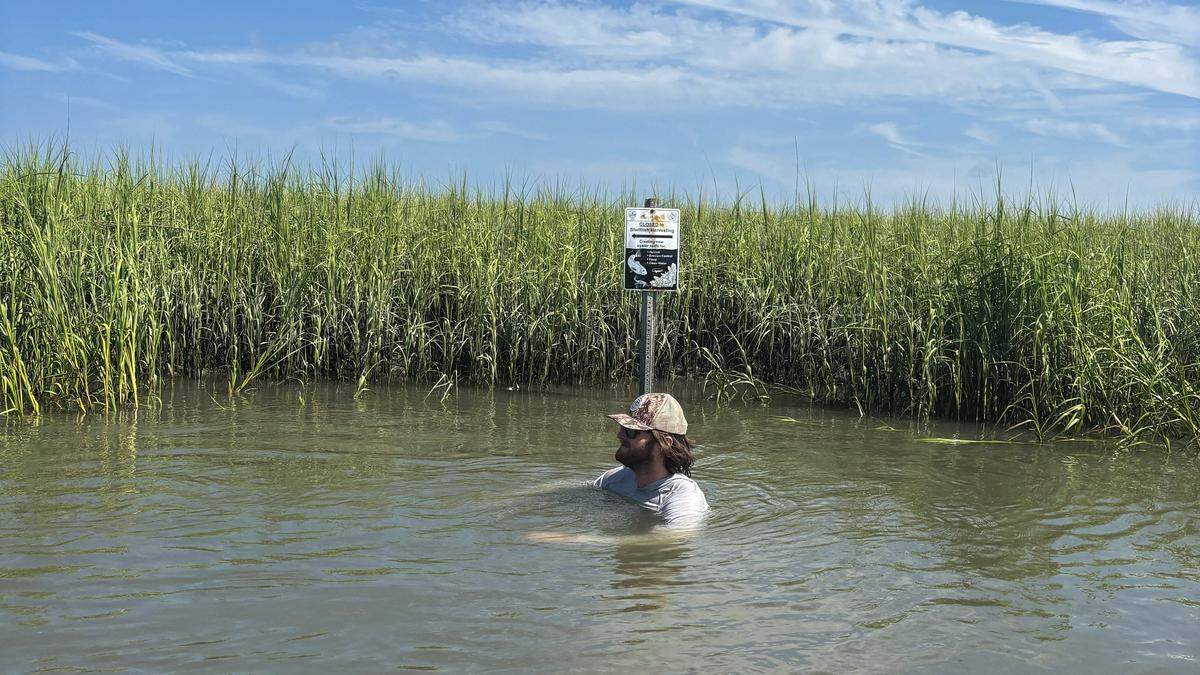
Soon enough, others jump into the creek to grab pre-made wire oyster reefs off the boat and place them in a checkerboard pattern along the side of the creek.
Perry stands high above the water, maneuvering the boat along the side of the creek as volunteers wade and swim back and forth as they build the reef further down the shoreline. Shrimp and small bait fish occasionally pop up out of the water as the group moves along the shoreline.
While still working as a crabber in Charleston, Perry felt that if he was always taking something out of the water, he should help put something good back in, so he started volunteering with the oyster program at the DNR.
Perry joined the DNR two years ago after he began volunteering at oyster reef events. While he loves captaining the boat, he said both he and his colleagues are “mud guys,” and they enjoy tromping through the pluff mud the most during these trips.
Giving back to the marsh
Unchecked harvesting had decimated oyster beds across the state until regulations were put in place about 20 years ago, Ruch said. When oysters spawn, or reproduce, in response to environmental cues like temperature and salinity, the fertilized eggs drift in the water column. Eventually, larvae develop and grow a “foot” that attaches to a hard surface, allowing the oyster to begin building its shell.
Oyster reefs build up over long periods of time because when oyster shells meet salt water, the calcium carbonate in the shells enters the water column, attracting the larval oyster which then attaches to the existing reef. When there aren’t enough oysters or other hard surfaces in an area, there is nowhere for the larvae to attach its foot and start building their own shell, Ruch said.
The manufactured wire reefs give developing oysters a place to land and start growing in an area where natural oyster reefs no longer grow. The wire reefs placed in the marsh in the past few years already have new oysters growing on them. They also hold the sediment that was eroding into the marsh in place, allowing more spartina grass to take root along the shoreline, Swain said.
“When we’re doing this using a keystone species like an oyster, we are bringing so much more to the table,” Ruch said.
Once they start growing on the manufactured wire reefs, a single adult oyster can begin to filter 50 gallons of water a day. Over 120 species live among the oyster reef, such as crabs, worms and small fish. When those populations are thriving, it benefits larger species such as dolphins, sharks, birds and large fish, Ruch said.
Tom Sandler has volunteered at five of the DNRs oyster reef building events. While his parents had lived in the area for 35 years, he didn’t pay much thought to the humble oyster before his neighbor in Sun City suggested they volunteer at an earlier time. He was impressed, not only after learning about the oyster’s water filtering abilities and the benefits of the project to the marsh’s spartina grass, but also by having so much fun with other volunteers and the DNR staff while out by the water.
“It’s a hard day, you’re doing some physical work,” Sandler said. “But I just can’t think of anything that’s more rewarding.”
This story was originally published August 22, 2025 at 1:29 PM.