On Pritchards Island, sea turtle nesting sites in peril from creeping erosion
As sea turtle nesting season starts to heat up, any turtle mamas that make the trek up the Pritchards Island beach may encounter some extra obstacles.
The rapidly eroding island owned by the University of South Carolina-Beaufort is one of many sea turtle nesting sites in Beaufort County. Erosion has led to dead trees scattered across the beach, which can block a mother turtle from finding a nesting place, and can limit an area where nests can successfully incubate for the season.
Beach erosion, coastal development and more frequent and intense storms drive habitat loss for the endangered and threatened sea turtles that nest on South Carolina’s beaches. In places with limited viable nesting habitat, relocating nests to a safer location — while controversial in some conservation circles — is the main method for combating nest failure.
This is the first year that USCB has taken full control of the sea turtle nest monitoring program, according to Kim Ritchie, professor and director of research at Pritchards Island. Compared to the end of the previous nesting season in October 2024, the island’s landscape has already changed.
“It’s a surprise every day,” Ritchie said.
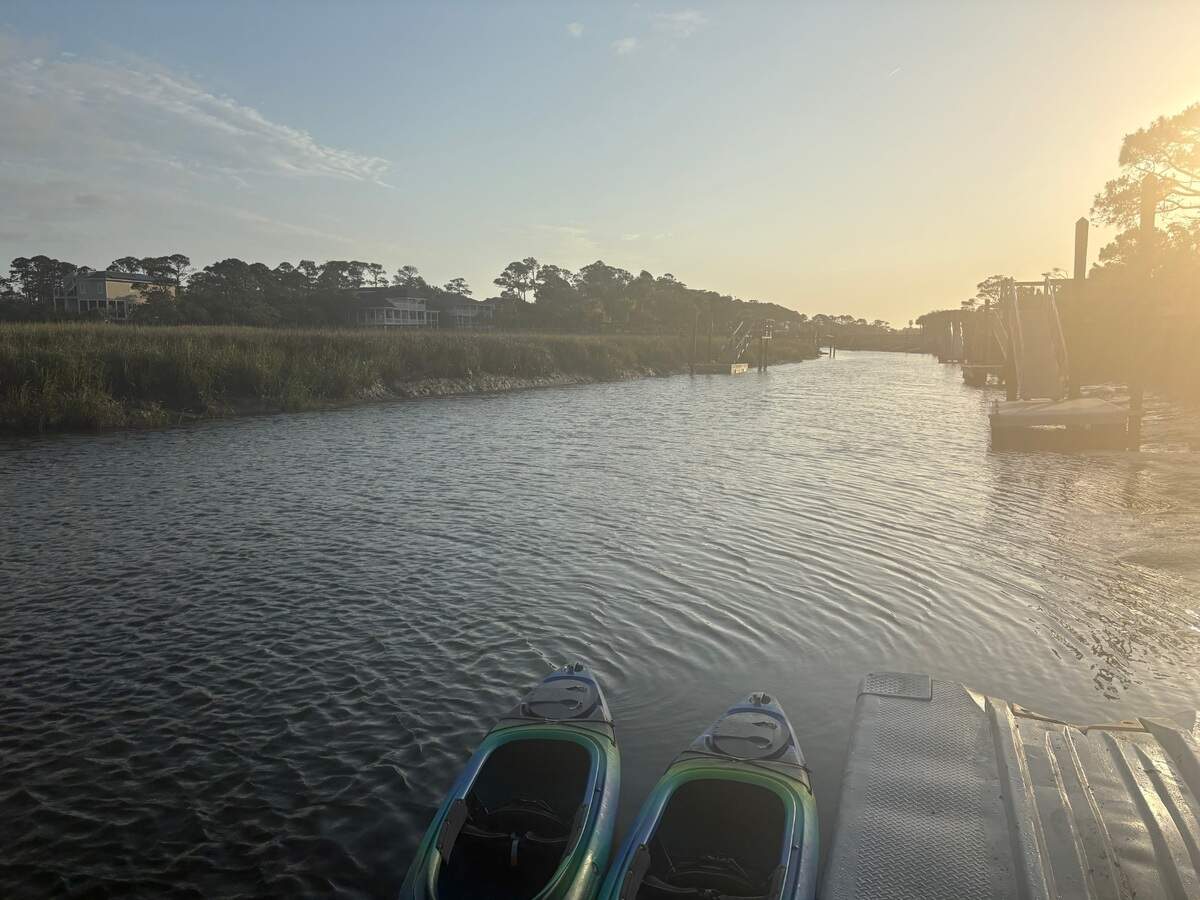
Pritchards is only accessible by boat. During sea turtle nesting season, Ritchie, student interns and volunteers, cast their kayaks off a dock on Fripp Island in the early morning hours. It’s a short paddle, through a creek and across Skull Inlet before landing on the northernmost point of Pritchards.
Stepping out onto the northern tip of the island, Ritchie gestures to the hard-packed sand. This stretch, she said, is washed over by high tides. Last year, there were more dunes and beaches. Now, there are occasional tufts of grass, wrack and the ripples left behind from the sea washing over the point of the island.
In 2024, some of the dunes in the area built up over the season. But right now, if a turtle laid a nest there, it would have to be moved, Ritchie said.
To move or not to move
In order to develop correctly, turtle nests need to be laid in a place with dry, cool sand above the high tide line, Michelle Pate, the coordinator for the SCDNR sea turtle program, said.
Moving turtle nests to higher, dryer ground is somewhat controversial. Some believe that “mother knows best” and the nests should be left where they were laid, Pate said. But because all four sea turtle species that nest in South Carolina are endangered or threatened, the SCDNR allows volunteers with specific permits and training to move nests in an effort to mitigate the effects of high tides and storm erosion.
Moving a nest is often the last resort. Movement during relocation can kill the developing embryos by breaking the membrane that connects the emporium to the yolk sac, which provides the embryo with nutrients throughout its development, according to the SCDNR.
The search for turtle tracks
On Pritchards, Ritchie and two student interns, Taylor DeSilva and Mary Claire Garland, began walking down the island along the high tide line. Their eyes are trained on the ground, looking for the turtle tracks that move from the water to a nest.
It was early in the season, but the USCB team had already recorded a turtle nest on Little Capers Island, which sits southwest of Pritchards. The nest was the third nest of 2025 in South Carolina. In 2024, sea turtles laid 47 nests on Pritchards Island and 53 nests on Little Capers Island.
Along the way, the team picks up trash that washed up on the beach and stuffs it in a bag attached to DeSilva’s backpack. A number of plastic bottles, a red balloon and pieces of plastic packaging have all washed up overnight.
What’s also scattered across the beach is a boneyard of dead trees and branches, felled by high tides and the creep of saltwater intrusion. Some have fallen over and are strewn across the beach and other trees still stand, their tall, white trunks sitting on top of exposed root systems. A family of eagles and ospreys flits between the remaining standing trees.
It’s hard for turtles to build nests on Pritchards because there are so many fallen trees and leftover roots that make it difficult for turtles to crawl across the beach, DeSilva said.
“If I were a turtle, I’d be like ‘nuh-uh,’” DeSilva said.
In one stretch of shoreline, DeSilva stops to point out an area they called “the nursery ground” last year. The team relocated a number of nests to that part of the beach. It’s questionable if a nest could successfully hatch there now because the high tide line is now so far up, DeSilva said.
The team stops to hand out tracking sheets and other supplies stored in bins among the forest trees. For much of the island’s length, the high tide line runs up against the forest, leaving next to no beach and no safe turtle nesting habitat. In some places, there is over a 10-foot cliff of sand. Palm trees cling to the top and roots stick out of the cliff’s face.
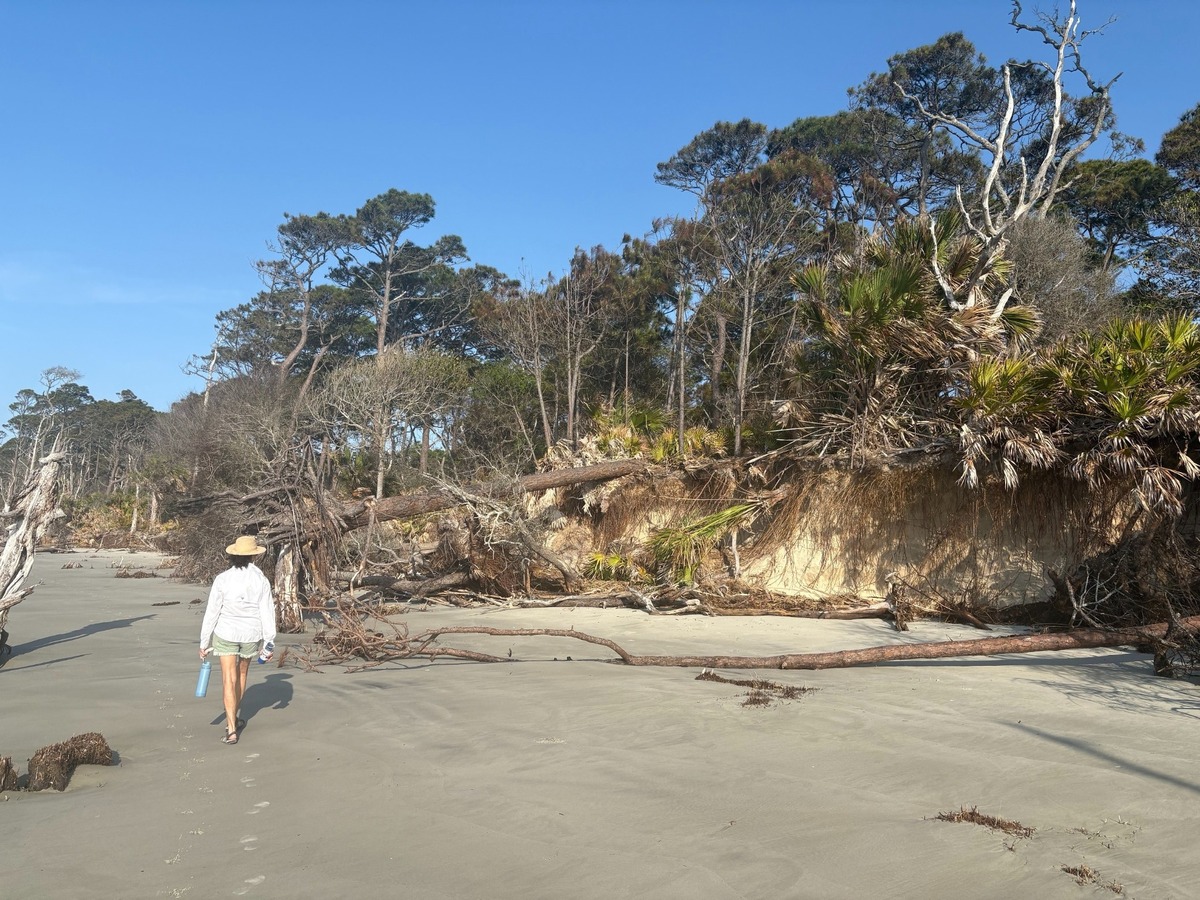
The erosion on Pritchards is removing viable sea turtle habitat, and the situation isn’t unique to the island. Across the state, habitat loss driven by erosion, coastal development and sea level rise is limiting the number of places sea turtles can successfully nest. Cape Romain National Wildlife Refuge, north of Charleston is the nation’s largest sea turtle nesting site north of Florida. It faces similar challenges from erosion. Because sea turtles take about 25 years to reach reproductive maturity, scientists won’t see the effects of this lost habitat for decades, Pate said.
The Pritchards team gives a shorebird nesting in the wrack a wide berth before reaching the southernmost end of the island. Dunes and beaches remain here. There were no turtle nests that day, so the team walked back with the sun rising overhead and the tide rolling further up the beach.
This story was originally published May 7, 2025 at 3:39 PM.