Beached whale euthanized after washing up on Hilton Head Island. Why couldn’t it be saved?
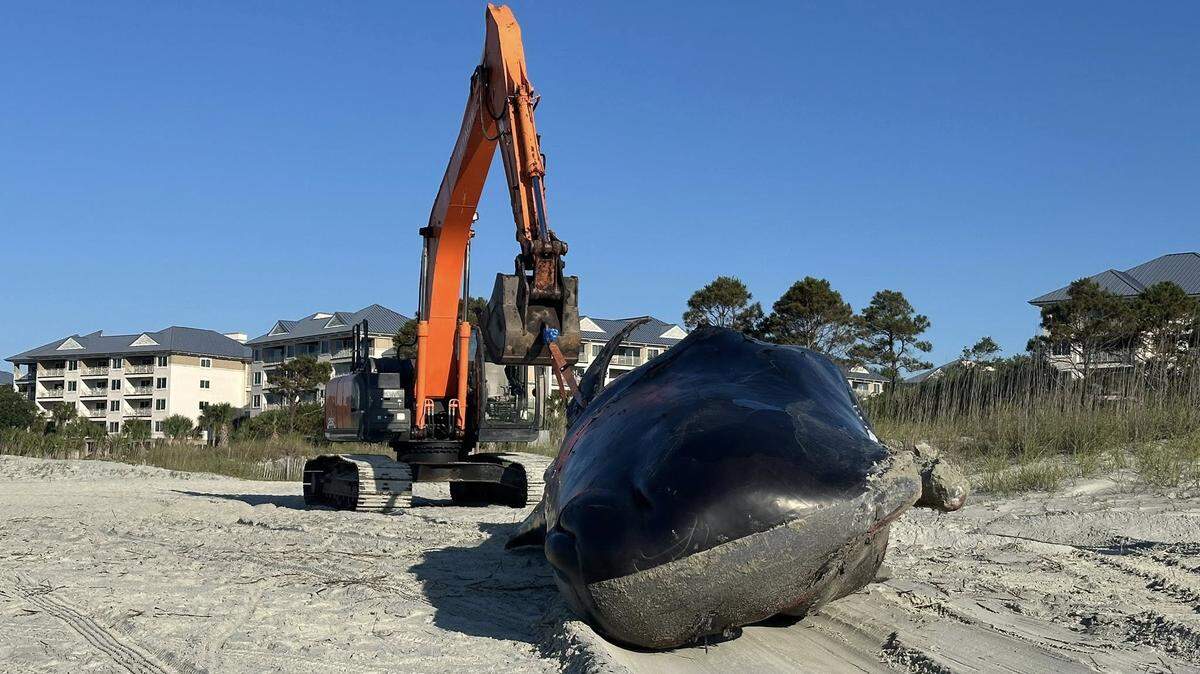
A beached sperm whale that washed up on Hilton Head Island Saturday evening was euthanized late last night, according to the town’s Facebook post.
The 31-foot whale is believed to be a juvenile, and washed up on South Forest Beach severely emaciated. It likely drifted “hundreds of miles” before ending up on Hilton Head, according to the post.
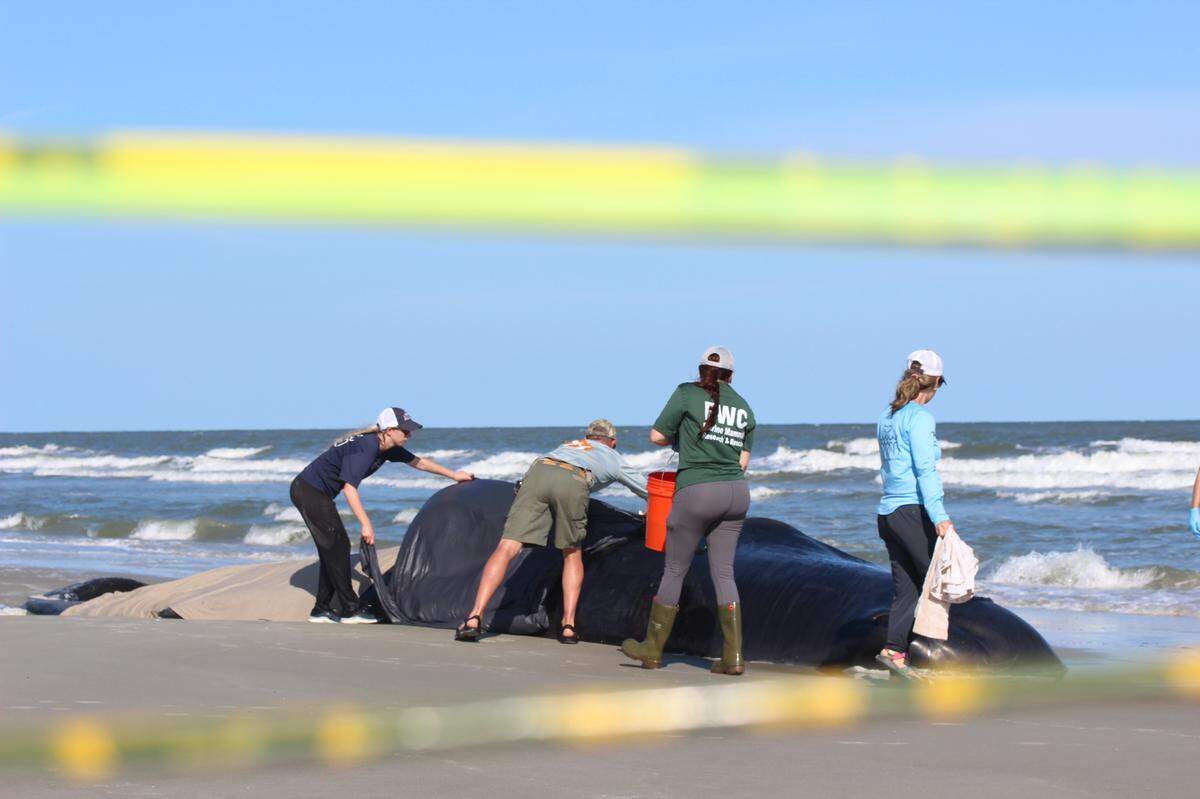
The rare sight attracted a crowd of beachgoers Sunday afternoon, who watched as workers covered the animal in sheets and doused it in water to reduce its suffering, as they awaited for specialized euthanasia equipment to be delivered from Florida.
A necropsy will be performed to probe deeper into what caused the animal to wash ashore. If tissue samples from the whale needs to be analyzed in a lab, that process could take months, biologists at the scene said.
After the necropsy, the whale will be buried in South Carolina, according to Nadia Lentz, a marine mammal biologist with Florida Fish and Wildlife.
Why couldn’t the beached whale be saved?
Euthanizing the beached whale was the best option to minimize the animal’s suffering, according to marine mammal biologist Clay George with the National Marine Fisheries Service. The whale was already in visibly poor health, but rehabilitation was not an option.
“There’s not rehab facilities that can take an animal as big as a sperm whale,” George said. “This is a 31 feet long animal, so moving it safely and putting it in a tank is just not an option.”
Pushing the whale back in the water was also not an option, according to George, as the whale would have “almost certainly” washed up again somewhere else. “The reason it ended up here is because it wasn’t able to maintain itself in the water and swim properly,” the biologist said.
Why do whales wash up on beaches?
Like the beached whale on Hilton Head Island, live whales usually only beached themselves if they’re sick, injured, or in otherwise poor health.
One common cause of sickness is when the whale ingests marine debris, especially plastic. Whales can get entangled in fishing gear or get struck by boats.
Sperm whales are an endangered species, and about four of them strand themselves on beaches across the Atlantic coast per year.
George said there has been some increase in the number of whales washing up over the years, but it’s not known whether that’s due to an increase in sperm whale populations or an increase to the threats they face.
Lentz said the average person can help endangered whales by making conscientious choices about the food they eat and the products the buy, and picking up their garbage on the beach.
“Make those consumer choices count,” Lentz told beachgoers Sunday afternoon.
What to do if you see a stranded marine mammal
If you see a stranded or injured marine animal, do not push it back into the ocean, as biologists say it will likely wash up again somewhere else. Instead, call (877) WHALE-HELP to report the animal to the National Marine Fisheries Service.
This story was originally published May 5, 2025 at 11:04 AM.