A famous fish’s population declines, this program to give it a boost off Hilton Head
.jpg "Southern flounder lay at the bottom of a tank at the Waddell Mariculture Center. These fish will be used to grow a new generation of southern flounder that will be released into state waters as part of a fish stocking program.")
Two eyes stare up from the bottom of a large, blue tank. Aside from the bubbling of a filter, the water is still. The southern flounder inside lie in wait, just as they would in the pluff mud of local waters.
But, in the wild, there are fewer of them to find.
Southern flounder — a favorite among recreational fishermen along the Atlantic coast — have been steadily declining in South Carolina’s waterways. Overfishing and environmental changes have taken a toll on the population, raising a concern among both coastal conservationists and fishermen.
The southern flounder that live in these tanks at the Waddell Marculture Center, a nondescript building right across from Victoria Bluff Heritage Preserve, are part of a new effort by the South Carolina Department of Natural Resources to breed flounder and release them into the state’s waterways. South Carolina’s southern flounder stocking program, while in its infancy, is part of a growing trend as other southern state programs aim to lend a hand to this struggling species.
The popular — and delicious — gamefish has seen a persistent decline in population since the DNR began tracking its numbers in the 1990s.
While each fish species presents the devoted DNR staff with its own challenges, southern flounder’s oddities make the process almost as delicate as its taste.
The flounder are floundering
The DNR has been collecting data on flounder populations since the early 1990s. The numbers show that the southern flounder population has declined steadily since the beginning of the survey.
A regional study on the flounder population, which looked at data from North Carolina, South Carolina, Georgia and Florida found the population at historically low levels. Following that study, state biologists took a closer look at the data they’ve been collecting for decades, which included additional information on the size and age.
While the state’s southern flounder population declined, the average size of the flounder DNR staff caught also decreased, a sign of heavy fishing pressure. When anglers — or fishermen — consistently remove fish once they reach the minimum age requirements, there are fewer larger fish in the population.
In short, the species is experiencing overfishing. This decline in southern flounder populations comes at a time when the human population in South Carolina is booming. With that increase in people comes an increase in fishermen on the water.
“[Population growth] has led to a general increase and fishing effort throughout all of our coastal and estuarine waters, leading to increased pressure on southern flounder, red drum, sea trout and all sorts of commonly encountered estuarine species,” Joey Ballenger, associate marine scientist at the DNR, said.
There are also additional signs that changes in water temperature were affecting southern flounder’s ability to survive into the early stages of adulthood, Ballenger said. There is extra risk to the species since temperature plays a role in the differentiation between males and females, with warmer waters possibly skewing the sex ratio in wild populations.
Anglers have been noticing the decline as well. A survey of state anglers conducted by the DNR found that most of the respondents believed the flounder population is in poor shape and that the flounder they catch today are smaller than when they began fishing in South Carolina.
In recent years, the South Carolina legislature has enacted new regulations aimed at combating overfishing. New rules that went into effect in 2021 increased the minimum size limit and decreased the number of fish an angler could catch each day. The new regulations also coincided with an increase in saltwater fishing license fees in two decades. Some of those funds are directed towards the new flounder stocking program.
“Recreational anglers were willing to go to bat for this and to actually pay more in their own pocket to fund this through the license fees,” Scott Whitaker, the executive director of Coastal Conservation Association-South Carolina, said. “So there was clearly an interest in the recreational community to try and do something for flounder, to try and recover that fishery as quickly as possible.”
More flounder babies means a population boost.
Following the 2019 study that identified historically low numbers of southern flounder in the region, the South Carolina legislature funded efforts to develop a stocking program for the species. The state’s new flounder program joined Texas, which has been growing and stocking flounder for the past 15 years, as well as Mississippi and Alabama.
“Other states are just constantly jumping on board, primarily because the fishery is in decline,” Broach said.
The DNR had started to work on culturing southern flounder over 20 years ago. It was so difficult they decided to stop, Erin Levesque, the manager of Waddell Marculture Center, said.
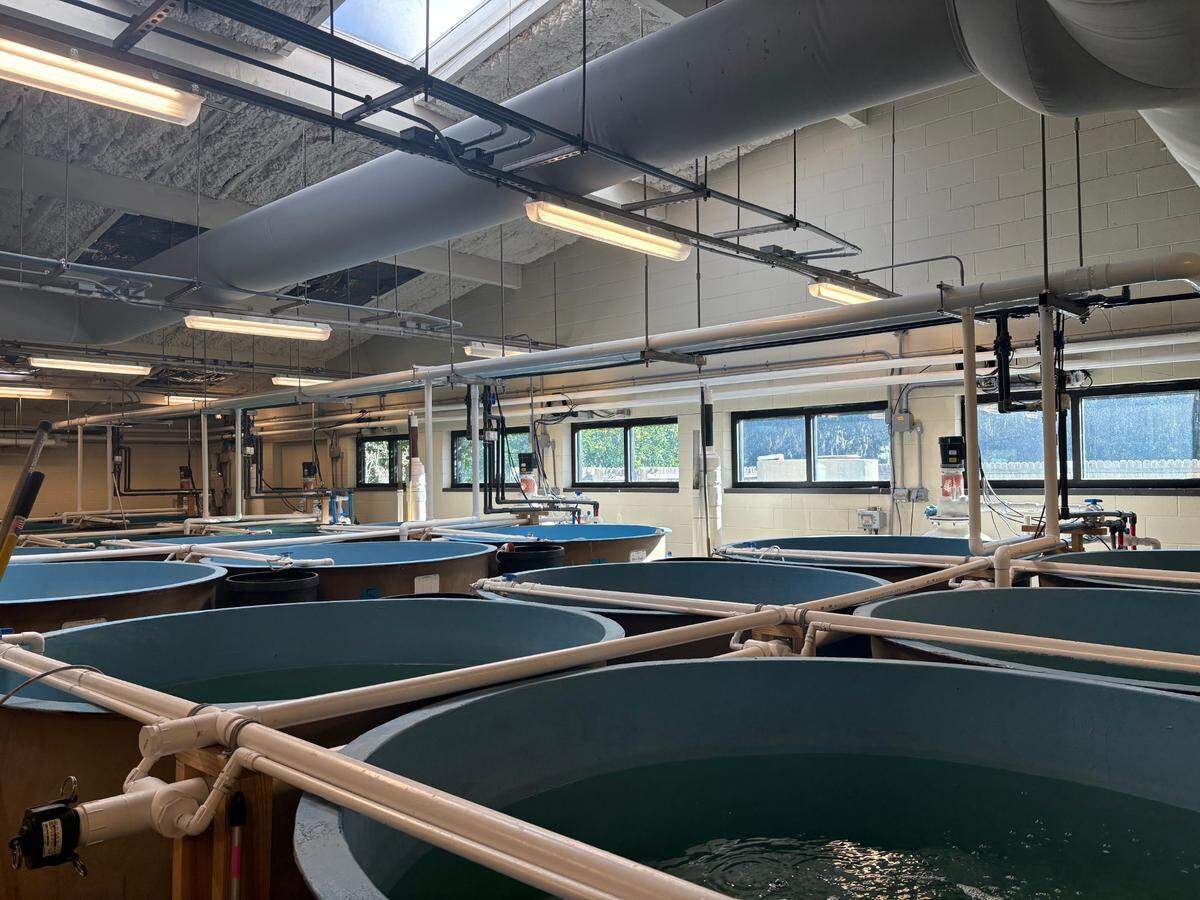
Waddell soon joined in on the effort once again. Since Waddell opened over 40 years ago, it has played a major role in producing red drum, cobia, and a number of other economically important marine species for stocking in the state’s waterways. But scientists at the center find a challenge in flounder.
“Flounder is challenging, exciting,” Jason Broach, an assistant marine scientist at Waddell Mariculture Center, said. “A lot of emotions with flounder.”
Because the fish is flat and doesn’t hang around in the water column like the cobia occupying a tank across from the flounder, the center needed new tanks. Funds from an increase in saltwater fishing licenses helped support the addition. But for a fish used to the dark, turbid waters of Port Royal Sound, the first batch of flounder didn’t initially take the transition to the tanks well. In the first year of trying to raise the founder, the fish kept dying.
“Then one day, magically, just one tank lived,” Broach said. “It happened to be the tank between two lights getting less light intensity.”
While only a couple cobia are more than happy to produce large amounts of eggs shortly after arriving, flounder take longer to adjust and are less inclined to produce eggs in a hatchery setting, requiring a hormone injection that drives the production of eggs.
Finding the right tank color, alongside the correct light intensity, for the small fish to develop color-changing chromatophores, or pigmented cells that allow the fish to blend into the background, is another new task for the center. This process comes after the fish goes through a very energy intensive metamorphosis as their skulls bend, allowing the right eye to move to the left side of the head. Perfecting the diet, temperature and light intensity is a constant journey.
Levesque said that the DNR has been producing red drum since the 1980s, and that even that species continues to surprise them. The southern flounder stocking program is a long, iterative process that, while aided by similar efforts in other Southern states, will take some time to perfect.
“But with flounder, we’re going to be answering these questions all over again, but adding these challenges in … especially because of all these developmental changes that are occurring,” Levesque said.
If all goes as planned, the first southern flounder stock will enter state waterways in 2026. While the new additions won’t completely prevent the decline, they’ll help keep the fish on the plate and in the water.
This story was originally published April 13, 2025 at 5:00 AM.