Can Trump’s tariffs save Beaufort shrimpers from a flood of foreign product?
Editor’s note: After this story was published, the Trump administration on Wednesday announced a 90-day pause on shrimp and other tariffs, dropping the effective rate to 10%, to allow for negotiations on trade, trade barriers, tariffs, currency manipulation, and non-monetary tariffs.
Beaufort shrimpers who make their living trawling Port Royal Sound are welcoming steep tariffs put in place by President Donald Trump. The tariffs, they say, are a lifeline.
But much more action is needed, they contend, to steer the industry off the rocks. In recent years, the industry has lost 50% of its market value forcing many shrimpers on the southern coast to tie up their boats. Long-term, they hope Trump’s spotlight on trade will expose what they contend is problem: Foreign competitors dumping billions of pounds of antibiotic-filled farm-raised shrimp — some of it subsidized with U.S. tax dollars — into the domestic market.
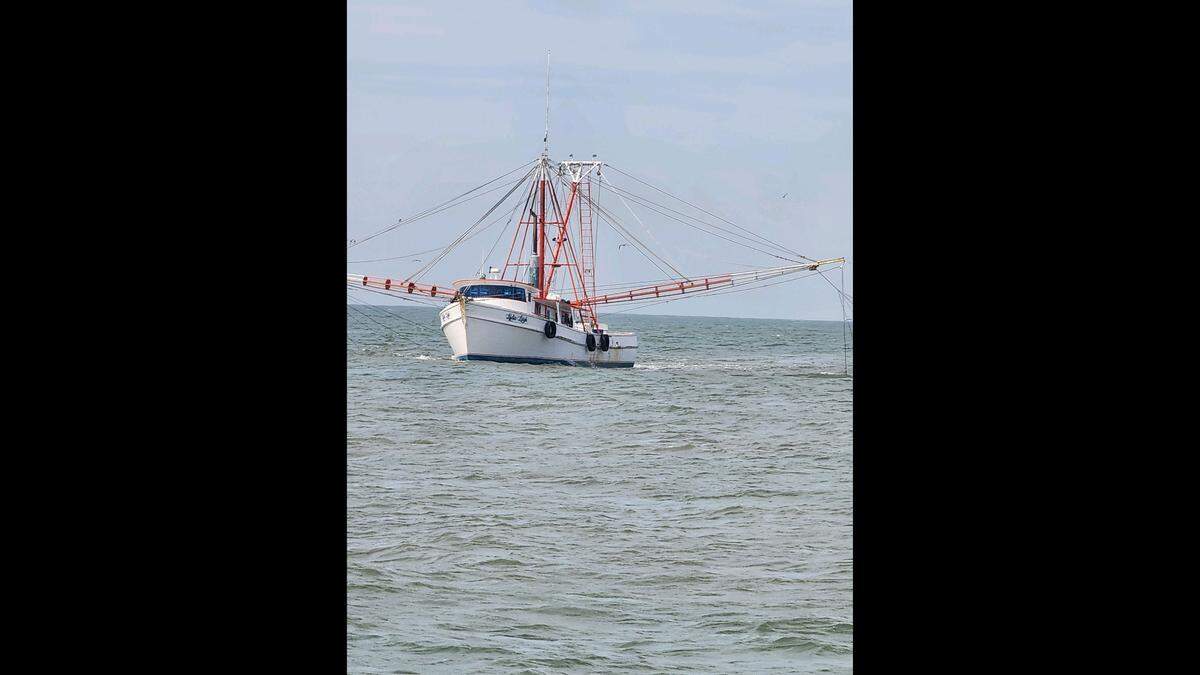
The tariffs come as shrimpers in Beaufort County, where trawlers cruising off Hilton Head or Hunting or St. Helena islands remains a common sight despite the choppy waters the industry has encountered recently, prepare once again for the valuable spring roe season, which will begin later this month.
Here’s answers to eight questions about the tariffs and their impact on Beaufort County.
.jpg "unnamed (1).jpg")
1. What countries are targeted and how much are the tariffs?
The following tariffs have been placed on these six countries that account for 96% of U.S. shrimp imports, according to the Southern Shrimp Alliance (SSA), which represents shrimpers in eight states including South Carolina. The percentage in parentheses is how much of the total shrimp imports that country accounts for:
▪ India (42.3%): tariff rate of 26%
▪ Ecuador (26.9%): tariff rate of 10%
▪ Indonesia (15.4%): tariff rate of 32%
▪ Vietnam (7.2%): tariff rate of 46%
▪ Thailand (2.4%): tariff rate of 36%
▪ Argentina (2.1%): tariff rate of 10%
2. What tariffs are those countries collecting on shrimp of U.S. origin?
Here’s the tariffs the top four shrimp exporters to the United States are collecting on U.S. shrimp imported into their countries:
▪ India: 30%
▪ Ecuador: 30%
▪ Indonesia: 5%
▪ Vietnam: 5%
These tariffs do not include taxes. When taxes are included, Indonesia charges 19.5 to 24.5% on U.S. shrimp and Vietnam, 13%.
3. How much foreign shrimp is being imported into the U.S.?
This is the amount, in pounds, of shrimp imports to the U.S. from all countries since 2019:
▪ 2019: 1.4 billion
▪ 2020: 1.5 billion
▪ 2021: 1.8 billion
▪ 2022: 1.7 billion
▪ 2023: 1.6 billion
▪ 2024 1.5 billion.
Shrimp imports from India, Ecuador, Indonesia and Vietnam, totaling 1.4 billion pounds, accounted for over 91 percent of the total volume of U.S. imports of warm-water shrimp imports in 2024.
In 2023, Ecuador alone accounted for the import of 442 million pounds into the U.S. market. In 2021, India exported 750 million pounds of shrimp to the United States, the SSA says.
4. What’s the impact on U.S. shrimpers?
NOAA Fisheries reports that the shrimp harvest in the Gulf of America and South Atlantic decreased from 227 million pounds of shrimp in 2021 to 219 million pounds in 2022 to 211 million pounds in 2023.
While the harvest decline was 7%, its value dropped 49% over those two years, from $522 million in 2021 to $269 million in 2023, according to NOAA. Surveys of federally permitted shrimp boat owners showed average cash flow per boat decreased from $60,000 in 2021 into the red during that same time span.
“In the absence of aggressive action taken to support the American shrimp industry, shrimpers across the southern coast will take their vessels out of operation as they can no longer weather the losses incurred,” the SAA wrote to Ambassador Jamieson Greer, the U.S. trade representative about tariffs, in March.
The SSA says the U.S. has never been a significant shrimp exporter because of substantial duties and taxes imposed on American shrimp. But by eliminating any general tariffs on imports of shrimp “the federal government flung open its doors to shrimp suppliers throughout the world while the home countries of those industries maintained protection in their respective markets.”
5. What do Beaufort County shrimpers say about the tariffs?
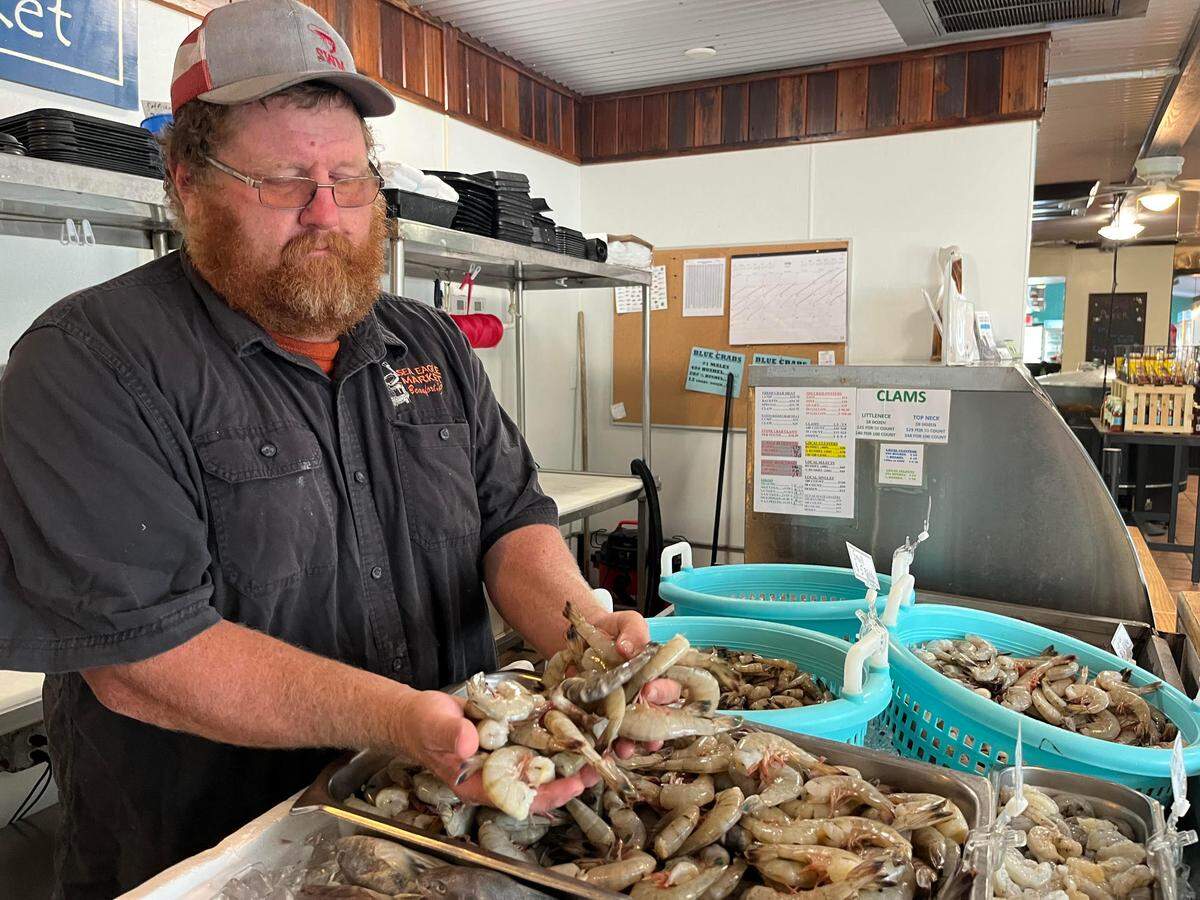
Craig Reaves, who owns Sea Eagle Market in Beaufort, a retail seafood business with shrimp boats based at Village Creek on St. Helena Island, says the tariffs will give shrimpers a level playing field. Many countries charged the U.S. substantial rates on imports, he says, while “we’ve basically had an open door policy where we are not charging any tariffs.”
“Number one: it’s going to drive the price up on the imports so that’s the immediate relief, that these cheap imports are going to go up,” Reaves said. “The price for that imported shrimp is not going to be as cheap as it once was so that’s going to drive up that market and also help the domestic market.”
While consumers will be paying more for shrimp, Reaves emphasizes “cheap food ain’t good and good seafood ain’t cheap.”
“Our goal is to be able to sell more domestic shrimp,” Reaves said. “We shouldn’t have to be competing against imports. We should be the desired product. Ultimately people should want fresh local seafood. It’s wild caught. It’s organic. It’s good stuff. Imports are farm-raised crap.”
6. What’s wrong with farm-raised foreign fish?
The SSA says consumers are unaware that the majority of imported shrimp comes from countries linked to the use of forced labor and the use of antibiotics in fish food that is banned in the United States.
According to SSA, in the U.S., 94% percent of shrimp consumed is imported. Reaves says the Food and Drug Administration inspects just 1% of the imports and doesn’t destroy the shrimp if they do contain banned substances allowing the boats to move to a different port. That’s in contrast with the European Union, he says, which will destroy the product if it finds evidence of illegal substances. The low barrier to entry for foreign seafood producers, compared to other food products, has allowed the United States to become a dumping ground for foreign shrimp, says Reaves.
“And people should be aware of that,” he says.
7. Why is the U.S. subsidizing foreign shrimp producers?
SSA also contends part of the reason there is an oversupply of foreign shrimp on the market is U.S. representatives have never voted against funding from International Financial Institutions (IFIs) such as the World Bank for foreign shrimp aquaculture development projects. Those projects have led to the global oversupply of shrimp and price collapses, SSA contends. IFI projects, the alliance says, are concentrated in India and Ecuador, which supply nearly 70% of the U.S. shrimp imports and are the largest competitors to U.S. shrimpers. Ecuador alone has received over $550 million in IFI development funding for shrimp farming since 2000, including $195 million that went directly to private companies competing with U.S. shrimpers, SSA says. In March, U.S. Sen. Bill Cassidy, R-La. of the Senate Finance Committee called on Treasury Secretary Scott Bessent to block U.S. taxpayer dollars from financing foreign shrimp aquaculture projects through IFIs.
8. Is shrimp served and sold locally local?
A recent sampling of Savannah restaurants by a consultant hired by the SSA revealed that 77% falsely marketed the shrimp as premium U.S. wild-caught shrimp when it was farm-raised imported shrimp.
Reaves says making the public aware of the challenges facing the local industry is the key to its survival.
When he moved to Beaufort in 1992, Reaves said, 100 trawlers were in operation but that’s down to less than 15 today.
The loss of working waterfront to marinas, housings and restaurants are factors in the decline but imports have been a major reason as well for the hard times.
“We’ve been pretty much decimated over the last 25 to 30 years,” he said.
This story was originally published April 9, 2025 at 3:08 PM.