Wetlands 101: What are they? Why are they a hot topic in Beaufort Co? Are they disappearing?
Few words in the environmental lexicon create more confusion than “wetlands.”
What is a wetland? Where are they? Can wetlands be dry land? Who decides what land gets the designation and who has jurisdiction over them?
Here are some answers: Wetlands are a critical component of the Lowcountry’s landscape and environment. But they’re also disappearing. In some ways this vanishing is slow, as tidal marshes slip under rising seas before they can migrate further inland. They also disappear either under new developments or into them, as rising sea levels cause marshes to migrate inland and straight into coastal developments.
The state has lost about 27 percent of its wetlands, or about 1.75 million acres, since the middle of the eighteenth century. In the May River Watershed, which includes parts of the Town of Bluffton and Beaufort County, 2.7 percent, or 513 acres, of wetlands have been lost between 2001 and 2021.
What are wetlands and how many are in Beaufort County?
Scientists who study wetlands define them as an area where either water covers or is near the surface of the soil. This water can exist in the area all year, but some wetlands are only covered by water during certain periods of time.
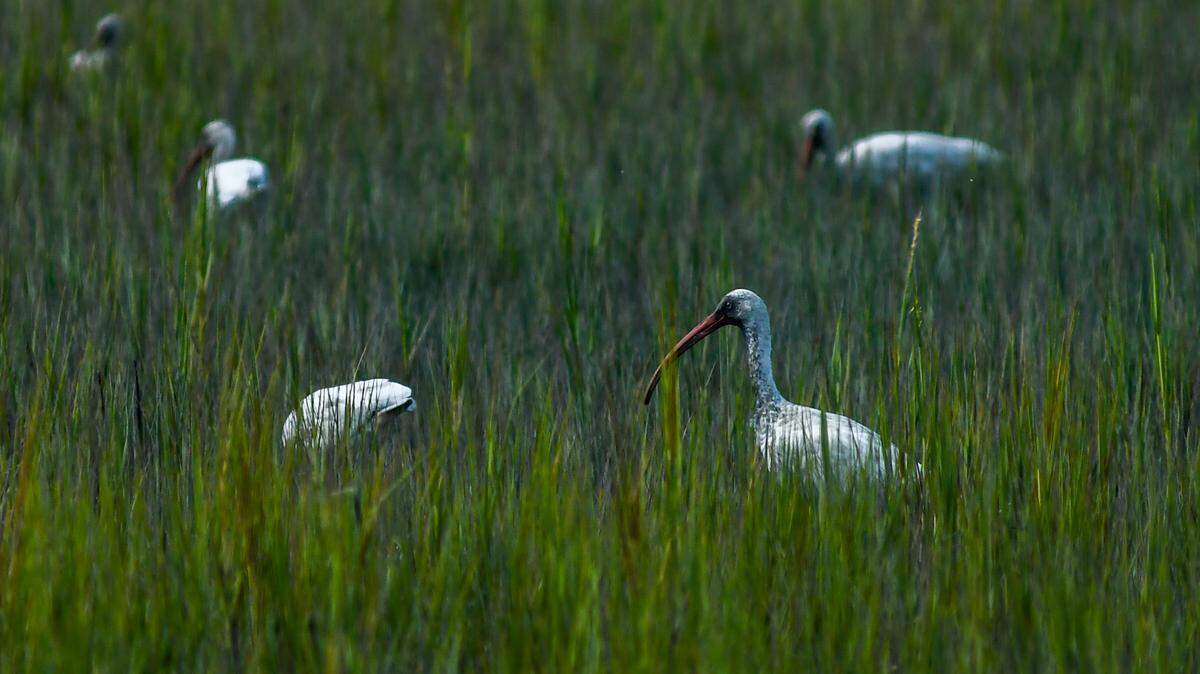
Wetland is a broad term and many different landscapes fall under its umbrella, including marshes, bogs and swamps. Due to some of the largest tidal fluctuations on the Atlantic coast, Beaufort County contains large swaths of salt marshes. Shrimp, crabs, oysters and many fish depend on these salt marshes for at least part of their life.
In addition to saltwater marshes, Beaufort County also plays host to freshwater wetlands. These areas help filter out toxins from floodwaters, help manage stormwater drainage and provide habitat for a number of plants and animals. According to the National Wetland’s Inventory, there are about 34,440 acres of freshwater wetlands in the county. These wetlands add up to about 14 percent of the county’s total area.
Who decides that someone can build on or near a wetland?
Under the Clean Water Act, the U.S. Army Corps of Engineers has the authority to protect wetlands. If there is a wetland on the property, the owner or developer typically hires an environmental consultant to survey the property. They then submit that information to the Army Corps of Engineers, who then decides if there are any wetlands on the property that are subject to the Clean Water Act, a federal law that regulates discharges of pollutants into U.S. waters.
“Court case precedent for many years has been ripping away, slowly chipping down the protections of the Clean Water Act and the water bodies that are included in those protections.” Emily Poole, an attorney with the South Carolina Environmental Law Project, said.
In 2023, the Supreme Court reduced the number of wetlands that the Environmental Protection Agency and Army Corps of Engineers can protect under the Clean Water Act. Sackett vs. EPA decided that only wetlands with a “continuous surface connection” with “waters of the United States” are subject to the Clean Water Act. This decision limited the amount of wetlands that are protected by the Clean Water Act.
After the Sackett vs. EPA decision, there are a lot of questions regarding the state’s ability to regulate and protect wetlands in Beaufort County, Grant McClure, a project manager with the Coastal Conservation League, said.
“The development community is saying that they still have to do a coastal zone consistency process through our state Department of Environmental Services,” McClure said. “But there’s some question marks about if they’ll still be able to have that authority to enforce that after Sackett.”
South Carolina’s Department of Environmental Services has jurisdiction over wetlands in the state’s eight coastal counties, including Beaufort, under the Coastal Tidelands and Wetlands Act. The review process under this law only begins when there is another state or federal permit involved, Amy Armstrong, the executive director of the South Carolina Environmental Law Project, said.
Because the Sackett vs. EPA decision limited the type of wetlands that the EPA and Army Corps of Engineers are able to regulate, there are now fewer wetlands than the Department of Environmental Services can protect. Local ordinances are sometimes the only protection for wetlands that the EPA and Army Corps of Engineers doesn’t regulate, Poole said.
Due to the lack of federal and state protections, the South Carolina Environmental Law Project is encouraging local governments to enact their own wetlands protections to fill the void left by the state and Sackett vs. EPA.
At the moment, Beaufort County requires that most developments on unincorporated land undergo a natural resources survey. Only “water-oriented facilities” are allowed on tidal wetlands, which includes boardwalks, observation decks and docks. The county is considering an update to their wetland ordinance, according to the long-term resilience plan.
The Town of Hilton Head has a flood protection ordinance and requires that developers try to protect wetlands in their site design. The Town of Bluffton has also passed its own wetland protection ordinance, which includes 50 foot buffers between wetlands and any structures.
“We’re so we’re pushing for this responsibility to also be in the local government’s hands, if they choose for it to be by adopting such an ordinance,” Poole said. “Because they approve developments, and their wetlands disappear because of development.”
The battle lines between development and environmental preservation
Environmental advocacy groups and concerned citizens are often at odds with developers who propose to build subdivisions and other structures on or near several of the county’s remaining wetlands. This conflict is not a new one, but the pressure to build both luxury and affordable housing has increased as the population and in-migration totals for Beaufort County continue to escalate. There is no end in sight for the leveling off of these increases at the same time wetlands protections are at risk of being further reduced by decisions of federal regulators.