As the climate warms, this pink bird is moving north into the Hilton Head area
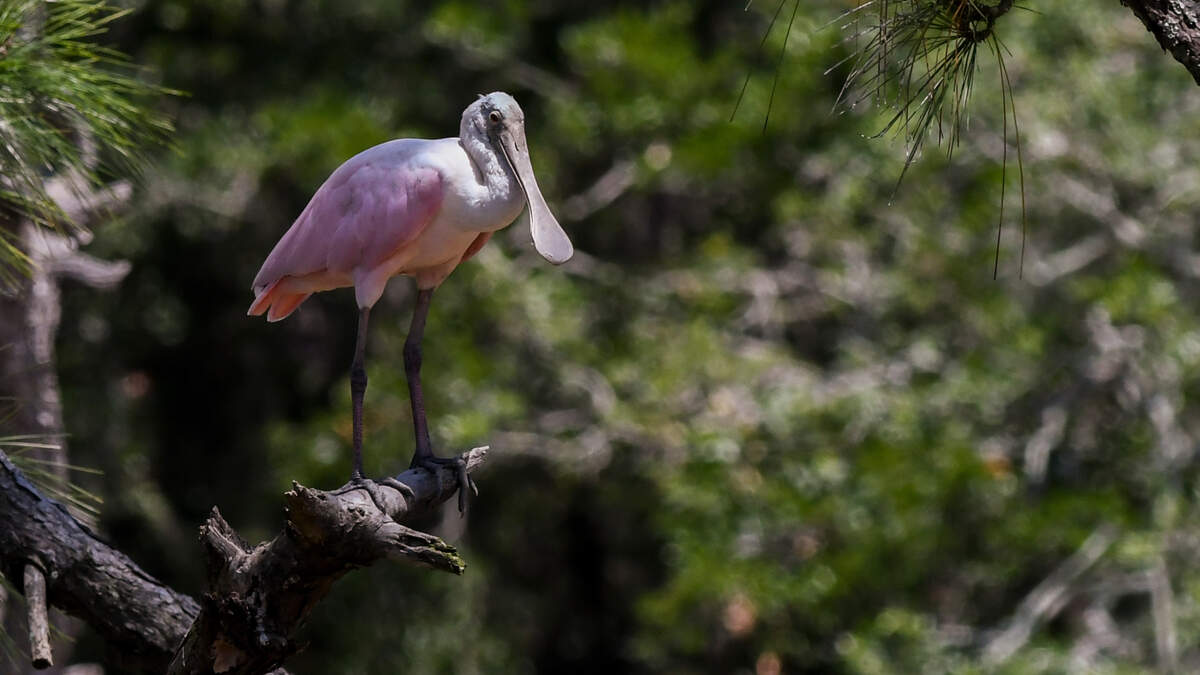
The Lowcountry has long been a popular destination for Florida expats looking to escape - add to that list a familiar but mysterious species of pink birds that are increasing in population in the Hilton Head and Beaufort County marshes.
When spotted locally, the Roseate Spoonbill is far from what his or her ancestors considered home. At first glance, the large, pink bird standing in a Beaufort County marsh could be mistaken for a flamingo. But what sets a Roseate Spoonbill apart from their pretty, pink cousins is a shorter neck and a long wide bill shaped like, well, a spoon.
This striking bird has been making its way north, from its traditional home range in Florida Bay, up though Georgia and into South Carolina for the last two decades. Driven by warming temperatures and loss of habitat in Florida, there are signs that this climate migrant may soon be in the Lowcountry for good.
“Its very clear that they’re following the temperature,” Jerry Lorenz, a researcher with Audubon Florida who has studied the species for the past 30 years, said. “The country is getting warmer, the world is getting warmer…these birds are taking advantage of warmer temperatures.”
There are now a number of year-round residents in and around Beaufort County, Jenn Clementoni, a master naturalist vice president of Port Royal’s Cypress Wetland, said. A pair of Roseate Spoonbills has taken up residence on Harbor Island, even staying through the snow in January. Another pair have stuck around Cypress Wetlands in the past. A few places in the ACE Basin play host to spoonbills year round now, including Donnelley Wildlife Management Area in Colleton County, Clementoni said.
Historically, most of the country’s Roseate Spoonbills lived in Florida Bay, southwest Louisiana and the Texas coast. In the second half of the nineteenth century, plume hunters drove the population nearly to extinction in pursuit of feathers to adorn women’s hats and other fashions. But by the 1970s, the population in Florida had made a comeback.
A simple roseate Spoonbill appearance in the Lowcountry isn’t necessarily unusual. Spoonbills often return to where they were raised to begin breeding, but after leaving their nest for the first time they often travel far to explore. In fact, they’ve been spotted as far north as Wisconsin, Montreal and New Jersey. Those that astute birders have spotted historically in much of Beaufort County are these errant, curious teenagers.
It’s not unusual for a very small number of birds to spend the winter while the rest of their peers migrate south. But a number of roseate Spoonbill outliers have started to stick around in South Carolina, establishing a year round population, Clementoni said.
The steady move north
Around 2000, Lorenz started to notice that the birds were moving further north and inland into Florida. Since then, many have abandoned their old nesting grounds in Florida Bay as the sea level has risen. Shallow water is necessary for spoonbills to catch food. They stand in shallow water and wave their half open beak back and forth until they catch a small fish or shrimp. If that water gets too high for too long, like it has in Florida Bay, many can’t continue to feed, and therefore live, in the area anymore.
The spoonbill’s move out of Florida Bay has been accompanied by a move north. While a young bird hanging out in the marsh before flying back to Florida to breed isn’t a sign of permanence, breeding in South Carolina certainly is.
In 2020, researchers with the South Carolina DNR documented the northernmost roseate Spoonbill nest ever recorded in Charleston County. This comes after the previous record set in 2011, researchers first recorded a nesting spoonbill in Georgia. To date, there are no records of spoonbills nesting in Beaufort County, Clementoni said.
Making a home in South Carolina
The spoonbills will not need to deal with many new natural predators, namely alligators, in South Carolina.
“What does affect them is making sure we have healthy, clean marshes,” Clementoni said. “That’s where they feed … So we seem to have the perfect storm as far as what they’re looking for, as far as habitat and as far as food source.”
The Roseate Spoonbill can certainly add to the biodiversity of an area, which is a good thing. But if they become more prolific in the area, they could also displace other native species.
“They’re not introduced, so you can’t call them exotic or introduced or invasive,” Lorenz said. “They may be invasive, but they’re native. It’s just the climate is changing. From a legal perspective, that’s one thing. From an ecosystem level, that’s a whole different question.”
The spoonbills moving up north are not unique, Lorenz said. There are a number of birds and other animals that move north as the climate changes and their home ranges become too warm. He says that state and local governments will need to come up with a plan to manage these species that move into new ranges.
This story was originally published March 6, 2025 at 1:22 PM.