Federal funding freeze threatens local climate, wildlife and coastal research
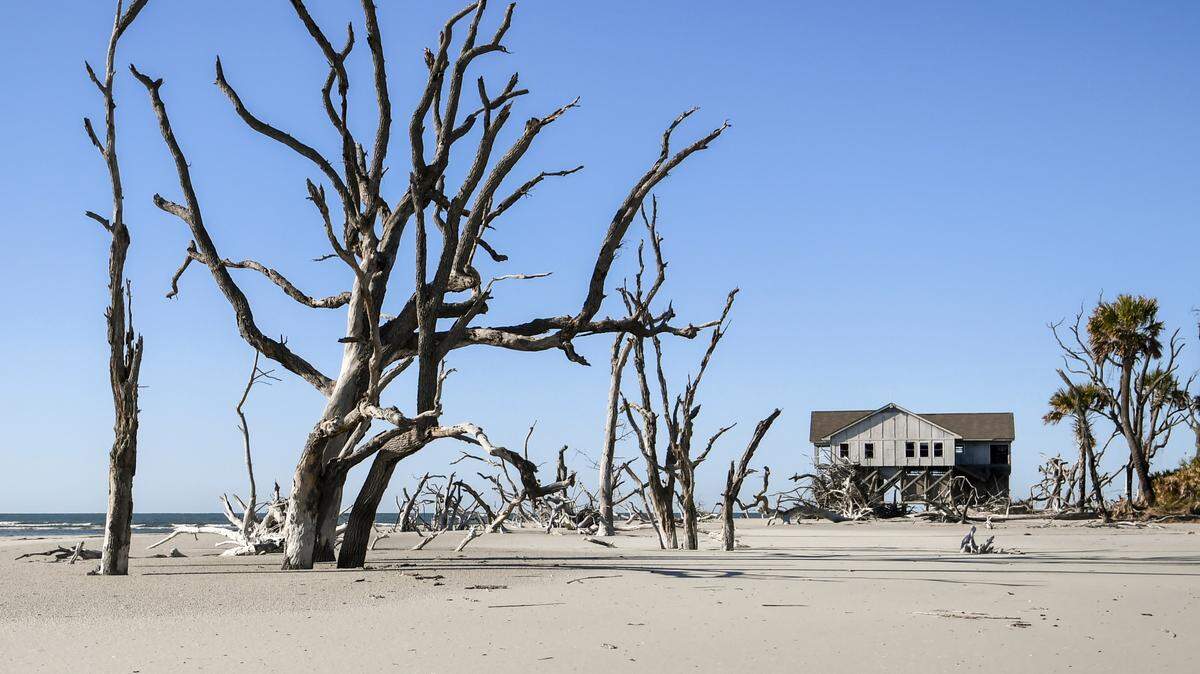
With Trump’s inauguration comes fears in Beaufort County’s academic circles that research funding may be put in jeopardy.
Some of that funding to local programs is focused on coastal issues including flooding and sea life.
This weeks news about a federal funding freeze ordered by The Office of Management and Budget sent shock waves through research communities, reaching a number of environmental researchers in Beaufort County. While the memo was rescinded, it’s unclear if federally funded climate and environmental research in Beaufort County could be at risk under future funding reviews ordered by the Trump administration.
For those with federal grants in University of South Carolina-Beaufort’s Department of Natural Sciences, the now rescinded freeze would have put their research into a holding pattern, according to Daniel Pettay, an assistant professor at USCB. It’s currently unclear exactly how many researchers in the department have federal grants, though Pettay says members of the department have funding through the National Science Foundation and NOAA.
USCB research grants called into question
Pettay said USCB recently submitted a grant proposal to the NSF for a resilience hub in Beaufort County. The NSF, the funding source for a wide array of the country’s scientific research projects, canceled it’s grant review panels following President Trump’s executive orders, according to an NPR report. When researchers apply for the competitive federal grants, panels of subject matter experts make decisions on where to award the money. Participating in grant review panels requires extensive preparation. While the NSF said that review panels will be rescheduled, that process can be complicated and drawn out, leading to delays in funding.
The county and its partners have already created a climate resilience plan. USCB submitted a NSF grant application that would build off that work by creating a “resilience hub.” If approved, money from the federal grant would allow more work to identify which areas in the county will be most impacted by rising sea levels and flooding from storms.
“If we get it, it would be fantastic for us here and the county as a whole to put money into better developing this program,” Pettay said.
Pettay hasn’t heard anything from NSF regarding the delay in grant committee meetings. But any hold ups in that process will prolong the funding decision for the resilience hub grant.
A groups of USCB researchers also have funding from a NOAA grant to study the sounds produced by animals in South Carolina estuaries. The Estuarine Soundscape Observatory Network in the Southeast uses underwater recordings to better understand how different sources of environmental stress, such as vessel noises and chemical pollution, affect marine organisms. Much of the money for that research project comes from funding sent to NOAA from the Inflation Reduction Act and Bipartisan Infrastructure Law, both of which were major pieces of climate legislation passed under the Biden administration.
An executive order issued by Trump includes an order to halt disbursement of IRA and BIL funding. It’s unclear at this point how that order will affect the continuation of the project.
Much of S.C. Sea Grant funding comes from federal sources
A number of climate resilience research projects are also conducted by S.C. Sea Grant. Sea Grant is a partnership between NOAA and the state government, and includes partnerships with state colleges as well as the South Carolina Department of Natural Resources.
If the federal grant freeze took affect, it would have halted current projects at state universities and the SCDNR in addition to preventing staff from completing their ongoing work along the state’s coast, according to Susan Lovelace, the executive director of S.C. Sea Grant. Current work includes an investigation into the sources of harmful bacteria in the Edisto Island Watershed, where shellfish harvesting is frequently restricted due to bacterial impairments. S.C. Sea Grant’s current research portfolio also includes investigations into septic management in coastal areas, floodwater contamination and research on how area marshes will respond to sea level rise.
Lovelace said she’s received communications from the national Sea Grant office in NOAA, though that office has limited information regarding recent policy changes. She hasn’t received communications regarding any other funding reviews.
Projects with local funding are not at risk
State and local funding supports a number of research projects at USCB, so any changes to the federal funding process would not affect that work. USCB’s Water Quality Laboratory, which conducts ongoing monitoring of the May River among others, receives funding from Beaufort County and the Town of Bluffton. That program would not be affected by changes in federal funding, Pettay said.
The state currently supports erosion and wildlife research at Pritchards Island, so the ongoing projects there would not be affected. Kim Ritchie, USCB’s director of research on Pritchards Island, said she’s interested in federal grants from The U.S. Fish and Wildlife Service. She may apply for that funding in in the future, though she’s not sure what the process looks like at the moment.
Any changes to the federal research funding could affect current and future projects at USCB, according to Joe Staton, professor of Biology and Marine Science. The current landscape makes it difficult to engage in long term planning.
“A lot of things here don’t have large federal grants yet, but they’re in the position to start applying for those kinds of things because we’ve been growing for the last few years,” Staton said.
Despite the administration’s decision to rescind the federal funding freeze memo, reports from the AP say the Trump administration continues to focus on halting federal spending that doesn’t align with the administrations executive orders regarding climate change.