North Atlantic right whales close to Hilton Head for calving season. Are they protected?
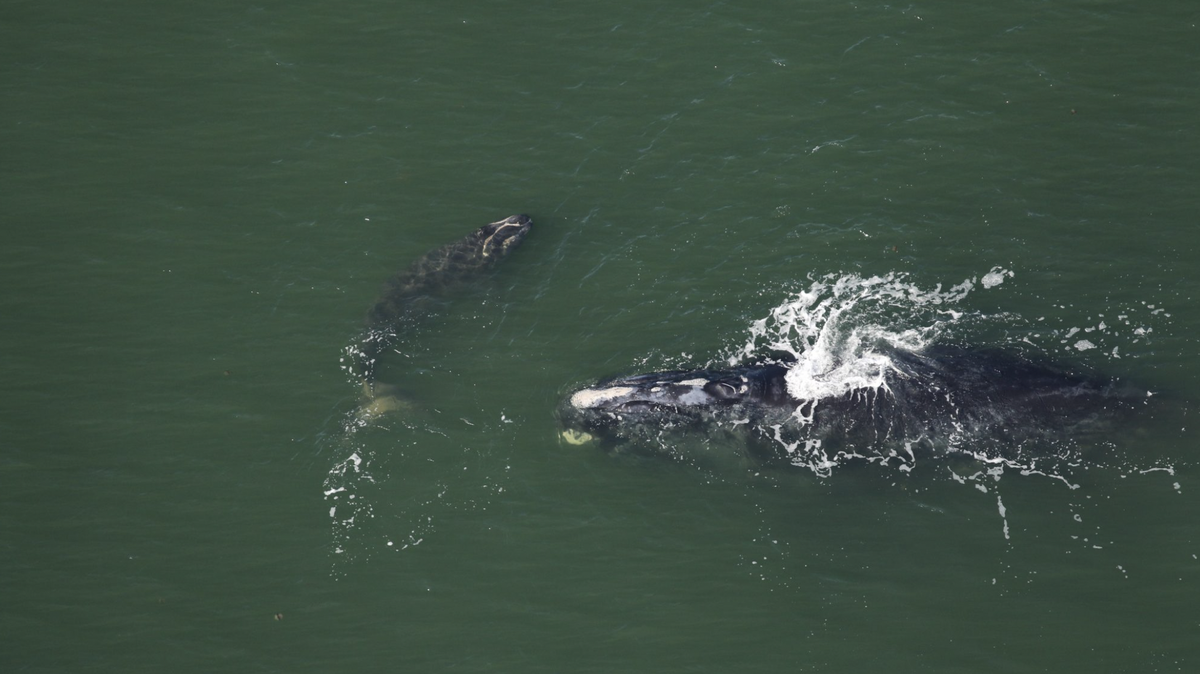
After seven months in northeastern waters, some North Atlantic right whales have traveled more than 1,000 miles back to the coastal waters of the Carolinas, Georgia and Florida. Despite their dwindling numbers, the right whales still head south during calving season, which lasts from mid-November to mid-April.
The endangered whales have already started swimming through waters on the South Carolina and Georgia coastline. On Dec. 1, researchers from the Clearwater Marine Aquarium Research Institute sighted a whale and her calf five miles off the coast of Sapelo Island, Georgia. In November, another mom-calf pair were spotted by a boater north of Charleston off Cape Romain, South Carolina.
So which whale is which?
Right whales were assigned their name from being the right whale to hunt throughout the history of whaling, said Dr. Eric W. Montie, an associate professor in the Department of Natural Sciences at the the University of South Carolina Beaufort. Because of their slow, surface skimming behaviors, whalers could easily spot them, and their high blubber content caused them to float on the surface once they had been killed.
Montie received his PhD in Biological Oceanography from the Massachusetts Institute of Technology and the Woods Hole Oceanographic Institute where he worked alongside Michael Moore, a marine biologist that has devoted much of his career to understanding the endangered North Atlantic right whale.
Researchers can identify right whales by the unique patterns on their heads, called callosity patterns, said Montie. Callosities are white growths on the right whale’s head that appear shortly after birth. This is how the whale pair seen off Sapelo Island earlier this month were identified as a 31-year-old mother, Nauset, and her fifth documented calf.
It’s the first time she has given birth since the 2020-2021 season, according to CMARI.
North Atlantic right whales have been listed as endangered under the Endangered Species Act since 1970. They are one of the world’s most endangered large whale species. The majority of their deaths are caused by chronic entanglement and vessel strikes, said Montie. And as shipping needs continue to grow in our area, he said, these numbers could dwindle even more.
During last year’s calving season, a calf, first spotted in November with its mother, Juno, was found deceased off the coast of Georgia in March. The calf suffered injuries from a vessel strike.
In 2024 alone, according to the National Oceanic and Atmospheric Administration, five North Atlantic right whales were killed, three of which were the result of a vessel strike. The losses were especially alarming, Montie said, since they included reproductive females and calves.
Only about 370 North Atlantic right whales remain, including fewer than 70 female whales that can reproduce, according to CMARI. An ongoing Unusual Mortality Event since 2017 has left 41 of the whales dead and 33 seriously injured, according to NOAA.
“Every animal counts,” Montie said, noting those that are already endangered in the first place.
How are they protected?
According to CMARI, mother-calf pairs are especially vulnerable to vessel strikes because they spend time close to the surface. With their dark color and without a dorsal fin, they can be difficult to spot. Most boaters who have reported striking a whale never even saw it, per CMARI.
Mother-calf pairs are at heightened risk for vessel strikes because they spend nearly all their time at or close to the water surface, but are difficult to see. Most boaters who reported striking a right whale didn’t see the whale prior to colliding with it.
Current federal law says that all vessels 65 feet or greater must travel at 10 knots or less between Nov. 1 and April 30 in “Seasonal Management Areas.” The South Carolina coastal waters are a part of the Mid-Atlantic management area.
But research shows that many boaters go against the current regulations in these Seasonal Management Areas. According to Maritime Whale, a ship monitoring project from Rhode Island Marine Animal Support, compliance rates in the Charleston and Savannah harbors in the 2021-2022 season were less than 7%. The mean vessel speed in the harbors during calving season was around 14 knots.
This story was originally published December 12, 2024 at 11:20 AM.