Don’t forget plants during Beaufort County freeze warning. Here’s how to care for them
Freezing cold weather sucks the life from just about everything — plants included.
When the temperature needles to a freezing 32 degrees, most outdoor plants will survive the coastal Lowcountry cold, according to LowCo Gardeners. But during a hard freeze, 28 degrees or lower for a few hours, it gets dicey and plants need help from human hands.
Citrus plants are more finicky than most. They require constant warmth and sunlight, and are threatened by frost, which can set in at the 32-degree mark. Annuals and outdoor perennials — like perennial shrubs — can take on the cooler months.
If frost crusts a plant’s leaves, the fix is a simple trim away of the damage.
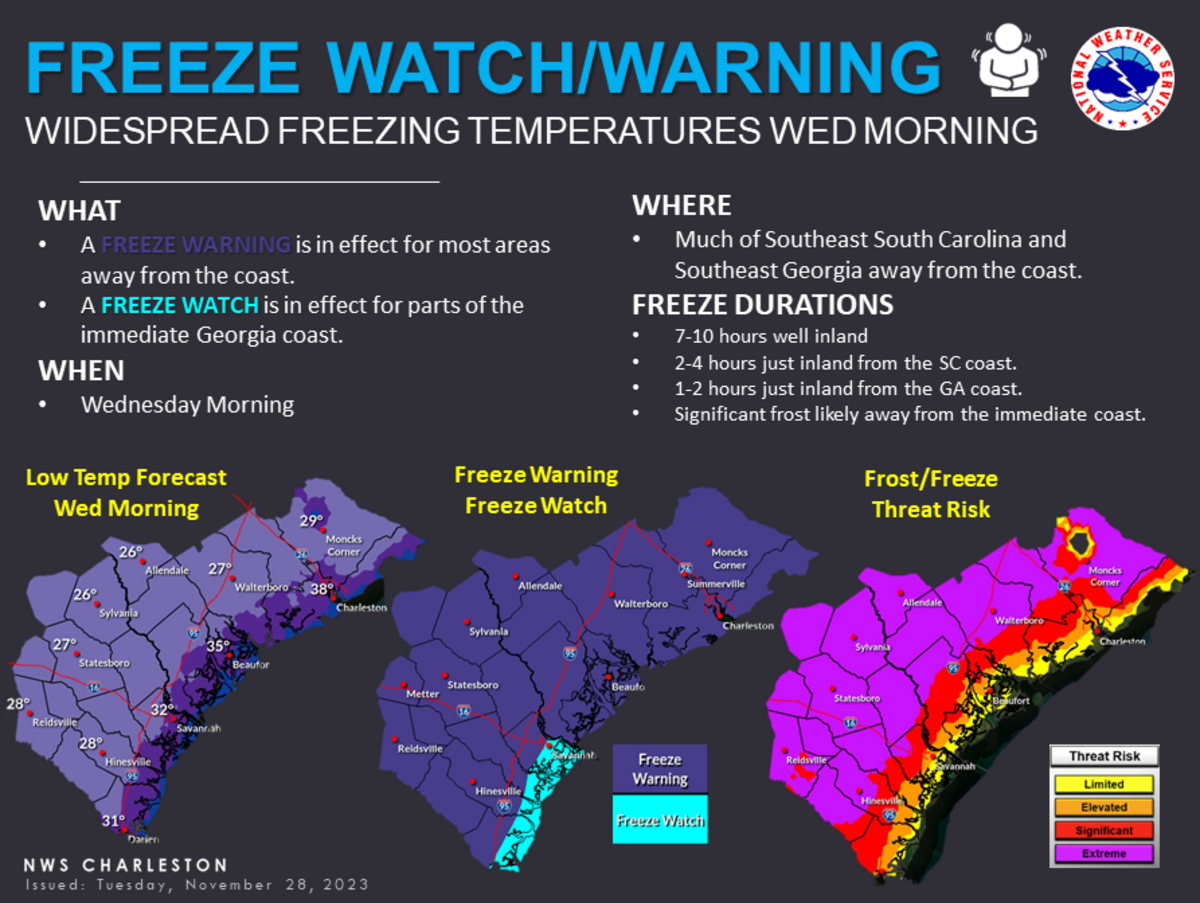
As Beaufort County is under a freeze warning from 11 p.m. Tuesday until 9 a.m. Wednesday, gardeners can get ahead of the chill. Forecasters predicted Tuesday evening’s temperature would drop to 31 degrees.
Gardeners may choose to cover the main landscape with a tarp, or they can dig up weather-threatened plants and put them in a pot either to stay covered outside or brought into the warmth.
Before pulling plants inside, LowCo Gardeners said to begin prepping plants outside before bringing them indoors in the days leading up to freezing temperatures. Check plants for bugs before bringing them indoors and, if needed, apply insecticide on potted plants when they are outdoors.
Beyond backyard plants, frost and freeze can be particularly hard on crops the state’s agriculture industry relies on. Last year, an untimely mid-March freeze riddled peach-growing season with significant loss. South Carolina peach-growers’ losses ranged between 70% and 90%.
On Tuesday evening and through Wednesday morning, freeze duration and risk threat is greater for inland counties, according to the National Weather Service. For local plant-lovers, it’s a silver lining for the Lowcountry.
After early Wednesday morning, temperatures will spike up far above freezing through the end of the week.
Head to www.almanac.com/protecting-your-garden-frost for in-depth information on freeze and frost impacts on a variety of plants.
This story was originally published November 28, 2023 at 11:25 AM.