Beaufort Co. superintendent talks safety, book bans, population growth and why his kids tease him
It’s been more than four years since the Beaufort County school board voted Superintendent Frank Rodriguez into his position. Since then he has been navigating pandemic impacts, book challenges, school safety, and his two sons razzing him about being asked to serve on Gov. Henry McMaster’s cyber task force initiative.
“My sons, they get a kick out of it because they say, ‘Hey, why is he asking you?,” he said.
Rodriguez can dish it back: “But then of course, you know, whenever something comes up at the house, and I just ask the question, “Are you on the governor’s task force? I don’t think you are.”
The Island Packet and Beaufort Gazette sat down with Rodriguez to discuss what’s going on in Beaufort County schools this year and learn more about how he’s approaching the district’s challenges and successes. A Bluffton resident, Rodriguez spent 26 years in education in South Florida before making the move to the Hilton Head area. He was a social studies teacher, which is fitting because history was his favorite school subject. In Palm Beach County schools he worked as an elementary and secondary principal, assistant superintendent and regional superintendent among other roles.
Rodriguez’s contract goes until 2028 and his annual salary is $251,254.
And even though “It’s hard to talk about yourself,” Rodriguez shared some fun facts too, like how he met his wife in high school in Florida, where they grew up and that they have been married almost 30 years.
This interview has been edited for clarity and brevity.
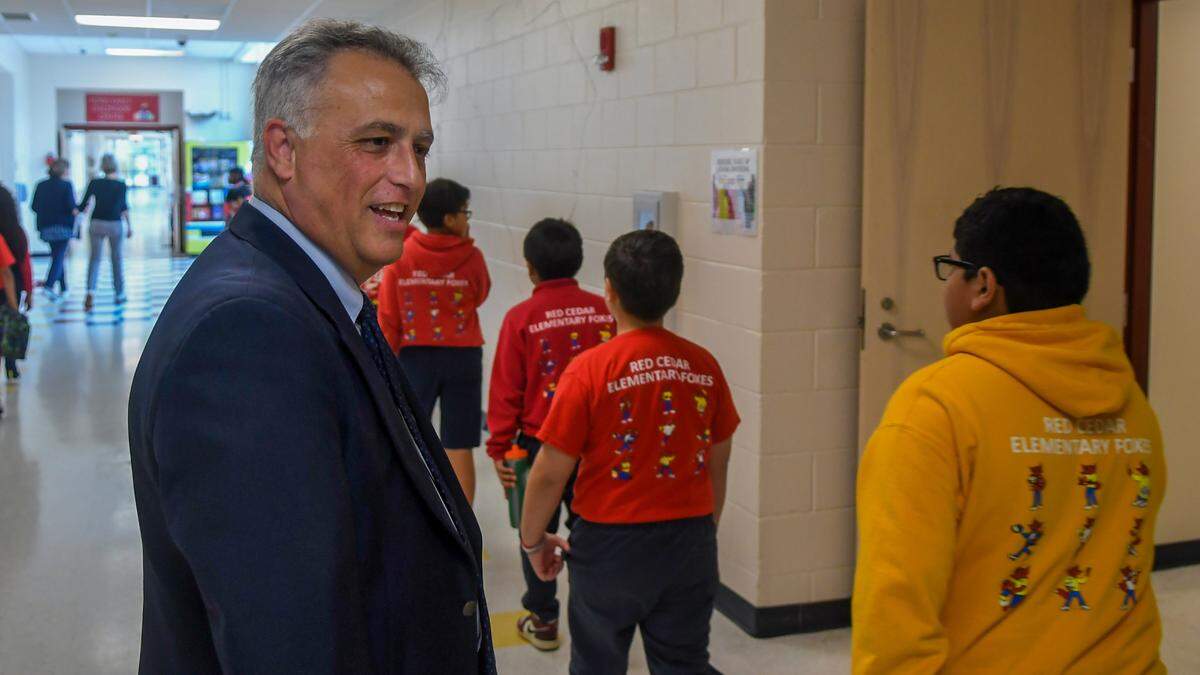
What are the top three to-dos as the superintendent this year?
Elementary and Secondary School Emergency Relief funding (federal money given to schools to address educational issues caused by the pandemic) is coming to an end and so during the course of this year, we want to identify initiatives that have been particularly helpful and have really seemed to show some advancement or some support for the system and the students. We want to identify those because those are the ones that we’d like to find a way to keep going.
The second thing that’s always really, really important is our continued move to support academic progress for our students and initiatives. Obviously, the pandemic had a big effect on students and student learning so we have seen some progress that we have made and we want to continue that academic recovery.
We’re really talking about community engagement. There’s so many things that are going on in schools and really, it’s not just about schools. It’s not just about school solutions. A lot of it is about community support and community engagement in those solutions. And to continue the engagement with our community around needs that the school district has to see how we can leverage a lot of the expertise that might be there that people might have an interest in engaging with us and supporting our students through.
What has been your biggest challenge since becoming superintendent and how are you managing it?
I honestly have to go to the impact of a pandemic. There were no blueprints on how to manage and navigate through a pandemic. It’s not something people went to school and learned how to do, but here you are and it’s landed on your plate and you have to figure it out. The challenge of navigating through the pandemic knowing that it’s a polarizing issue.
I think that knowing whatever decisions you make, you’re trying to do in the best interest of kids, is going to upset potentially half of the people, and yet working through it to try to navigate through that was extremely challenging. But you can’t just stop there because the unfortunate thing about the pandemic is that it has a lasting effect. The aftermath of the impact of the pandemic, whether it’s mental health-related issues with students, the impact of social media threw on students and behaviors, or the impact on academic outcomes for them. Those are all challenges that we’ve been dealing with and we’re going to be dealing with for the foreseeable future.
If you didn’t have a blueprint, how did you make those decisions?
One of the things you try to do is you try to listen to where people are on different issues. We’re always listening. It doesn’t mean you and I have to have a conversation for us to be listening. I mean, people can speak at board meetings and say how they feel about whether we should be in school or not be in school or those kinds of things. We’re always listening.
You try to rely on best practices from prior situations that are unrelated to pandemics but you try to rely on those tools, skill sets, and knowledge that you and your team have.
I’m big about presenting a problem to my team and in tackling it from every angle, trying to land in the best possible place with solutions as best as possible. Looking at what is happening in other parts of the country and what ideas are out there in other parts of the country and connecting with Superintendent colleagues in the state of South Carolina and in other states to see how they’re navigating through things as well. And you just try to get as much as much input as you can and kind of work through it and try to tease it out to get to the best possible place, but we always start from, you know, trying to think about what’s best for kids.
What are you most proud of accomplishing since becoming the superintendent?
One, in spite of dealing with the pandemic our language arts scores have been improving significantly. We have outperformed our pre-pandemic levels, but more than that. We have hit our highest score on this state assessment since its inception in 2016. It’s not good enough until we’re at 100%, but that doesn’t mean that there isn’t progress, and we shouldn’t celebrate that progress that we’ve seen.
Another thing I’m particularly proud of is we have moved our compensation for our educators from being ranked 53rd in the state two years ago to now being number one in the state for two consecutive years. That is important to us because to engage in academic recovery requires talent and our teachers are such an integral part of making a difference in the outcomes for students and helping them reach their highest potential. And so I’m proud that as a system, we have prioritized that. And improved compensation moving from what was a $37,000 starting salary to a $50,000 starting salary.
I think the other thing that I’m proud of is when I arrived here in 2019, the school district was moving forward with a bond referendum. And I’m particularly proud of the way in which we have managed and executed on that bond referendum in spite of a pandemic, in spite of all the challenges that come with or came with.
How do you think the book review process has gone so far? It was ultimately your decision to pull the 97 books. Will you go about the process in the same way again for future book challenges?
One of the things that I think is important about the book process is that we followed the state model process for dealing with book challenges. We have worked through that process. We’ve been consistent about that. It was my decision to do that and that was because our system needed the opportunity to focus on the children that we were serving in the classroom academically. And the support that we provide them through that, and it was essentially why we engaged in that process in order to to work out the issue that existed and try to resolve the issue. So we utilize a state model process to do that.
I think we will follow the the process that the state would have in place to follow. If the state changes the process, then obviously we’d have to look at that and change the process. But if that process remains as the process right, then then that is what we would use.
With the challenge of the 97 books, there was one form filled out and there was an attached list. Are you saying that something like that wouldn’t be enough to pull all of them again?
I think if there are future mass challenges like that, there will need to be a form that is filled out for every particular book. There’s a challenge. There’s a process for it. And community members can challenge those books, but they will have to work through that process in order to do it. And that’s pretty much I think what I would say.
It’s not one form for multiple books. It’s one form per book.
The Hilton Head area is booming in terms of population growth and development. How is the district planning for that growth and handling the growth we’ve already seen?
The county repealed impact fees and then the municipalities didn’t take it up so there went the impact fee option, so it’s not really an option currently for us.
The second thing is eight percent funds, those are the dollars that we have to utilize for routine maintenance and work on facilities right. And so, if you utilize that you to deal with some expansion, like maybe you could buy classroom mobile for an example right and add mobiles to a particular place or a particular site. But if you do that, then you don’t have those dollars for routine maintenance on other facilities.
And then the third way is through bond referendums. And so the November 2023 bond referendum has on the project list, unused school, particularly in elementary school in Bluffton. That is why the project review committee made up of citizens from across Beaufort County that we’re working through and identifying needs and projects for the project list. Put that on the November 2023 bond referendum.
What interactions do you have with developers or the county council in relation to new developments and rezoning?
If a school is currently at capacity, we have to say that the school is currently at capacity or what that looks like. And then of course, if it’s approved, and it moves forward, we have to figure it out. The most immediate option for a school district is to look at the addition of mobile units. If there are rezoning opportunities then that’s an option. But generally speaking, in the Bluffton area, the rezoning opportunities don’t really solve the issue. The primary option that we have is in the more immediate moment, is to look at mobile units or the addition of mobile units to school.
What was the district’s strategy as you planned for the loss of the federal COVID relief money? What did you prioritize?
We’re still in the process of that. We’re looking at what we feel are initiatives that seemed to have been helpful for students, initiatives that were needed and seemed helpful with our employees, and trying to utilize that kind of thinking around what we would want to try to continue. And tutoring and support for students. That’s an important piece.
I think is also engaging with the community to help us work through the challenges of academic recovery. Utilizing as much expertise from our community in terms of tutoring and tutoring opportunities for students. That is helpful. You know, there are some students at high schools that have gone down to elementary schools and organized groups of students, fellow peers, to help tutor the younger students, so they come to school early and they work with students before walking over to their high school for their own classes. There’s some some of that, that we’ve seen. So we want to leverage everything we can to help with that growth.
The pandemic had devastating impacts on learning. What are Beaufort County schools doing to help close this gap?
In the literacy area, we want to continue that growth that we’re seeing, but math is what’s been most heavily impacted by the pandemic across the country. And so one of the things I’ve done this year is we added a math coordinator to support our schools, with math programming, for example, and support for students. We’re focused around trying to impact that.
What is your outlook on school safety right now? What is being done right now to improve it?
We’re always very vigilant in that. We have Student Resource Officers at all of our middle schools and high schools. We have armed security guards at our elementary schools. And we began the process this summer, working with our local law enforcement partners, to essentially bring in more SROs into the elementary schools as well.
We have done an enormous amount of training with staff in crisis management initiatives. And I think that’s been an important piece. We as a school district, have this district discipline matrix and policies that we have in place and are adhered to, and then we work with law enforcement because sometimes something might need law enforcement referrals. Law enforcement is present in all of our schools. I think the other piece that we need, is that community engagement partnership in this issue. Many of the issues that we face aren’t manufactured here in school. These are things that come from social media, things that happen on the weekends, things that happened and oftentimes they roll into school and it happens in a school setting.
Can you talk a little bit about how social media plays into safety and how you monitor that?
There are systems in place and partnerships with law enforcement that provide alerts to statements on social media and that kind of thing that are connected to communities, and then that information can get relayed to school personnel. You know, it could be something that we are alerted to at nine o’clock at night, and then we might be on the phone till midnight, or whatever, working through things. There are alerts that we can get about these things. I’ll be honest with you, sometimes, a lot of times, students come to us ahead of time. You know, sometimes parents notify us of things that they see or hear just from talking with their children. That engagement is really important at home, as it supports us to help maintain safe environments in our schools.
What about safety in terms of bullying and fights between students?
One of the things that you’ve seen also across the country as a result of the pandemic, is an increase in, sometimes aggression from some students. You deal with that in different ways, when you have your discipline matrix, policies that the district puts in place, and you work closely with law enforcement, because those aren’t things you want happening in your schools, schools are places of learning.
We’re constantly supporting students and supporting parents in dealing with anti-bullying behavior. Those are things that schools deal with all the time. There are district initiatives to remind and help support schools as they deal with those things, fights in schools. We work closely with law enforcement, and if it’s a case of assault and those kinds of things, those are dealt with by law enforcement. And on top of dealing with law enforcement, they also get dealt with from a school discipline perspective. But again, those are things that you want, and you need community support around. We’re not manufacturing the issue at the school, but we’re dealing with the issue that comes so engagement from parents is really helpful. When we see it, it’s wonderful, and it’s a beautiful thing and then sometimes just connecting to try to understand and hear what your child is dealing with. And then sharing that with school is an important way for schools to try to stay ahead of, of issues like that, but it’s a community wide component that we really need.
More private and charter schools are popping up in Beaufort County. What would you say to parents deciding what education is best for their students?
I think one of the things I would say is that your Beaufort County School District supports all students that we serve. There are high academic level and rigorous programs that we have in place such as international baccalaureate, Cambridge programs, AP Capstone programs, and advanced placement courses and dual enrollment courses with our post-secondary education partners that meet and address the needs of our certainly high-end academic students that are focused on a post-secondary education system. And so we have those things in play that nurture and develop and help them reach their highest potential.
We also have career and technical education programming that exists that meets those needs too. For example, over at May River, we have a wonderful welding program that is highly sought after there is a waiting list of kids who are dying to get into that program.
We provide support for our students who might struggle and you can see in the report card ratings, that there’s been a shift up from the schools that were performing at the lower end of the rating system. The opportunities are there for all the students that we serve, and we want to be their best choice.
What’s a fun fact that your community might not know about you?
I think our community knows that I love to play soccer. We’ve done several videos, we’ll be playing with the high school teams over the years. I don’t get to play as much anymore, you know, but on occasions, I get an invitation to go to a practice and I gotta rearrange my schedule and make sure that happens, because I never get a chance to get out there that much. And that’s something I love to do.
This story was originally published October 16, 2023 at 12:57 PM.