When to stop for a South Carolina school bus? And what is the ‘Danger Zone’
Beaufort County schools start August 21, which means that its yellow buses will soon be popping up on the road again.
It also means that drivers should be aware of South Carolina law when it comes to stopping for them. In most cases, a driver must stop as soon as a school bus starts preparing to stop with its lights flashing or stop-sign arm extended. Drivers must stay stopped until the bus’ lights have finished flashing and the stop-sign arm is no longer extended, according to the South Carolina Department of Public Safety. Even after, drivers should proceed with caution and watch for children.
The first offense is a fine of at least $500 or up to 30 days in jail or community service. The second offense is a $2,000 to $5,000 fine or between 30 and 60 days in jail.
If someone is injured or dies the penalty is significantly greater, according to Beaufort County Sheriff Office spokesperson Angela Viens.
Here are the instances where drivers must stop and when they don’t have to, according to SCDPS:
1. Two-lane road with no center turn-lane or median
Vehicles traveling in both directions on a two-lane road must stop.
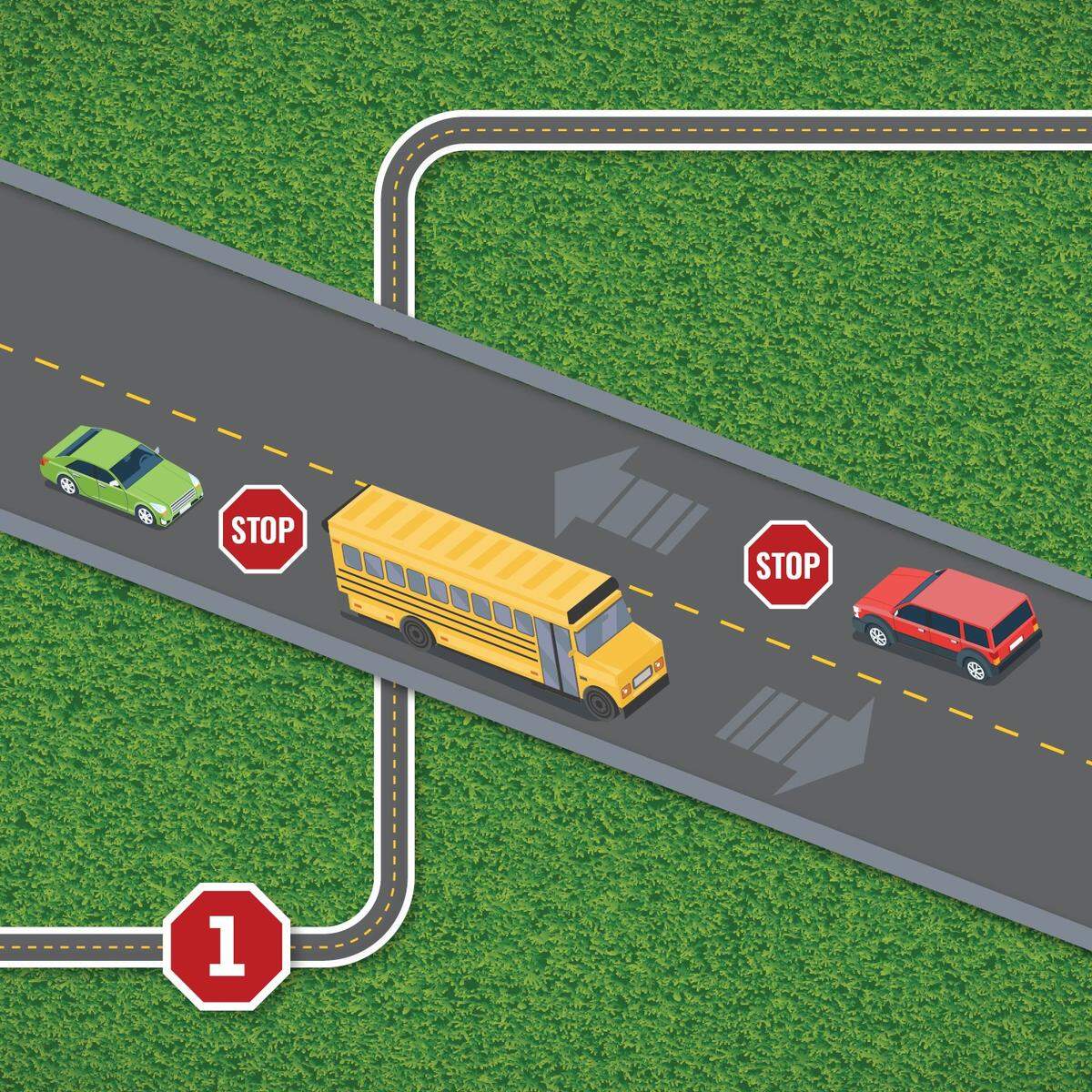
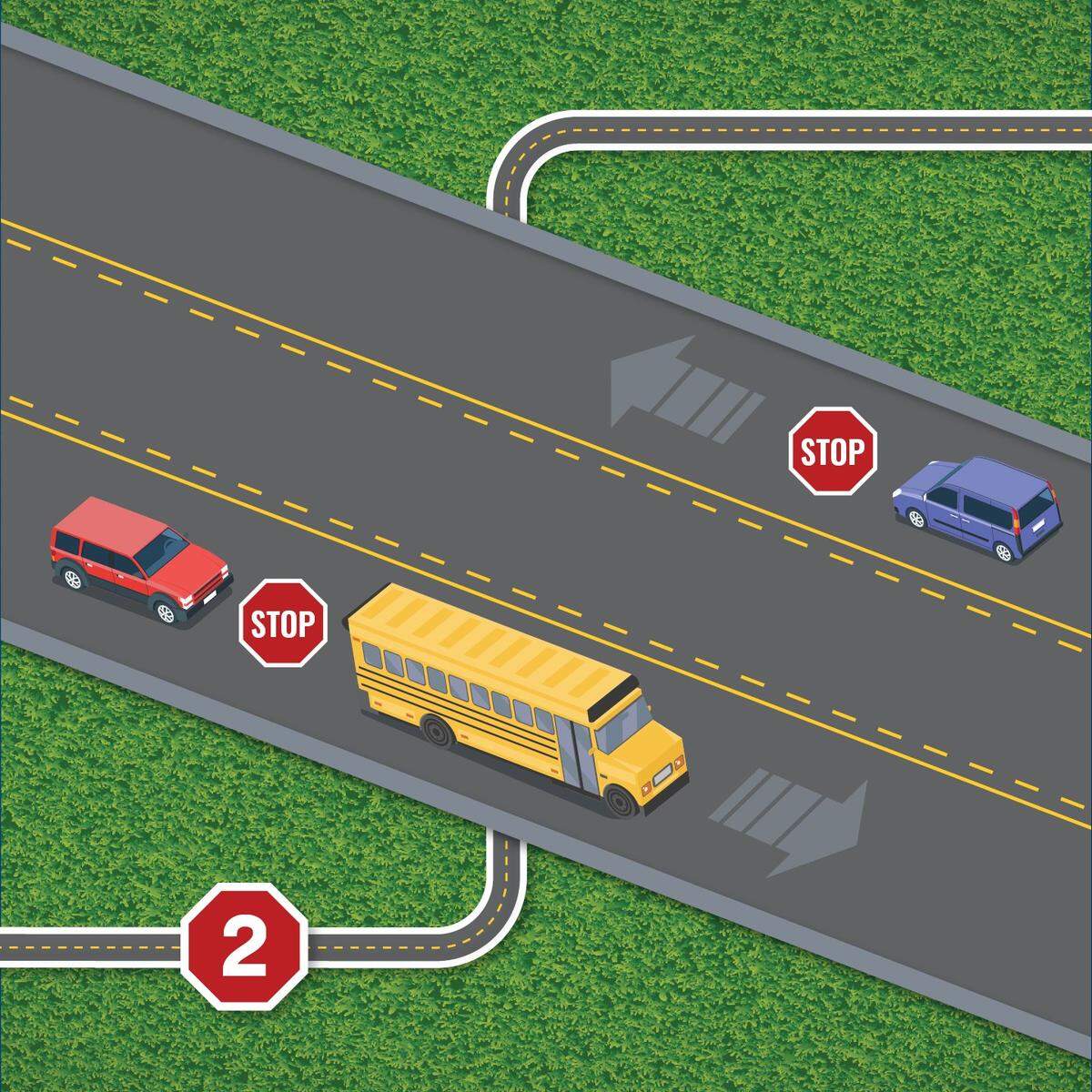
2. Two-lane road with center turn-lane or median
All vehicles must stop behind the bus and oncoming traffic, even if there is a paved, raised or grassy median.
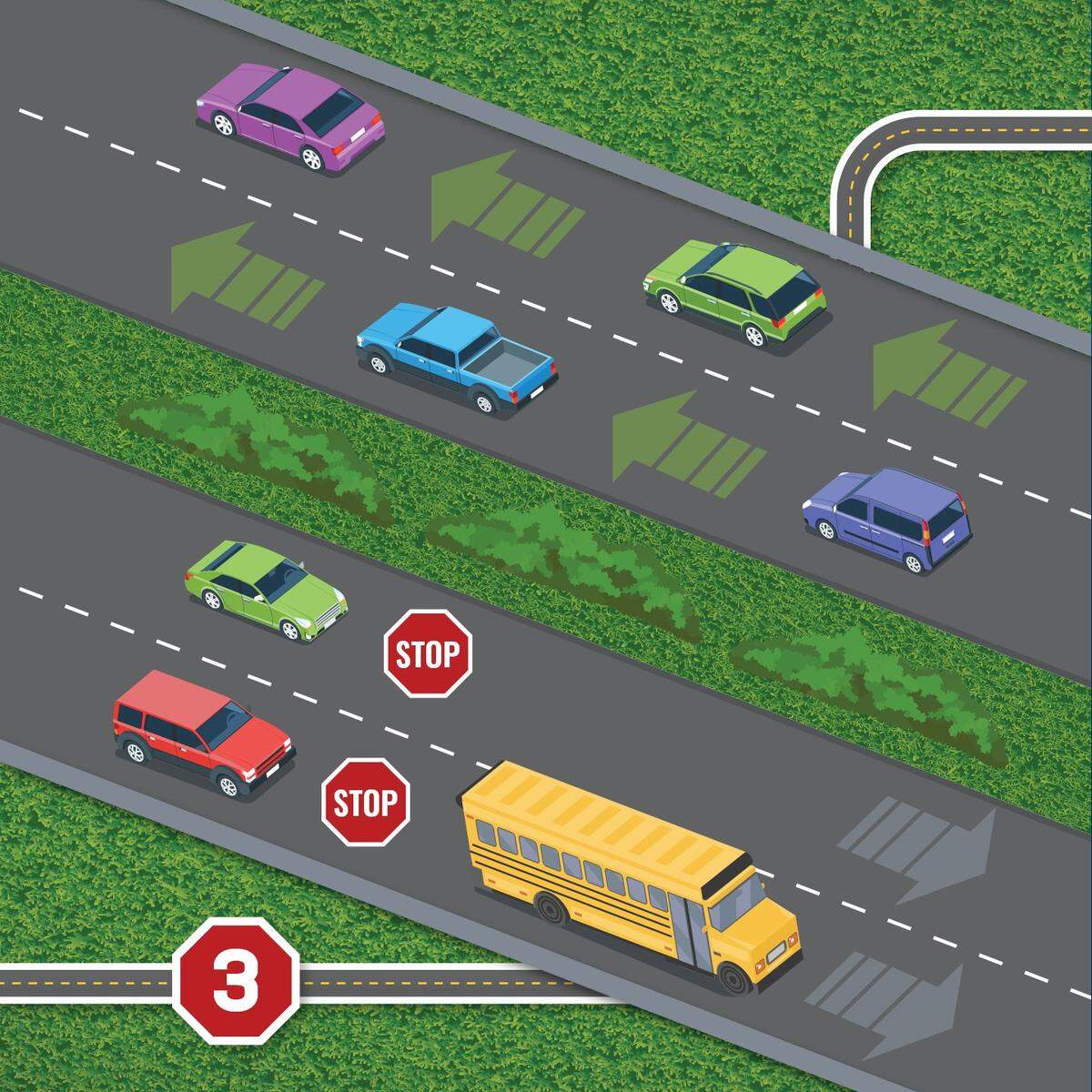
3. Multi-lane road with or without center turn-lane or median
Stop for the school bus if you’re traveling in the same direction as the bus. Opposite traffic should proceed with caution.
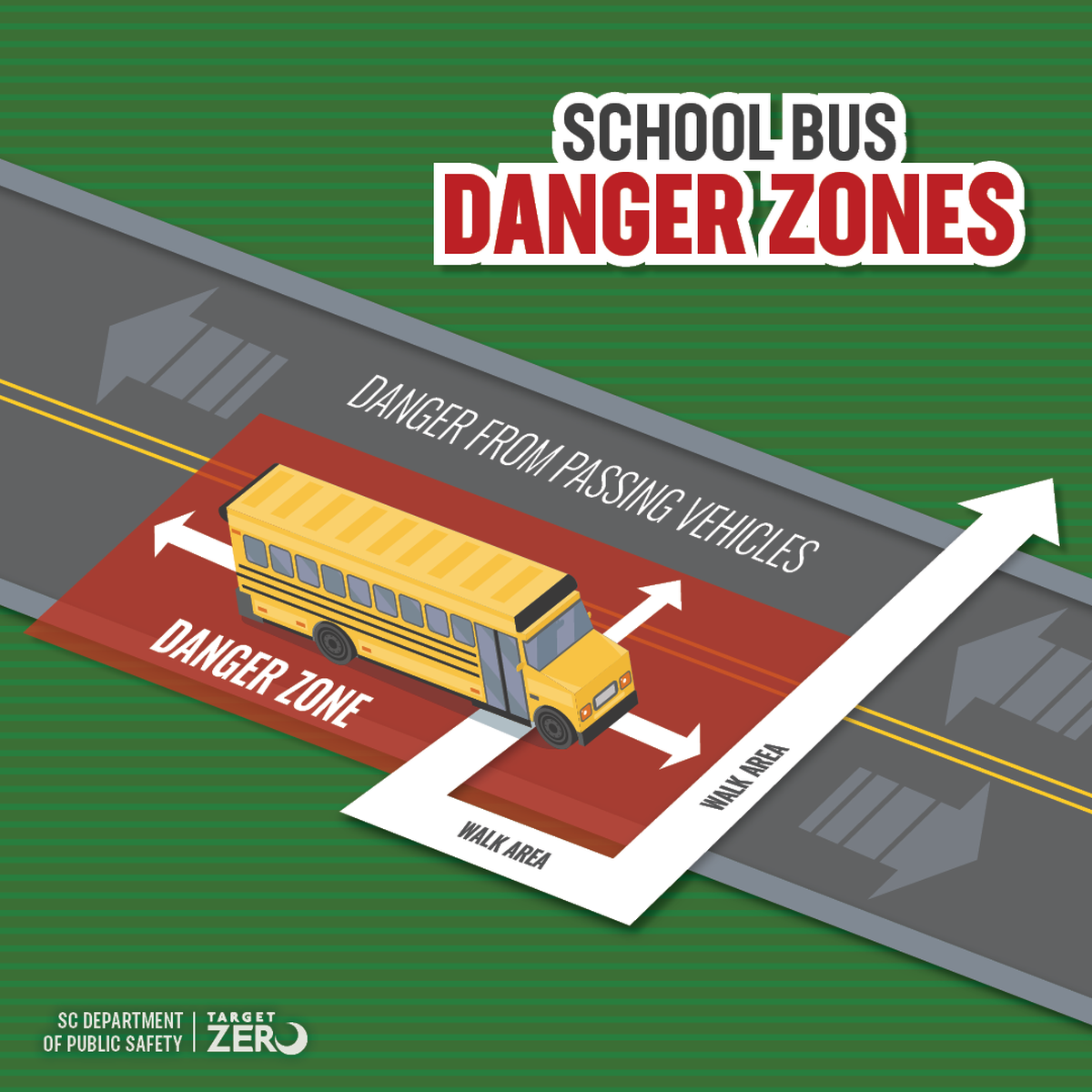
The “Danger Zone”
Pedestrian fatalities while loading and unloading school buses account for about three times as many school bus-related deaths, compared to school bus occupant deaths, according to SCDPS.
The loading and unloading area is called the “Danger Zone” and extends ten feet in front of the bus, ten feet on each side of the bus and behind the bus. These areas are where the bus driver is least likely to see children.
More safety tips can be found at https://scdps.sc.gov/schoolbus