
Schools are night and day on masks as Beaufort Co. starts first day of classes
As students settled in Monday on the first day of school, every student in an Algebra 3 class at Whale Branch Early College High School wore a mask or face shield. Some sat behind three-sided plastic barriers; others had taken them down, but students were less than three feet apart.
The same was true in an English 4 classroom, where students weighed the pros and cons of virtual school. Former Whale Branch High principal Mona Lise Dickson said she could count on one hand the number of students and staff who weren’t wearing masks at the school.
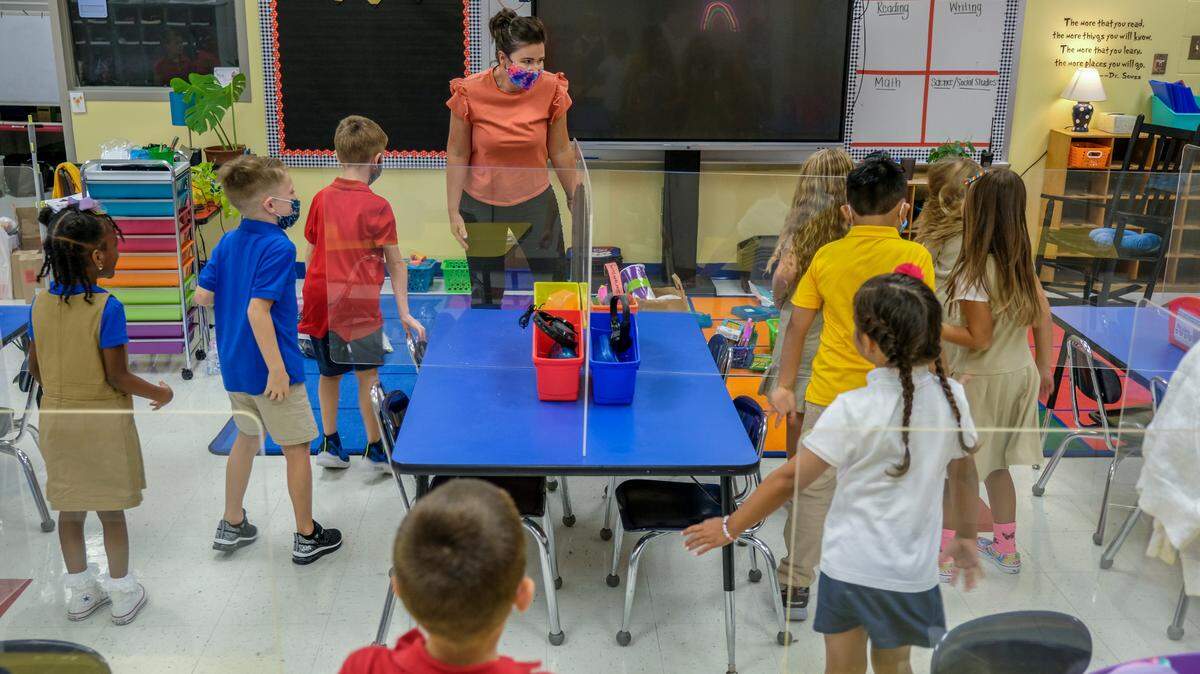
But at Bluffton Elementary School, only about a third of students in a first-grade classroom wore masks while they were “shaking out the wiggles.” Their four-person tables were divided into quarters by clear plexiglass, but students stood less than three feet apart during their exercise.
All but 10% of the elementary school’s students had returned to in-person classes by the end of last school year, echoing a push by Beaufort County School District to bring younger students back to buildings. In contrast, at Whale Branch High, around 80% of students were still virtual, attending classes via computer screen, at the end of the year.
The night-and-day difference between the schools on their first day back echoes the divide among teachers, staff and parents, 1,400 of whom had responded to June back-to-school survey on how to reopen in the fall.
Their responses ranged from “no masks at all” to “mandatory vaccination for teachers and students.” Despite the mix, responses heavily favored optional, rather than required, masking and vaccinations. The district did not ask about whether virtual classes should continue.
As the pandemic stretches into its third school year, Superintendent Frank Rodriguez worries about its long-term effect on the education of Beaufort County students.
While end-of-year test scores are embargoed until the S.C. Department of Education releases school report cards in the fall, Rodriguez said that the pandemic had “a significant impact” on student learning and will require a “multi-year process” of academic recovery.
“I think the state laid that out before any child took a test,” he said. “They said seven to eight out of 10 students in grades three through eight would be below grade level.”
At Bluffton Elementary, Principal Christine Brown is using federal COVID-19 relief funding to pay for afterschool tutoring and instructional coaches who can catch kids up on reading and math. The same thing is happening at Whale Branch High with credit recovery and Saturday school to make up for absences.
While Rodriguez said he’s thankful students are back in schools to begin their academic recovery, the district is already seeing COVID-19 cases in line with the county’s recent spike in infections.
District spokesperson Candace Bruder said that as of Sunday evening, the district had reported 60 active COVID-19 infections, 11 of which were staff, and about 250 people — around 1% of the district’s student and staff population — in active quarantines for COVID-19 exposures. That estimate might be lower than the actual number because school nurses are still looking at infection data from the weekend, she said.
Quarantines and a COVID surge
Beaufort County School District will not require masks because a state budget proviso says any school or district that requires masks for students or staff will lose state funding.
There’s also a state budget rule blocking extensive virtual options. School districts can’t have more than 5% of their students in a virtual program this school year. If they go over that limit, districts could lose up to 50% of their per-pupil funding, according to the S.C. Department of Education.
The district says it will not offer remote-only options this year for elementary and high schoolers, and it has only 100 slots in a full-time virtual program for middle schoolers through the Lowcountry Education Consortium.
The relaxed protocols in schools seem at odds with the reality of the pandemic. On Friday, Beaufort County recorded 231 new COVID-19 cases, breaking its previous record set Jan. 8, at the height of the winter surge, when vaccinations weren’t readily available.
In January, the district had just begun full-time, in-person classes. About 30% of district students were attending online school, and masks were required for everyone in school buildings. But the district still reported more than 1,600 students in quarantine the week of Jan. 16-22, two weeks after students returned.
Already, quarantines and COVID-19 cases have been reported at the district even before buses pulled up Monday. At least three high school sports teams — at Battery Creek, Beaufort and May River high schools — have gone into quarantine for COVID-19 exposures; the May River cheerleading team quarantine won’t end until Thursday.
Whale Branch High freshman Alonzo Allen, a football and track athlete, said his coach was on him “every day” about COVID precautions.
“The head coach tells us every day to wear our mask, he gets on us about that,” Allen said. “Bringing our water bottle, making sure we bring everything we need so we don’t get quarantined.”
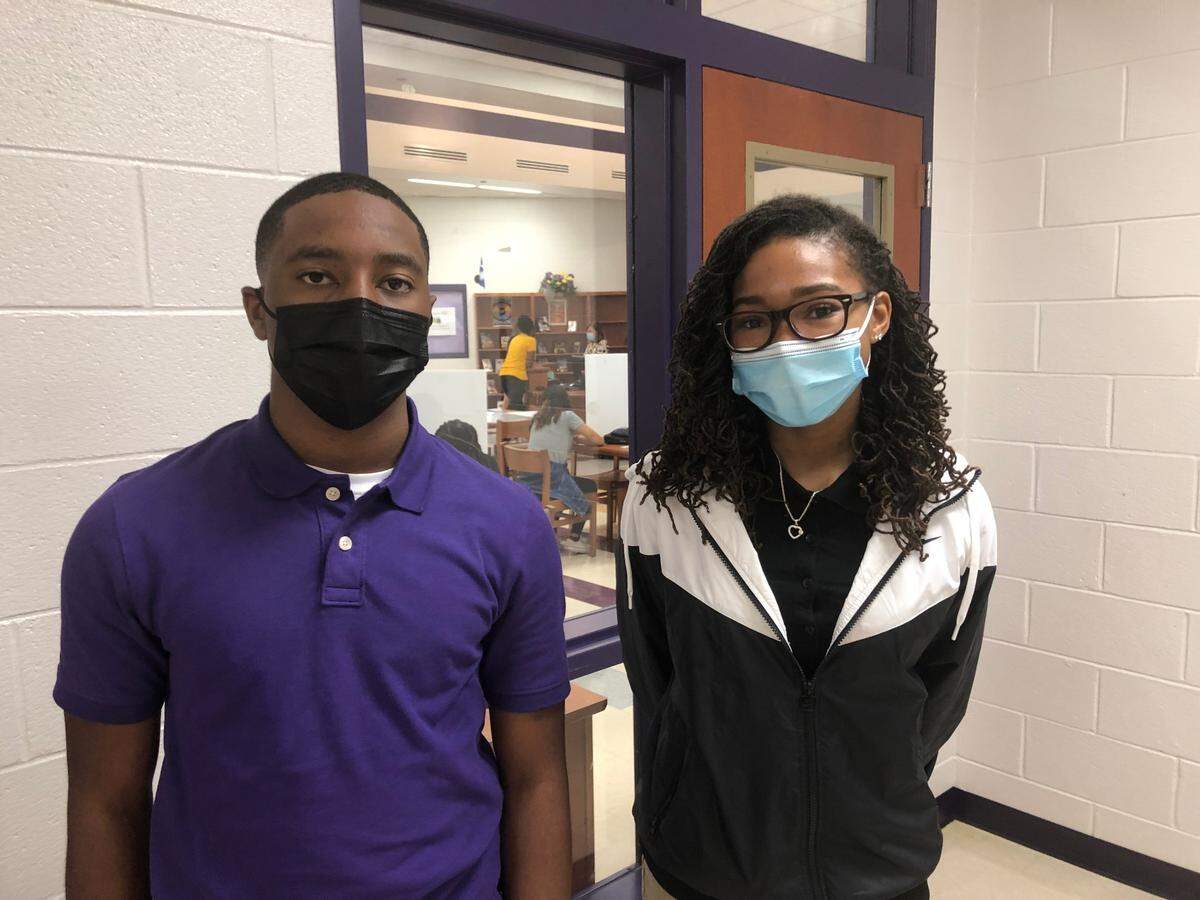
Senior Kaylyn Caldwell agreed. She’s on the track and cheerleading teams, the latter of which is coached by her mother. “My mom really gets on us about wearing our mask, even if we’re vaccinated,” Caldwell said.
Both students are wearing masks and returning to in-person classes for the first time since the start of the pandemic. Both made good grades in virtual school but said that procrastination had been a problem.
“Sometimes it kind of scares me, honestly,” Caldwell said about the possibility of contracting COVID. “Because I have grandparents ... at my house that have health issues. If I could possibly have COVID, I could bring it back to them and they could get really sick.”
Rodriguez said Monday that if not for the legislature’s virtual learning cap, the district likely would have offered virtual classes at all grade levels, using out-of-district teachers to keep staff from having to teach in-person and remotely at the same time. As of now, the only elementary and high schoolers who will get virtual options are those who are quarantining from COVID exposure.
Rodriguez declined to name specific metrics he would use to determine whether to return classrooms, schools — or the entire district — to virtual schooling. But he said he would “monitor very closely, case by case” and stay in touch with state and local health officials.
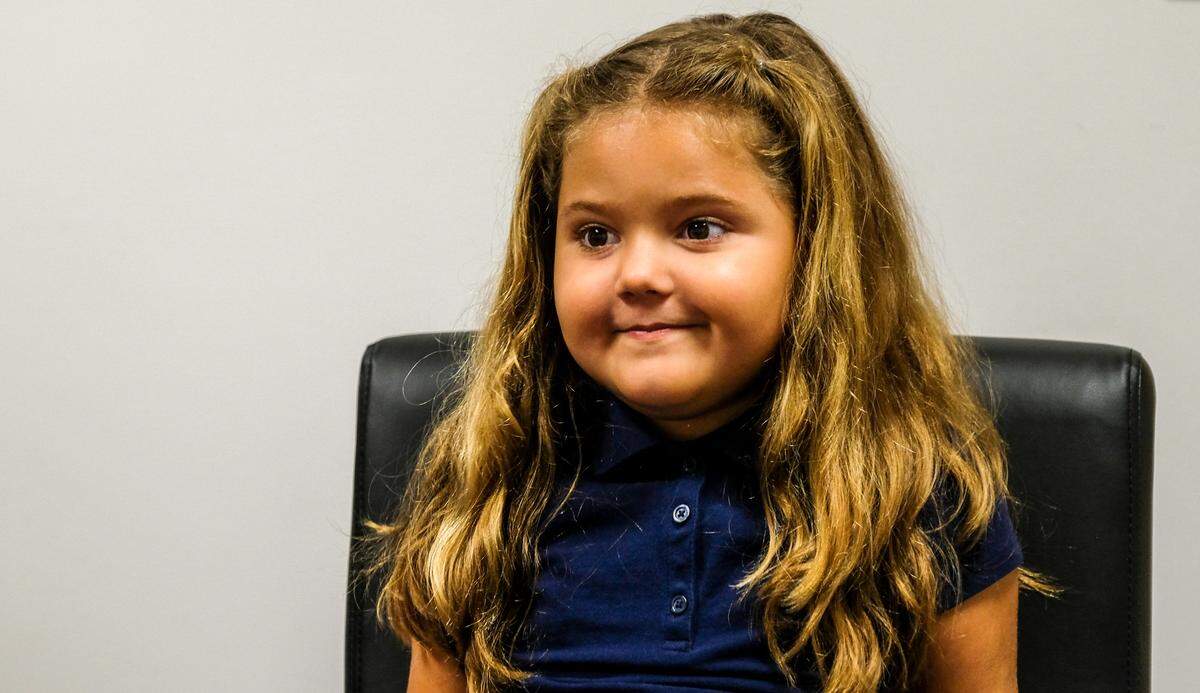
Bluffton Elementary first-grader Hazel Sparks said she was excited to be back in school and to see her friends in person instead of behind a screen. She wasn’t wearing a mask, and when asked if she was worried about COVID, she shook her head no.
“I know that I just have to be careful,” she said. “Just not get my face in other peoples’ faces.”
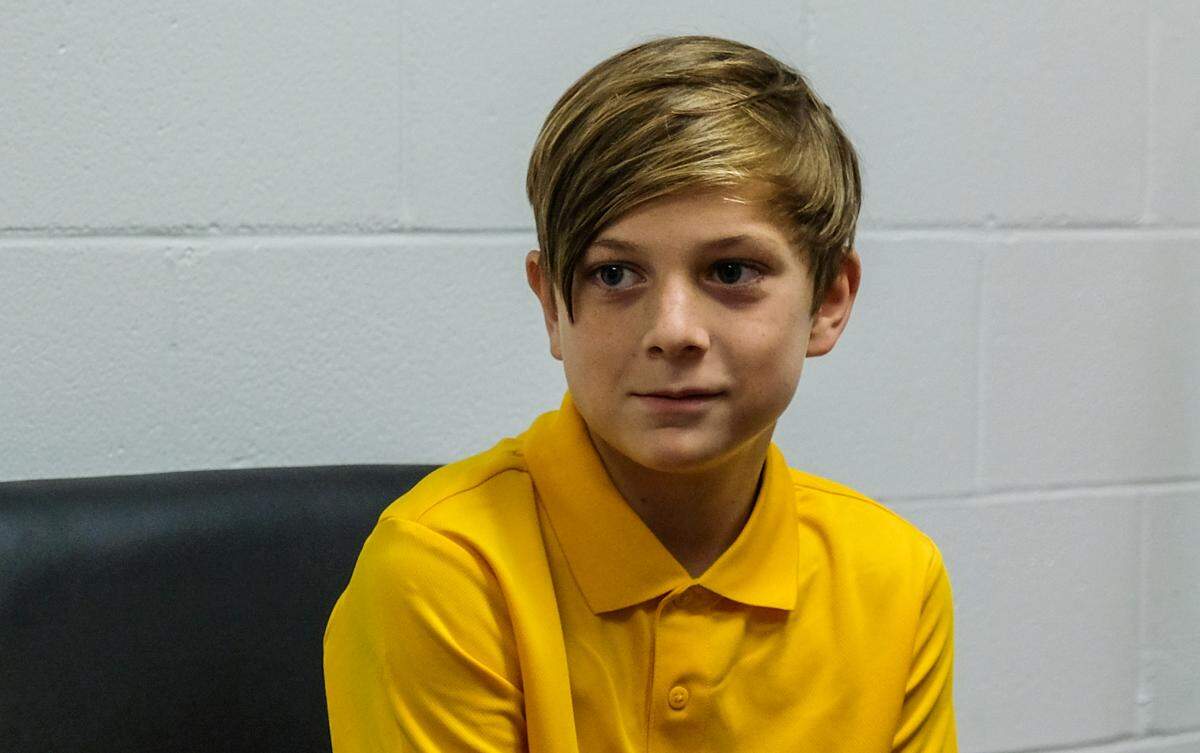
Fifth-grader Sawyer Sanfelippo said he was looking forward to eating in the cafeteria and not having “stations” at the playground to keep kids from one class confined to one area.
“I’m not really scared of it,” he said about COVID. “I know it will get better eventually.”
This story was originally published August 16, 2021 at 2:53 PM.