A $1.3M defense grant tees up Lowcountry cybersecurity degree programs. What we know
About 15 months after launching, an initiative aimed at training Lowcountry students in the growing cybersecurity field and luring technology firms to Beaufort has received a $1.3 million boost from the U.S. Defense Department.
The federal grant will fuel the nonprofit South Coast Cyber Center, a partnership between local colleges, the City of Beaufort and economic development groups, as the educational institutions aim to establish degree programs in cybersecurity, according to a University of South Carolina Beaufort news release.
USCB, the grant’s primary recipient, will work with Technical College of the Lowcountry and other partners to hire faculty, develop a curriculum and launch the programs, which will be based in Beaufort.
This fall students may begin enrolling in a new cybersecurity concentration as part of USCB’s Bachelor of Science program in information science and technology, according to Eric Skipper, USCB provost and executive chancellor for academic affairs.
“We are looking forward to this new and exciting opportunity for USCB students and for the region,” Skipper said in a statement, adding the university intends to eventually offer a four-year degree in cybersecurity.
The initiative has been in the works for months.
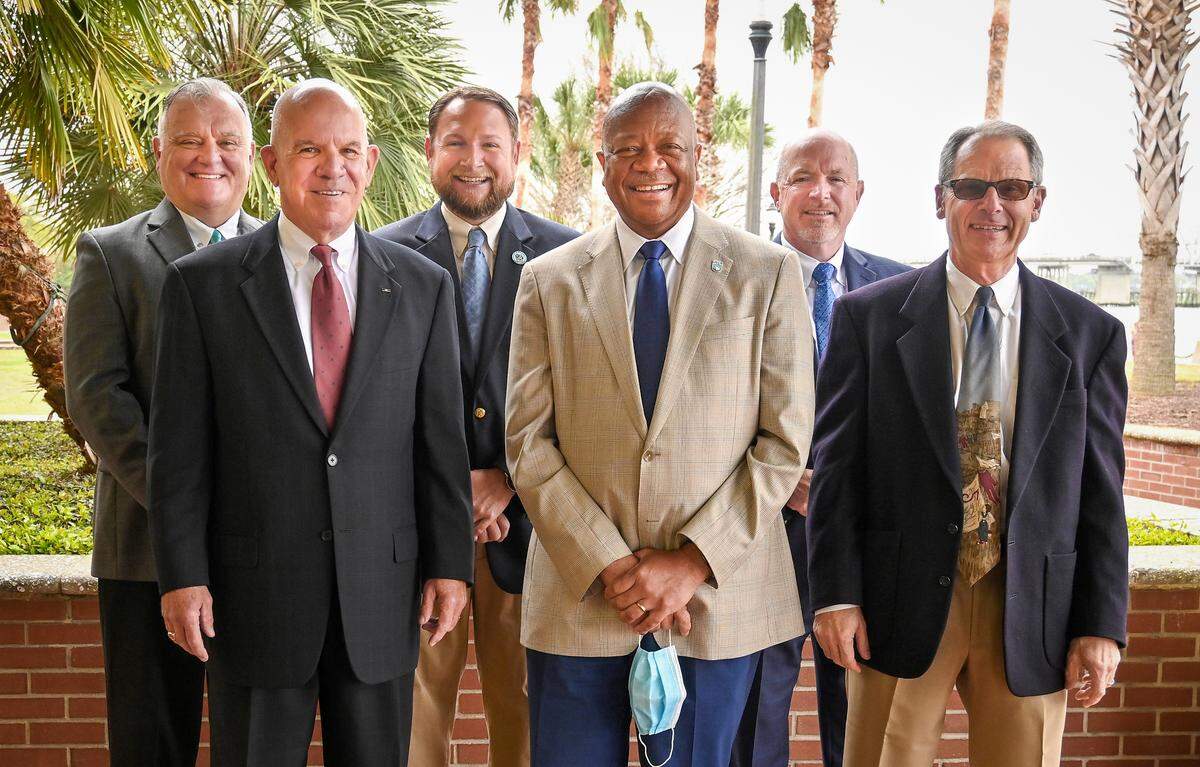
“We are well situated to become a cyber hub,” said Warren Parker, chairman of South Coast Cyber Center, an umbrella group that boasts an advisory board of nearly two dozen retired military members, business leaders and local officials.
The colleges hope the National Security Agency and Department of Homeland Security will certify their degree programs as Centers of Academic Excellence in Cyber Defense — a national accreditation that will elevate graduates’ career prospects, Parker said.
Five South Carolina colleges and universities already hold a version of the accreditation, including The Citadel and Clemson University. The median salary of an information security analyst was nearly $100,000 a year in 2019, according to the U.S. Bureau of Labor Statistics.
Beaufort is the perfect backdrop for the program, Parker added, noting the proximity to tech firms in Charleston and military installations. The initiative could train veterans exiting the Marine Corps in a field that is seeing massive shortages of professionals trained in defending computer systems, networks and sensitive data from digital attacks, he said.
“There’s no unemployment in cybersecurity,” Parker said.
The field touches everyone. “I like to say, if you have a bank account, a car and a house and a credit card, you’re deeply involved in cybersecurity already,” Parker, a retired Marine Corps colonel who has worked in banking and the defense industry, explained.
Computers in each area of our lives are subject to attack by hackers, which can also threaten government at all levels, he said.
Neighboring Jasper County suffered a malware attack in 2019 that slowed public services and affected the public availability of months of law enforcement and 911 records.
South Coast Cyber Center is preparing Beaufort County public officials to respond to similar attacks.
Last week, town staffers with Beaufort and Port Royal met with leaders from law enforcement and infrastructure agencies, as well as hospitals and schools from across the county for a tabletop cybersecurity exercise.
With cybersecurity professionals from the South Carolina Law Enforcement Division and 125th Cyber Protection Battalion of the S.C. Army National Guard, attendees simulated threats and response plans throughout the daylong exercise.
Beaufort Mayor Stephen Murray, vice chairman of South Coast Cyber Center, said in a statement that the new grant money will also kick off the creation of the community’s “first-ever regional cybersecurity strategic plan.”
The application for the $1.3 million infusion had the backing of two Republican lawmakers from South Carolina, U.S. Sen. Lindsey Graham and U.S. Rep. Nancy Mace, according to Parker.
The funds from the Defense Department’s Office of Local Defense Community Cooperation will also help another partner in the initiative, Beaufort Digital Corridor, a technology incubator in downtown Beaufort, offer cybersecurity mentoring for businesses and teach related skills, the USCB release said.
“I think that our future is really bright,” Parker said.